

Mother-of-pearlWhere the shell meets the design
Mother-of-pearl brings pattern and lustre to even a small part of an EDC piece. It can become a signature-shaped inlay, a carved plate or an arrangement of shell beneath a clear covering.
Mother-of-pearl is nacre from shell. In these examples it works alongside metal, wood or polymer bodies, with a distinct role in each design. GIA’s research describes nacre’s fine structure and optical effects; the shell species, treatments and covering on a particular product still depend on the maker’s information.
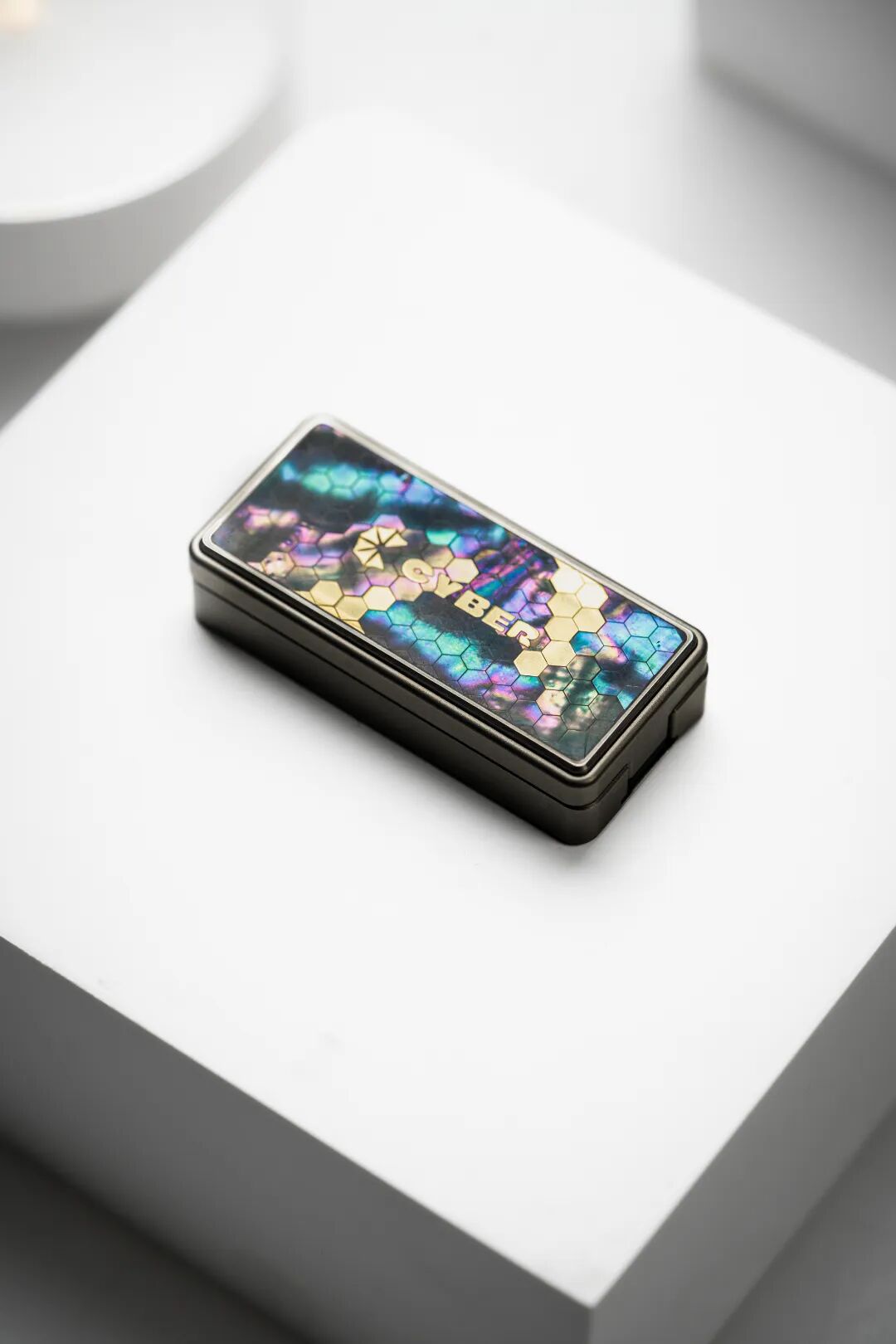
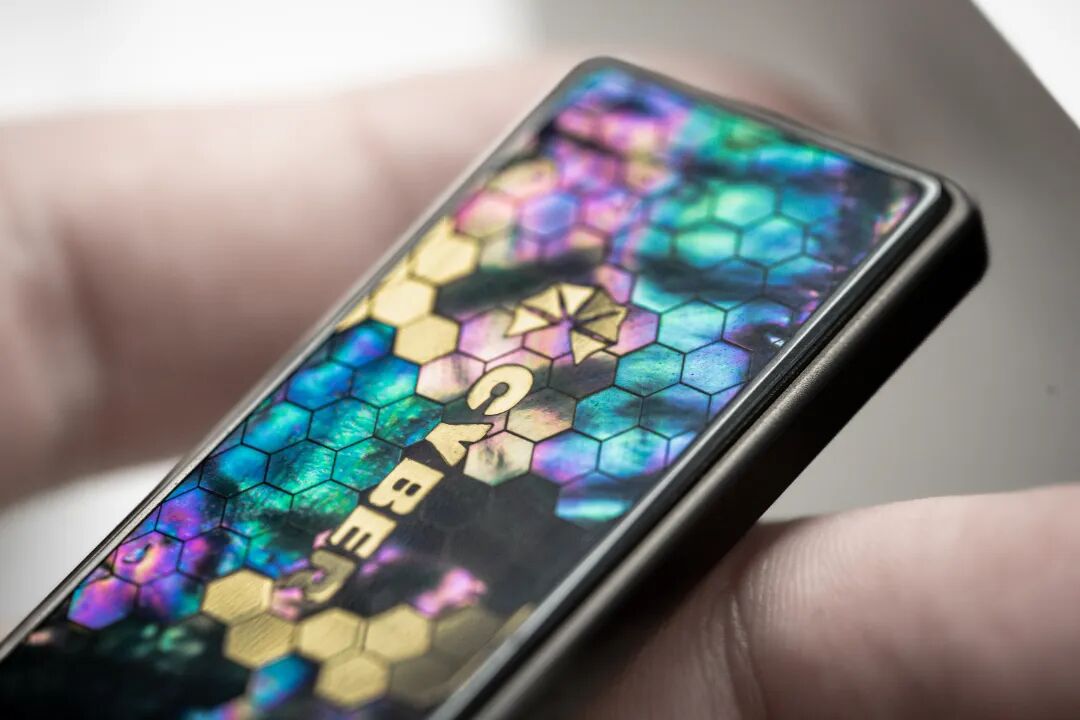
Colourful shell and a hexagonal pattern on Chuanliu’s Matrix plate, fitted to a stainless-steel body.
Yunxi: from plates to a signature inlay
The PEI and white mother-of-pearl configuration shown in the August 2025 release. This is separate from the December anniversary edition.
Yunxi shows how the same shell theme can sit against very different bodies. In August 2025, RUMU EDC listed white mother-of-pearl paired with PEI, ziguangtan wood, figured bubinga and submerged wood. The photograph shows the PEI configuration.
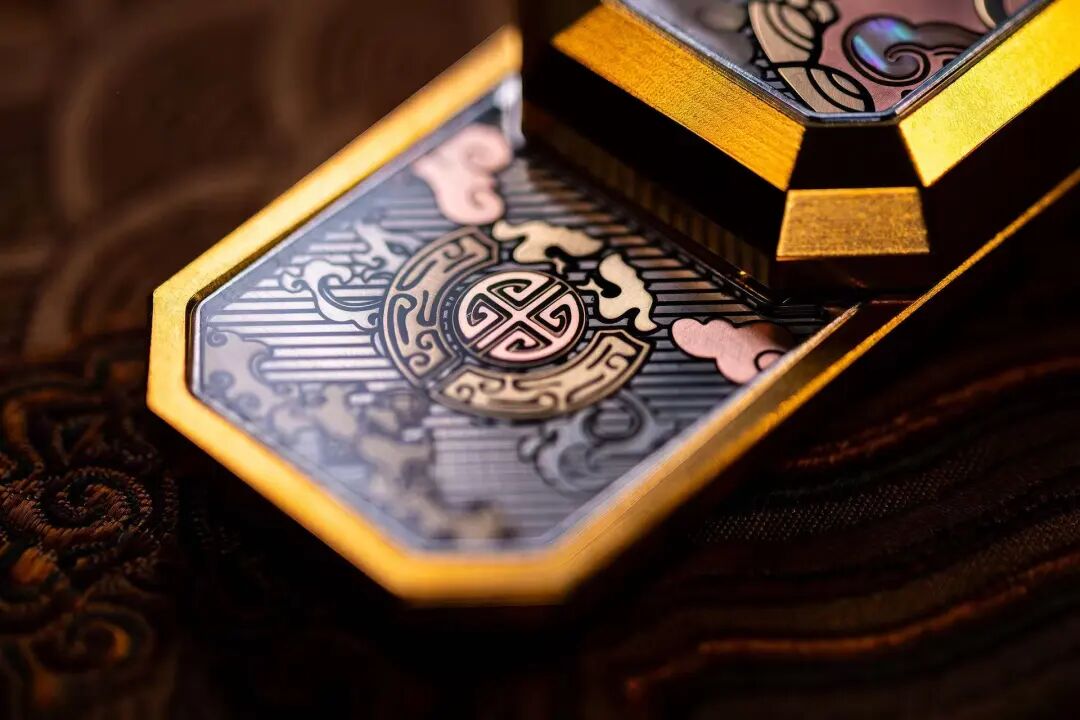
In the December 2025 anniversary edition, Yunxi Tianxia Yiren, the emphasis shifts to a signature-shaped inlay on the front. RUMU describes a body made from gold- or silver-foil chopped-carbon material, with the white mother-of-pearl cut by CNC from 1 mm-thick material. That thickness belongs to this anniversary inlay; it is not specified for the earlier configurations.
The silver-foil edition also uses white copper in the middle layer and in the lettering on the back. The shell, carbon-based body and metal details each have their own place in the assembly.
Price Tag: shell carved into a plate
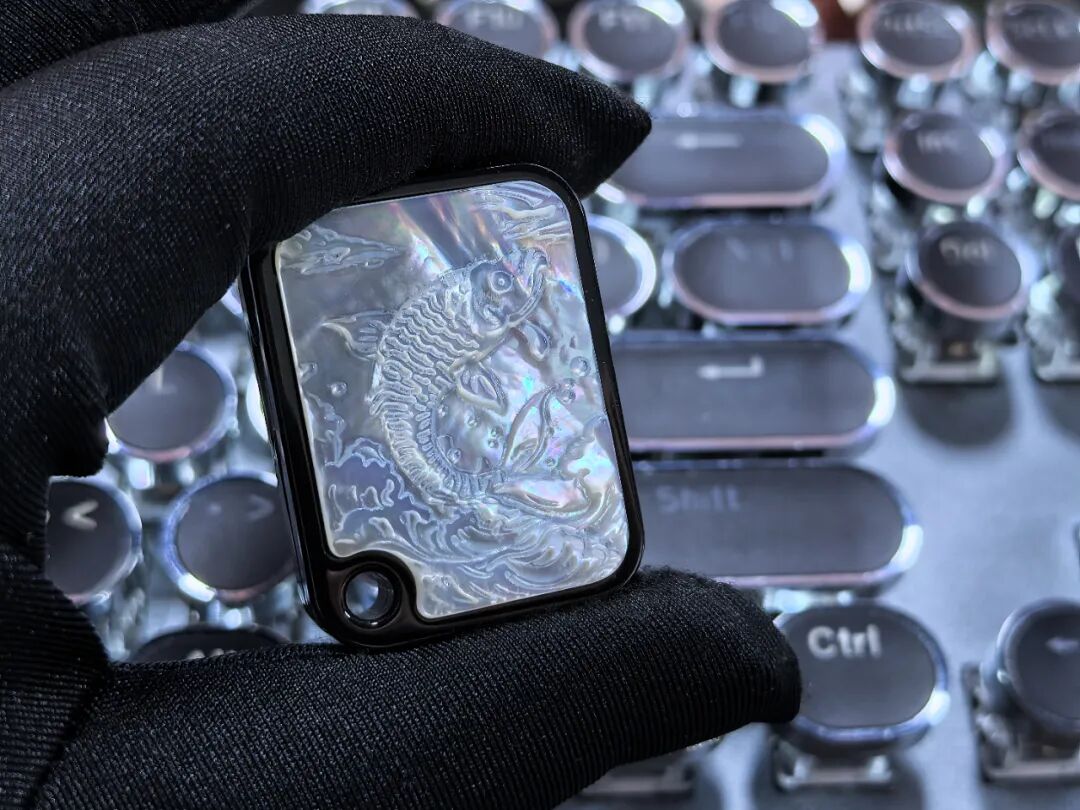
A third-party plate by Niaoshu, carved from white mother-of-pearl and featured by BPMODS.
BPMODS’ February 2025 feature on third-party Price Tag plates introduced Niaoshu’s mother-of-pearl series, including the fish and peacock designs. The maker’s account describes cutting and carving plates directly from a whole piece of shell, rather than filling a separate substrate with thin inlays.
The carved outlines and the shell’s colour distribution are both part of the result. Niaoshu made these plates; BPMODS presented the work. Mother-of-pearl is the plate material, not a description of the complete Price Tag fidget.
Chuanliu: colour arranged by hand
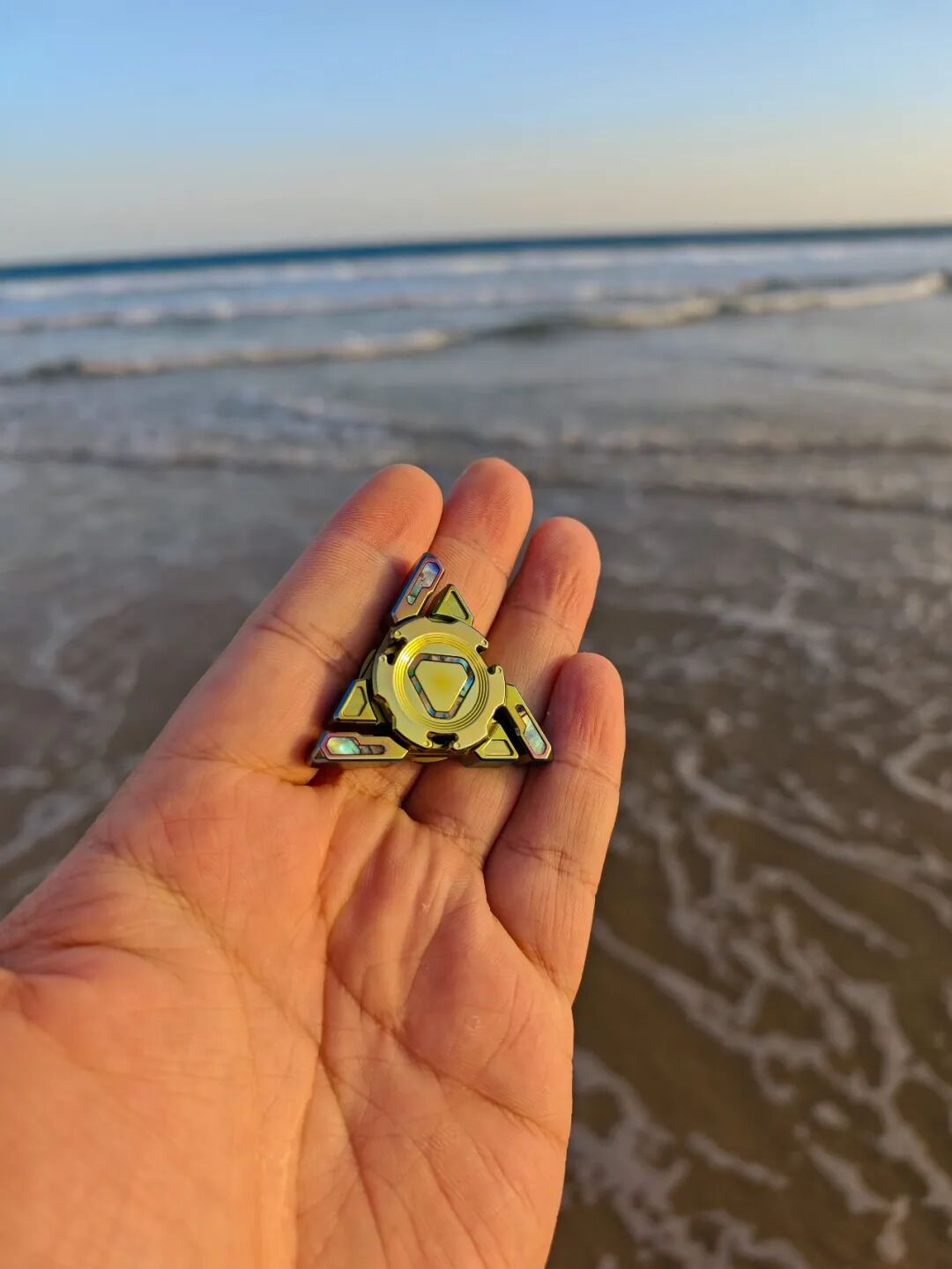
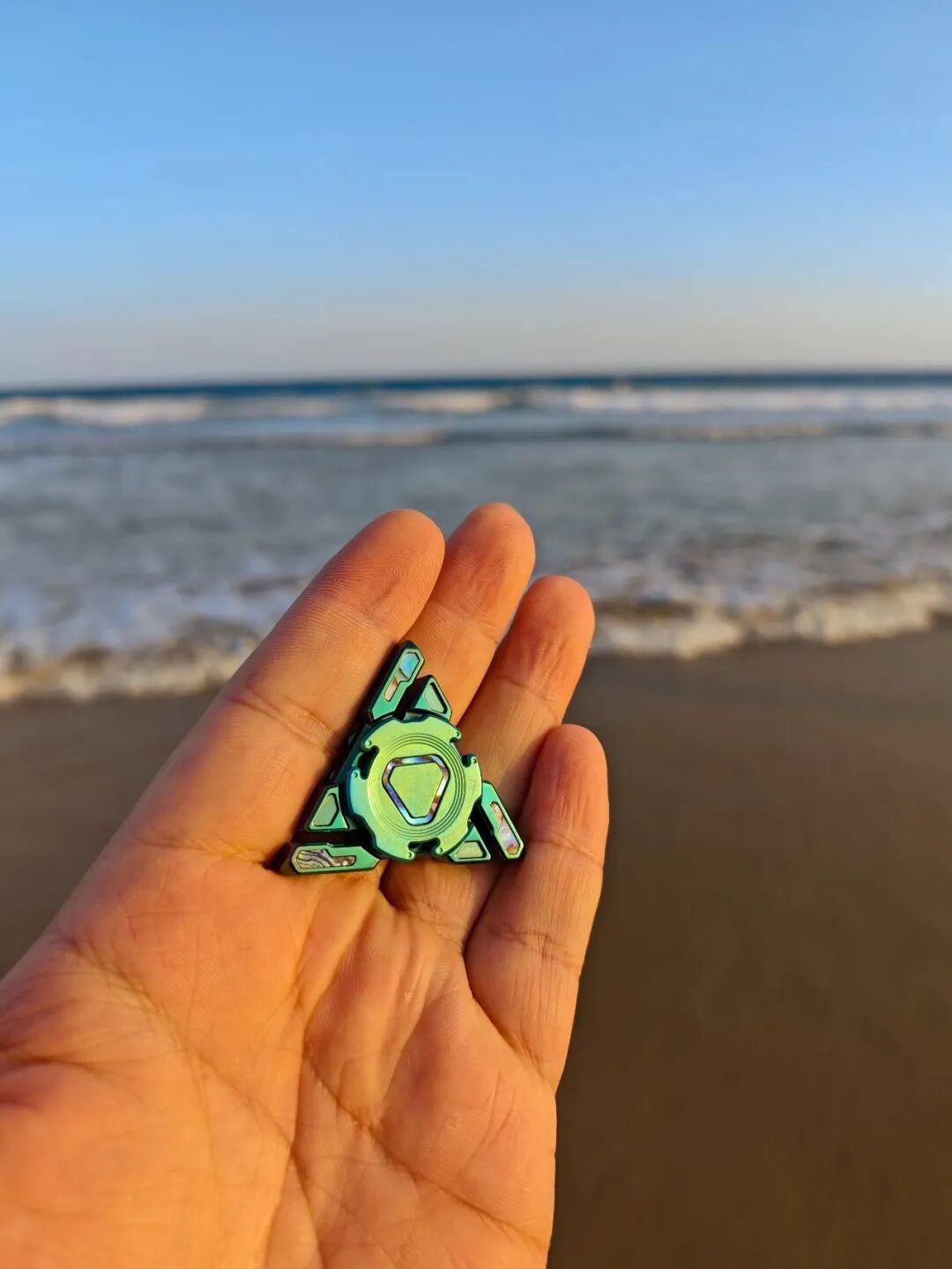
The listed release pairs a bead-blasted stainless-steel body with the shell-inlay Matrix plate. The arranged shell belongs to the plate.
CyberEDC collaborated with LusterLac on the shell-inlay Matrix plate for Chuanliu. The November 2025 release describes selecting, arranging, bonding and polishing the coloured shell pieces by hand. Colours and arrangements vary from plate to plate.
This configuration pairs the plate with a bead-blasted stainless-steel body. Luodian refers here to the shell-inlay work on the plate. The maker also warns that gaps or natural shell growth marks may be visible from particular angles. Those edges and joins deserve a closer look alongside the colour.
Zhangzhongbao: the layer you touch
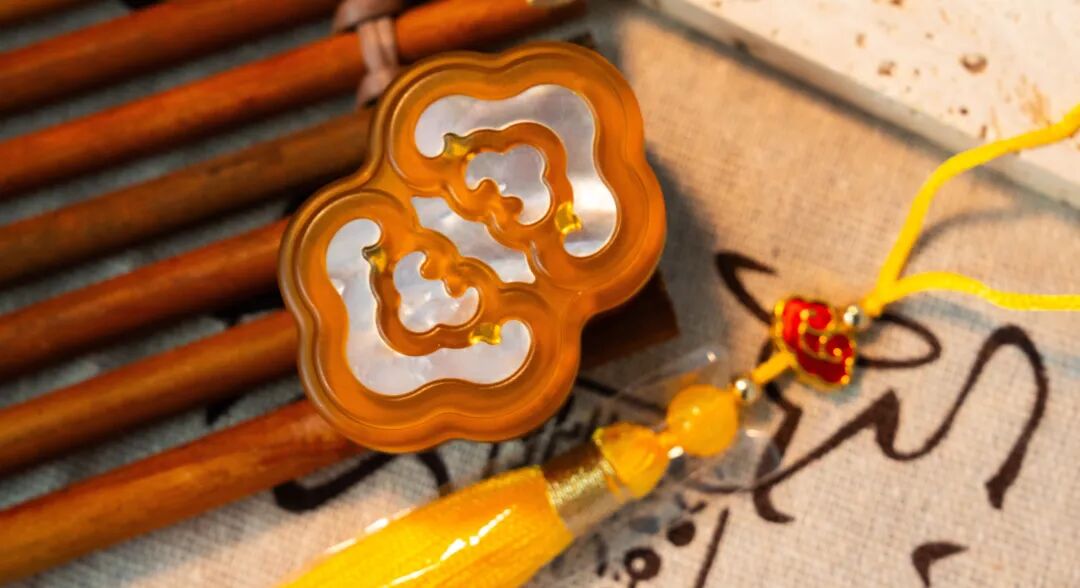
The maker describes mother-of-pearl inlay beneath a clear fengjing layer. The release uses zirconium-alloy substrates with magnetic finishing and gold plating.
In the introduction to Zhangzhongbao Fu Lu Shou, Lao Cai of CC28 EDC describes a clear sequence: mother-of-pearl inlay first, followed by a covering layer called fengjing. The outer layer therefore also contributes to the surface you touch.
The release uses zirconium alloy for the body and plate substrates, with magnetic finishing and gold plating. It has replaceable plates on three sides, including the middle layer. The gold-coloured finish, metal substrate, shell pattern and clear covering are separate parts of the construction. The article does not identify the covering’s formulation or provide comparative abrasion-test data.
Santi Mini: small inlays, distinct details
A Santi Mini photographed for the January 2026 release: tungsten-alloy body, titanium-alloy buttons and localised shell inlays.
The Santi Mini introduced by Chuanshanjia EDC in January 2026 combines a tungsten-alloy body, titanium-alloy buttons and colourful mother-of-pearl inlays. Shell replaces the brass inlays of the earlier version, adding a different surface pattern within the metal structure.
The maker’s listed 72 g is the weight of this finished configuration. It does not describe the shell’s weight or every Santi version. The source calls the inlay colourful mother-of-pearl; it does not establish the shell species or whether it has been dyed.
Care for the actual surface
For routine handling, start with a soft, dry cloth and keep the surface from rubbing directly against hard objects during storage. Van Cleef & Arpels likewise recommends soft-cloth dry cleaning and avoiding chemicals for its mother-of-pearl jewellery; this is limited material-care background.
An EDC piece may combine shell with adhesive, a clear covering, metal and moving parts. Follow the specific maker’s advice for cleaners, immersion, polishing or repair. A glossy photograph and the name fengjing do not establish the coating or bonding system.
IN THESE FAMILIES
Swipe to exploreExplore the product families through the parts made from shell and the ways their makers work it.
PIECES IN MOTHER-OF-PEARL
Specific configurations and plate designs, matched to their original release photographs. These are not current stock listings.
ALL MATERIALS
Keep exploring the TRB material guides.
 Mother-of-pearlYou are hereVIEW →Materials indexAlloys, polymers and finishesVIEW →
 ZircutiZircuti material guideVIEW →
 SuperconductorSuperconductor material guideVIEW →
Material background
GIA: Iridescence of Shell and Pearl · Nacre structure and optical background; not a species identification for these EDC parts.
Van Cleef & Arpels: Mother-of-pearl · Care advice for the brand’s shell jewellery. Follow the specific EDC maker’s guidance for the complete piece.
