

PolycarbonateA transparent body, or a single viewing window
Find the part that PC actually plays in each product.
PC takes several roles in these EDC products: a transparent exterior, a lightweight two-lobed version, or just a window through which to see inside.
Read the full material name alongside its location and configuration. Three photographed products introduce these uses, followed by coloured shells and spinner buttons. Neither colour nor a product name can replace a material specification.
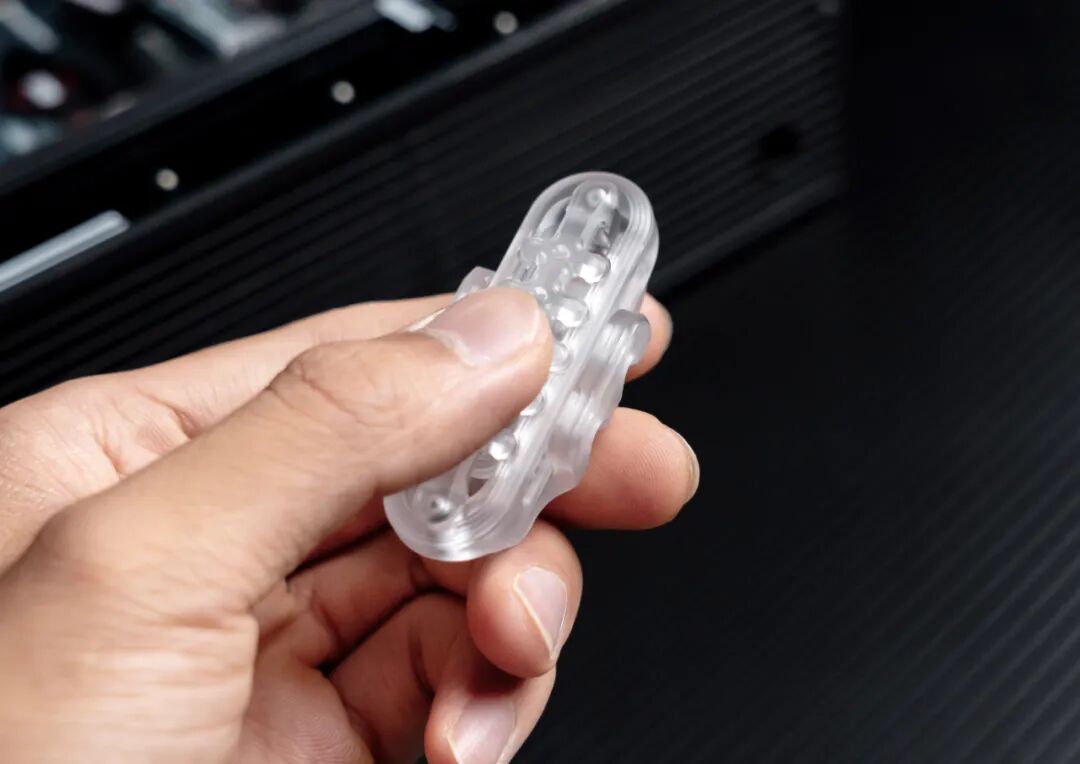
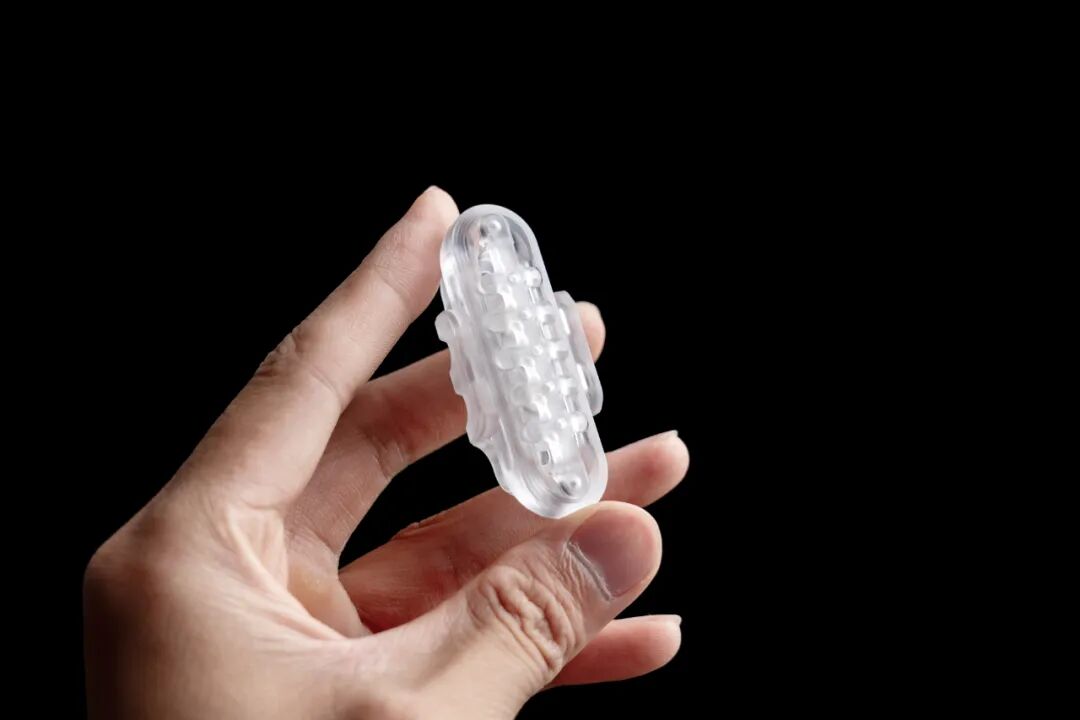
Wanwu Lezhi’s PC Ganggu special edition makes its internal outlines visible through a transparent exterior.
A transparent exterior reveals the inside
A closer view of PC Ganggu. Ganggu is a product name; it does not identify the internal components as steel.
A transparent exterior reveals the inside
Wanwu Lezhi released a special PC edition of Ganggu. Its transparent, elongated exterior reveals circular outlines and internal layers. Looking through the edges gives a different view from an opaque exterior.
These photographs show the PC special edition offered through the maker’s collection-redemption event at the time. Ganggu is the product name; the article does not identify every internal component’s material. The name itself does not establish that the internal parts are steel.
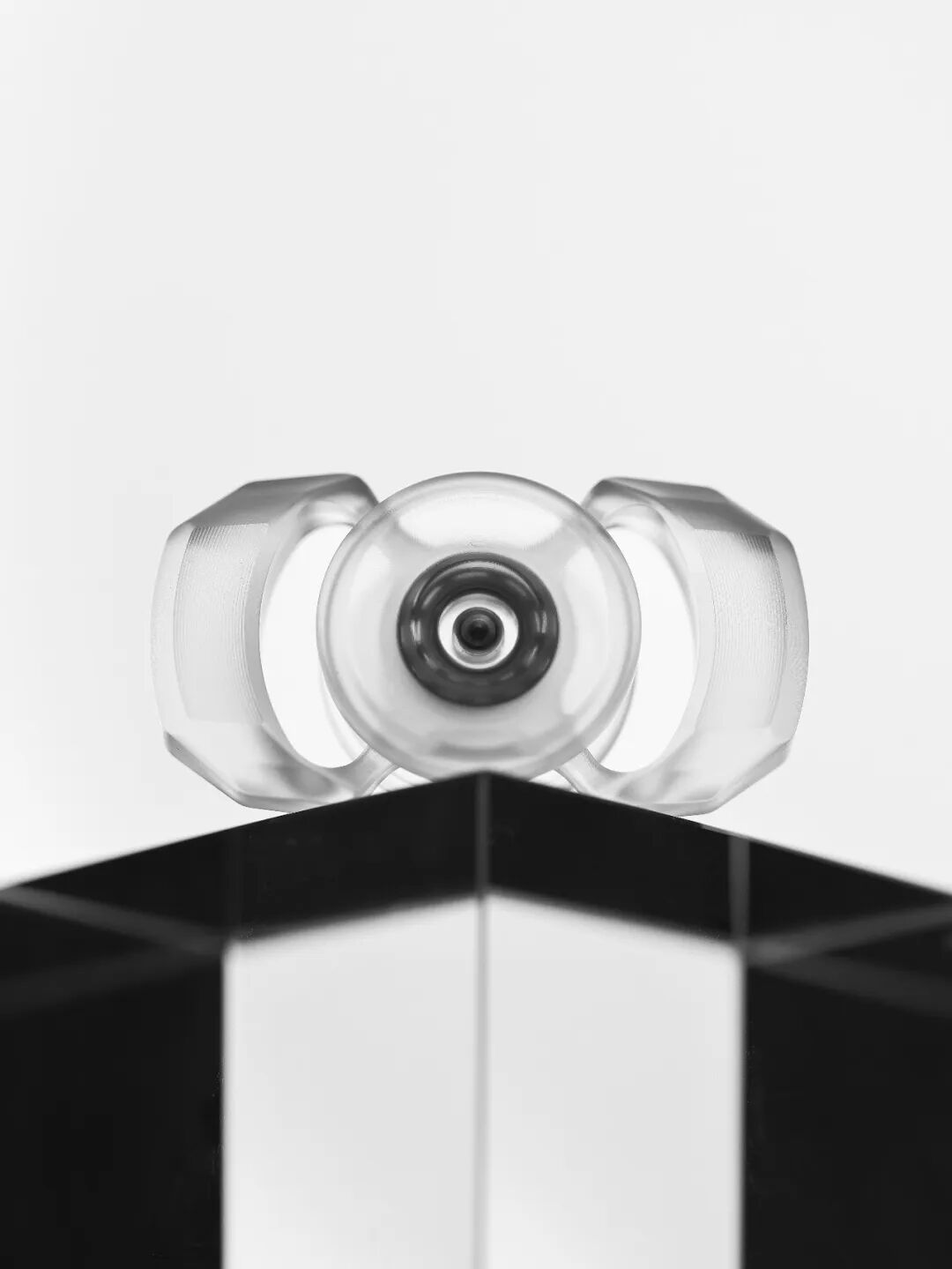
Two lobes and a machined PC version
Whisper-Duo’s PC version with machining marks. The maker listed approximately 10 g for this release, without a PC weight tolerance.
Two lobes and a machined PC version
Dreamy Geometry Labs’ Whisper-Duo has a symmetrical, two-lobed form. That release listed a PC version with machining marks alongside stainless-steel, zirconium and titanium versions. The PC entry specified approximately 10 g and 20 sets. The transparent body retains the two-lobed outline, with a circular component visible at its centre.
Approximately 10 g is the maker’s figure for this PC version. The article gives neither a PC weight tolerance nor a separate description of the accessories fitted during weighing. It also says that a small number of units in each material were randomly fitted with earlier Whisper buttons. The accessory combination should not be assumed identical in every set.
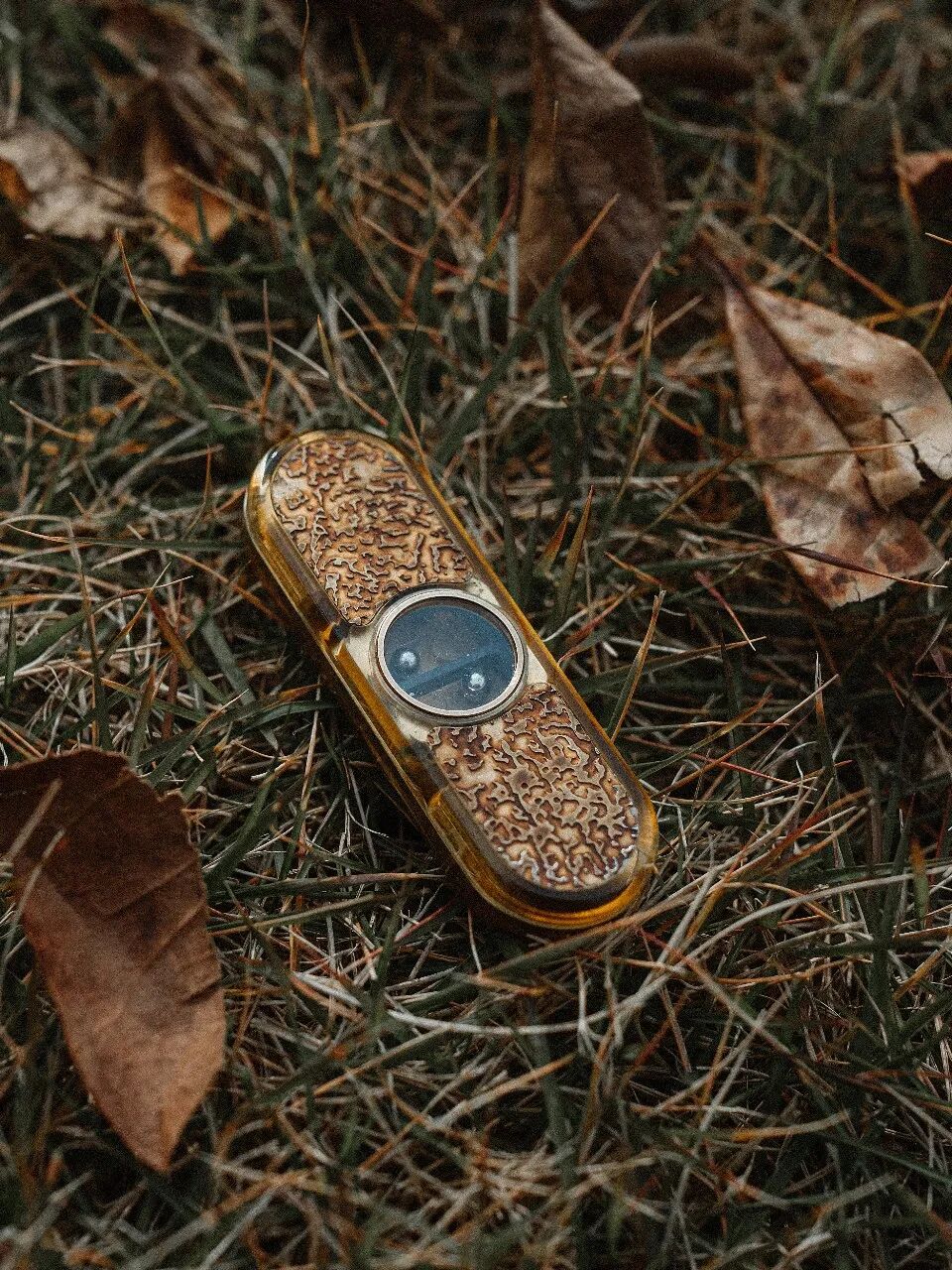
A PC window in a mixed-material assembly
ZacLab Jingjicang: PC forms the viewing window, PEI the body, and electroplated, aged stainless steel the exterior plates.
A PC window in a mixed-material assembly
ZacLab’s Jingjicang (Economy Cabin) assigns PC to one specific part: the viewing window. The article explicitly identifies it as PC, or polycarbonate. The body is PEI; the exterior plates are electroplated and aged stainless steel; the inner plates, retaining ring and rails are brass; and the sliding block is black POM.
In this photograph, the circular window has a different surface appearance from the surrounding plates, and details inside remain visible. PC is the window material here, while PEI forms the body. That small viewing component brings transparent material into the product’s appearance.
Coloured shells and separate accessories
PC can also form a replaceable shell. The illustrated specifications for 01’s summer version list an included PC shell in pink, blue or caramel, with a clear version allocated randomly. These are colour configurations under the same material name. The steel inner unit and PC shell are separate parts; the inner unit’s weight is not the PC shell’s weight.
A batch of MCZHI promotional spinner buttons separately listed PC, PEI and PSU, with a 24.5 mm diameter. The maker described compatibility with most spinners using that button size as theoretical, rather than guaranteed. Transparent or pale-yellow photographs alone are also insufficient to distinguish these polymers.
Polycarbonate can be more than clear
Polycarbonate’s transparency and colour depend on the particular material and product. Covestro’s Makrolon 2405 page lists transparent, translucent and opaque colours, illustrating that PC need not be colourless and clear.
This is material background, not evidence that the EDC products here use Makrolon 2405. Their articles do not disclose the PC grades. No industrial grade’s heat, impact or other test values are assigned to these products.
IN THESE FAMILIES
Swipe to exploreThese three products place PC differently: in Ganggu’s transparent exterior, Whisper-Duo’s two-lobed body and Jingjicang’s viewing window.
PIECES IN POLYCARBONATE
Compare the uses: an exterior that reveals internal layers, a PC version listed at approximately 10 g, and a separate viewing component.
ALL MATERIALS
Keep exploring the TRB material guides.
 PolycarbonateYou are hereVIEW →Materials indexAlloys, polymers and finishesVIEW →
 ZircutiZircuti material guideVIEW →
 SuperconductorSuperconductor material guideVIEW →
Material background
Covestro: Makrolon 2405 polycarbonate · An example of transparent, translucent and opaque PC colours; it does not identify the grades used in these EDC products.
