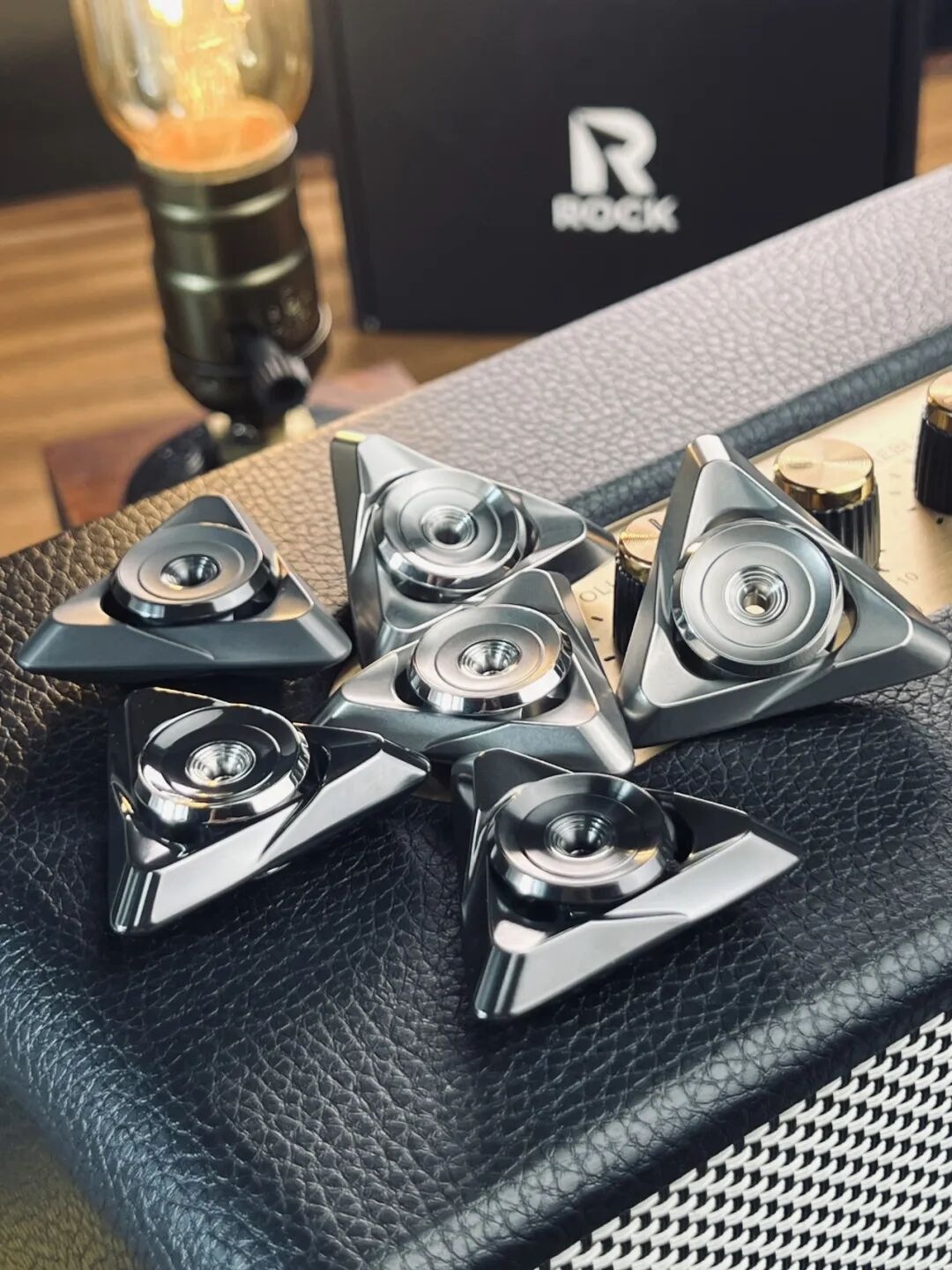
Mechanical Cashew-PRO
$42.16
Your cart is empty :(
Continue shopping
Lower prices. New tiers. More rewards.
Your cart
Mechanical Cashew-PRO

Precept

Ding Ding Fidget Slider

Mechanic-C Spy Wars Series Ring
 ROCK
Steel, titanium and zirconium opened the September release. November brought tungsten alloy, Damascus and four Zircuti treatments, all sharing the interleaved three-wing profile.
Ling Guang is Rock’s interleaved three-wing fingertip spinner. Its six launch configurations share a 50.5 mm spin diameter. Rock gives 52 g for steel, 31 g for titanium and 44 g for zirconium. Six November material and finish combinations bring the pictured studio catalogue to twelve.
TRB Creation · 2026-11-25
| Studio | Rock |
|---|---|
| Pictured configurations | 12 of 12 studio configurations pictured |
| Photographed features | Pierced caps and side profile |
| Host materials | Stainless steel, Titanium, Zirconium, Tungsten alloy, Maker-described Damascus, Zircuti |
On August 20, 2025, Rock previewed a three-wing design developed through more than six months of prototypes. Its September 13 announcement scheduled six configurations for September 15 at 20:00. The November 3 update recorded tungsten alloy, Damascus, two temperature-treated Zircuti versions and two surprise Zircuti finishes.
Rock’s September release and November material update identify twelve complete configurations. The photographs pair maker-documented finishes with studio or named TRB specimens.
Steel, titanium and zirconium opened the September release. November brought tungsten alloy, Damascus and four Zircuti treatments, all sharing the interleaved three-wing profile.
No matching configuration. Clear the search or reset filters.
Pinch the center caps and flick one wing. The three interleaved arms rotate around the grip, while a side view reveals the height difference between each pierced face insert and its supporting cap.
Rest the finger pads on the round central caps, leaving the three outer wings clear.
Rest the finger pads on the round central caps, leaving the three outer wings clear.
Interleaved three-wing profile, pierced caps and rotation axis
On August 20, 2025, Rock previewed a three-wing design developed through more than six months of prototypes. Its September 13 announcement scheduled six configurations for September 15 at 20:00. The November 3 update recorded tungsten alloy, Damascus, two temperature-treated Zircuti versions and two surprise Zircuti finishes.
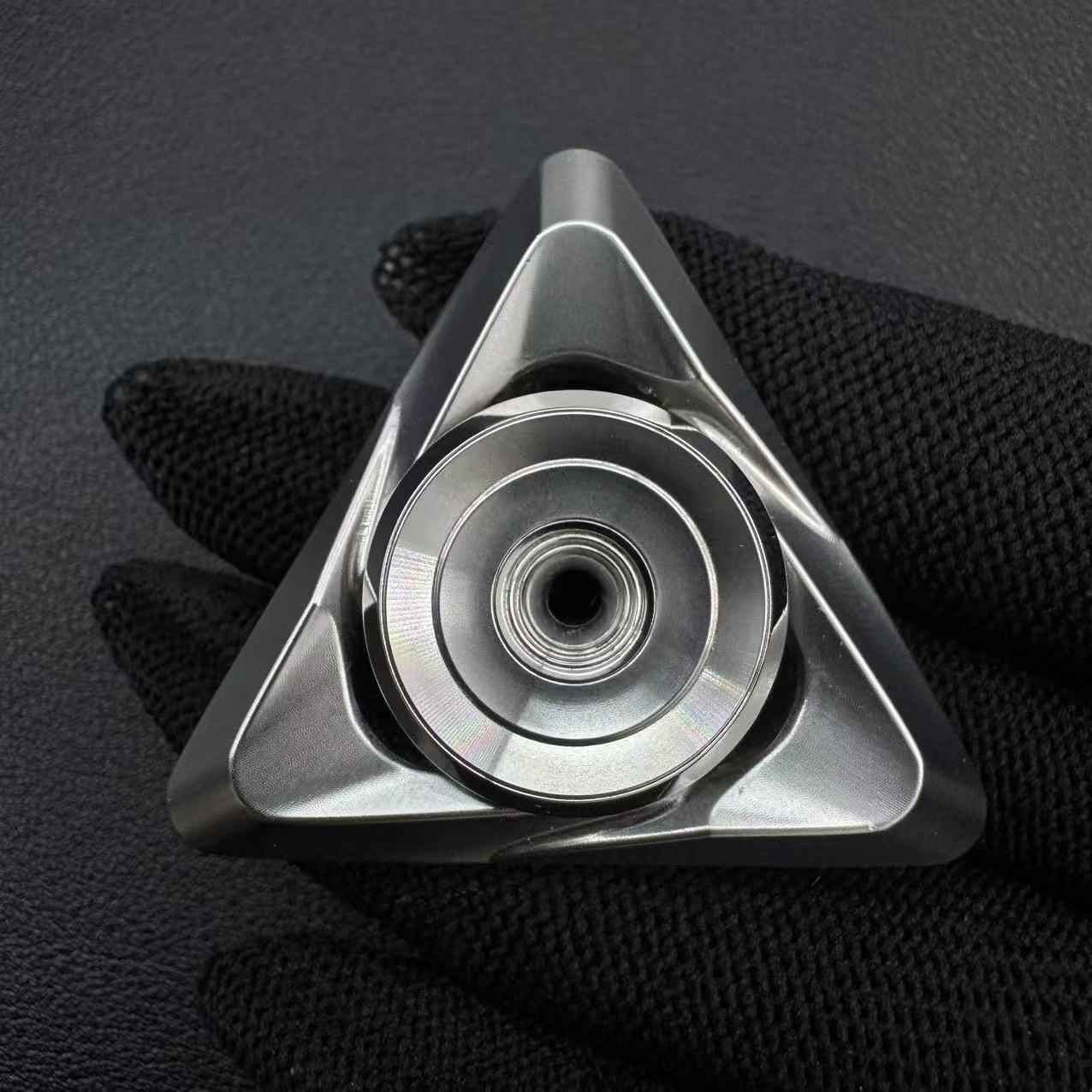
The wing facets form continuous bright edges, with fine machining lines across the broad faces.
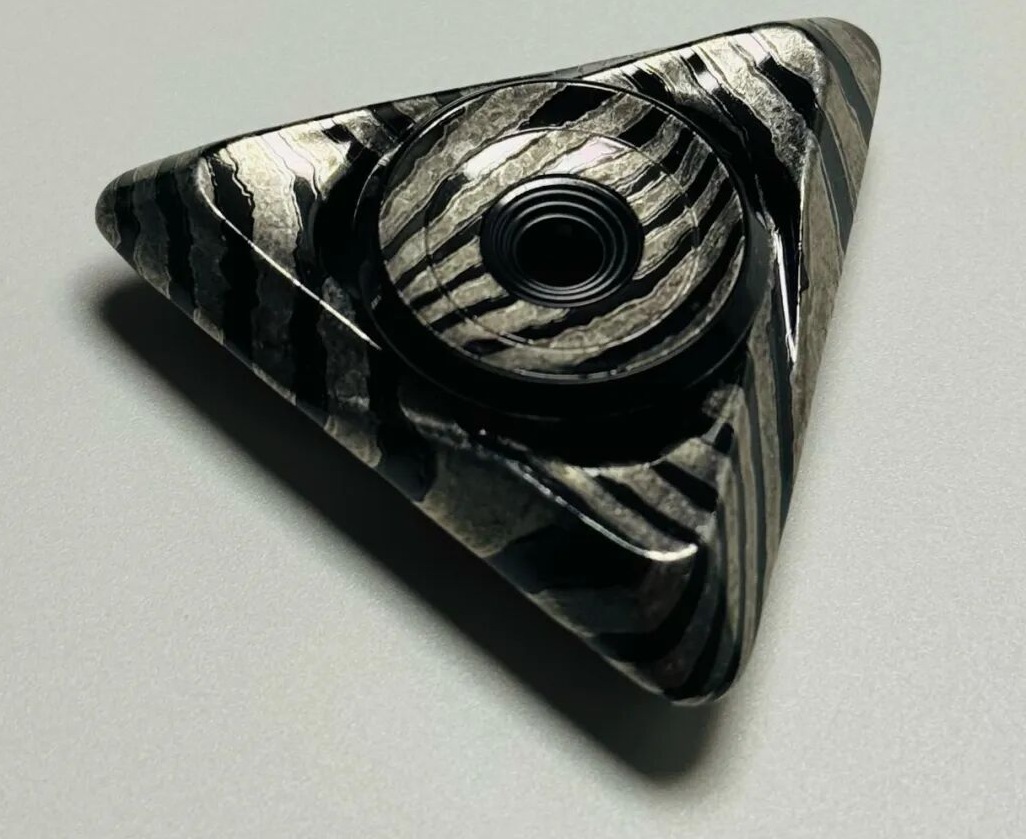
Pale and dark bands remain visible along the changing planes of the three wings.
Two studio detail views show the pierced insert caps and the layered side profile. Both features belong to the complete spinner.
Compare body material and finish against the individual photographs.
The September 2025 release assigns a weight to each metal and a run size to each finish.
The November 3 update labels these four material or finish options in individual images.
Rock describes anodized and black-and-white as the two surprise Zircuti versions.
Beyond the verified configurations in this guide, the following clues and cross-family mentions are tracked separately:
Two studio detail views show the pierced insert caps and the layered side profile. Both features belong to the complete spinner.
Select an accessory to open its related host record.
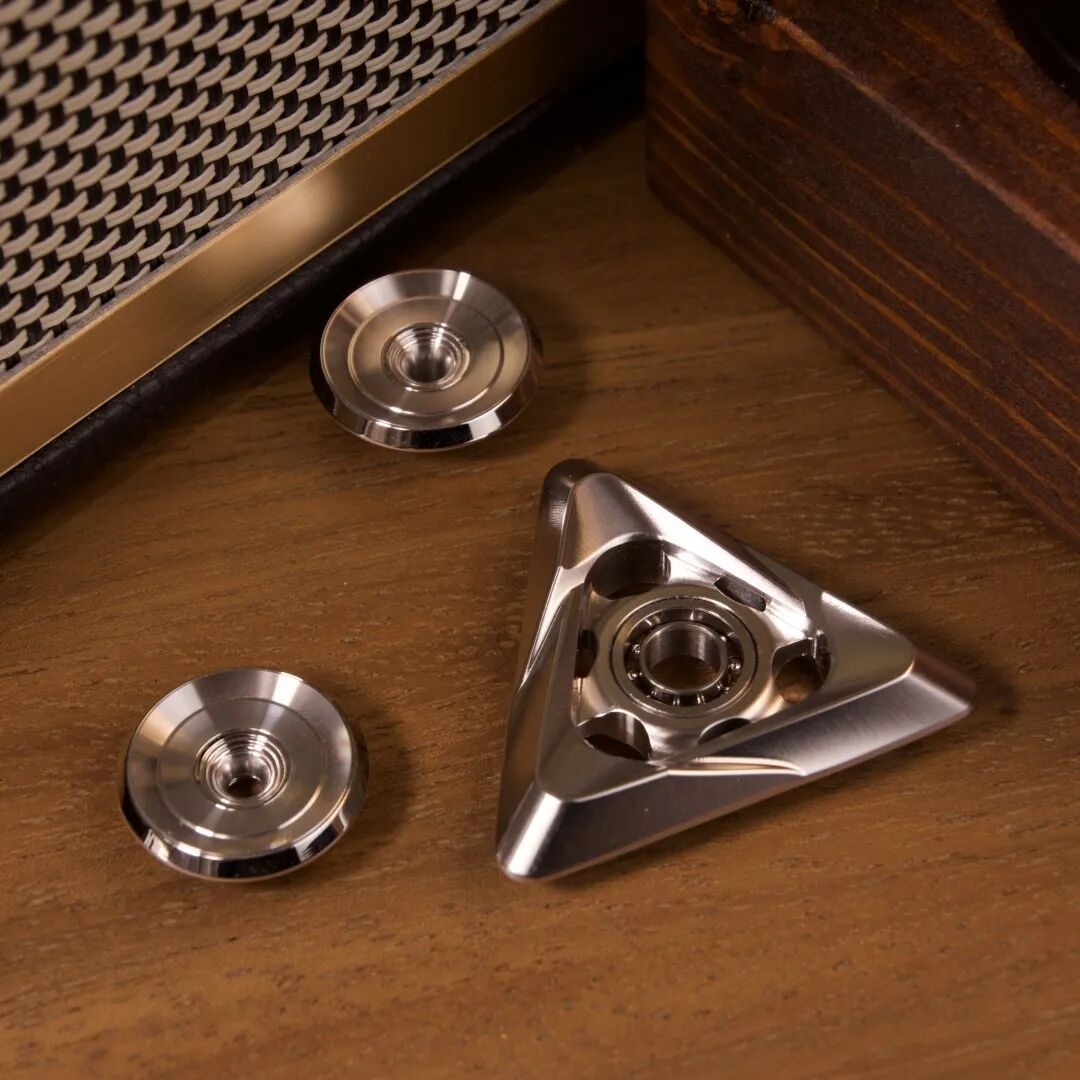 ANATOMYPierced insert finger capsThe studio close-up shows holes in the insert and the cap underneath; each level reflects the light differently.View related record ↗
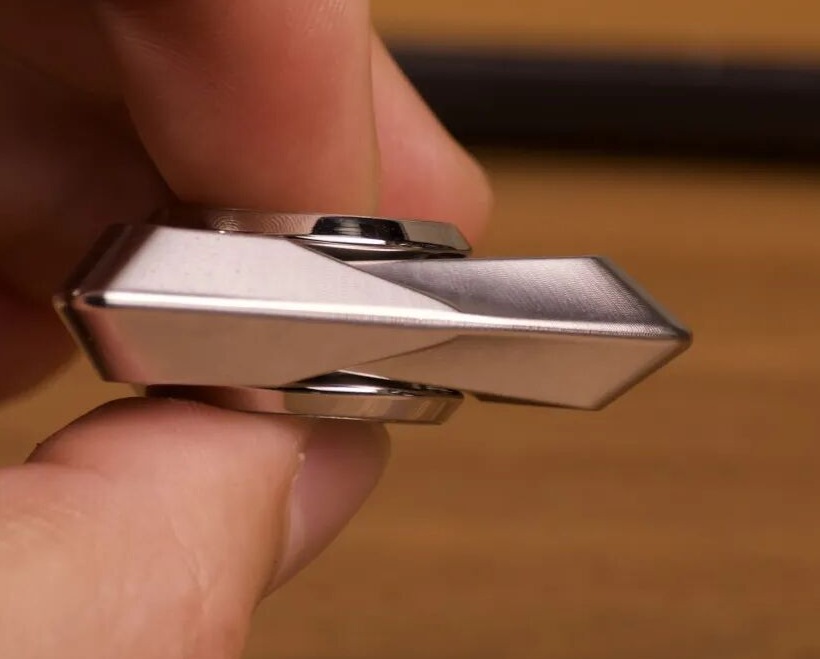 ANATOMYInterleaved wings in profileThe side view separates the raised center cap, insert edge and thickness of the tri-wing body.View related record ↗
The equally heavy stonewashed steel disperses light across a matte texture. The wing facets form continuous bright edges, with fine machining lines across the broad faces. Compare with Stonewashed stainless steel.
Named configuration in the studio release, illustrated by the corresponding TRB consignment specimen. · The wing facets form continuous bright edges, with fine machining lines across the broad faces.
Studio announcementThe titanium option shares the stonewashed finish and is listed 21 g lighter. Fine speckling covers the silver-gray wings while their facets remain visible. Compare with Stonewashed titanium.
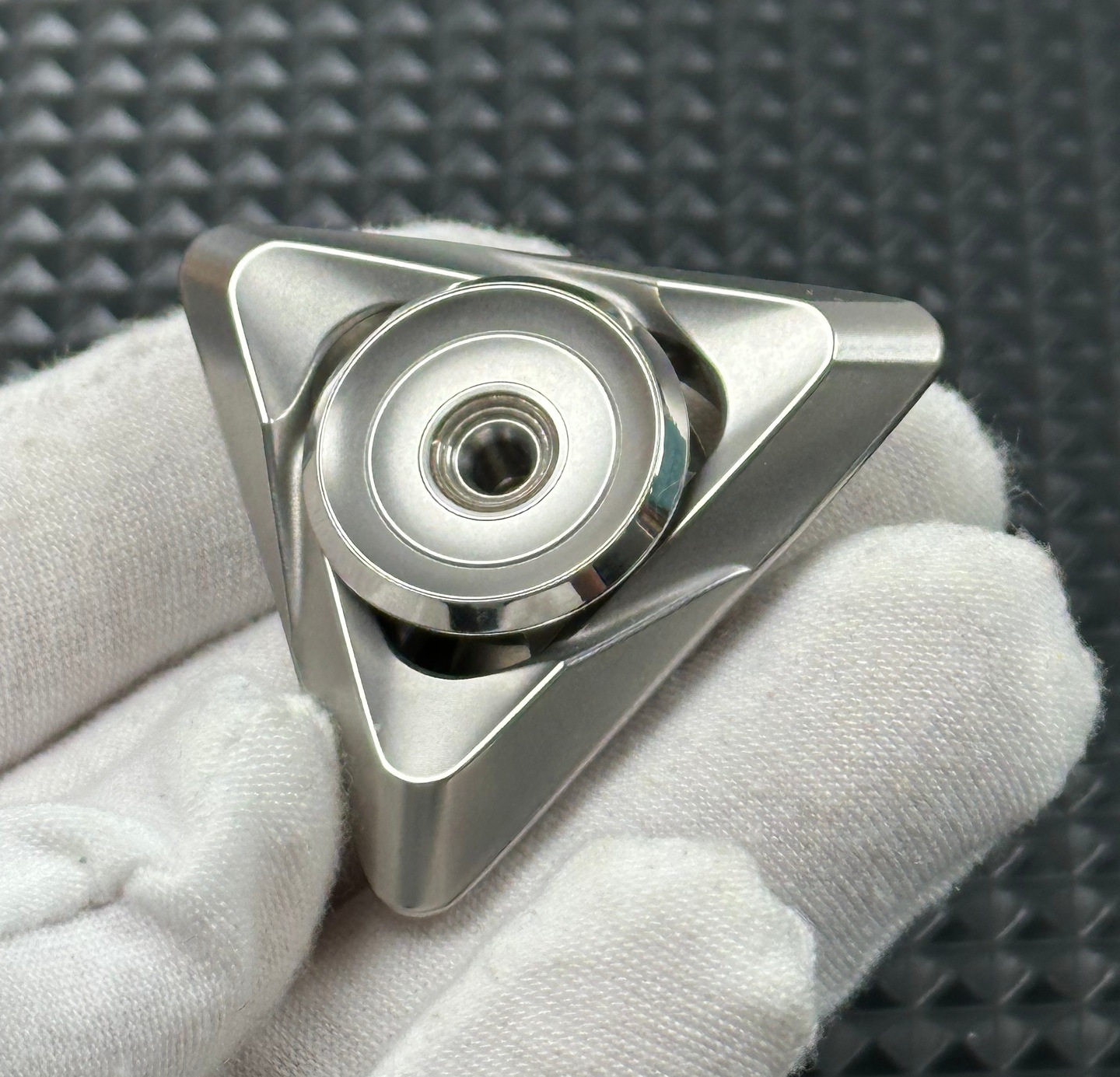
Named configuration in the studio release, illustrated by the corresponding TRB consignment specimen. · Fine speckling covers the silver-gray wings while their facets remain visible.
Studio announcementPolished zirconium shows much sharper reflections along the facets. The specimen in Rock’s titanium section has a light gray matte finish across both caps and wings. Compare with Polished zirconium.
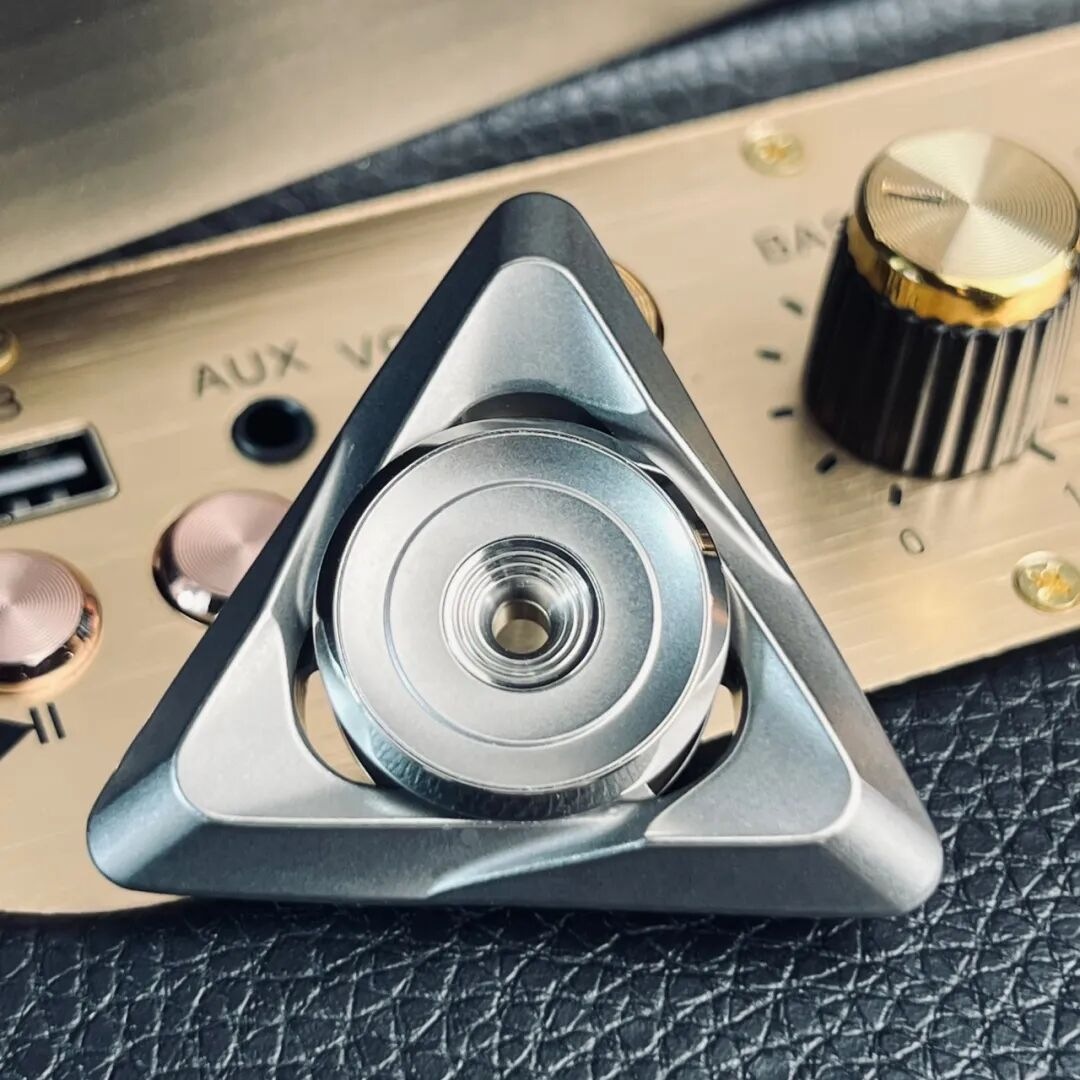
Maker release photograph and adjacent configuration label. · The specimen in Rock’s titanium section has a light gray matte finish across both caps and wings.
Studio announcementStonewashed zirconium retains the listed 44 g weight with softer highlights. The polished wings reflect sharply defined light and dark areas all the way to the central cap. Compare with Stonewashed zirconium.
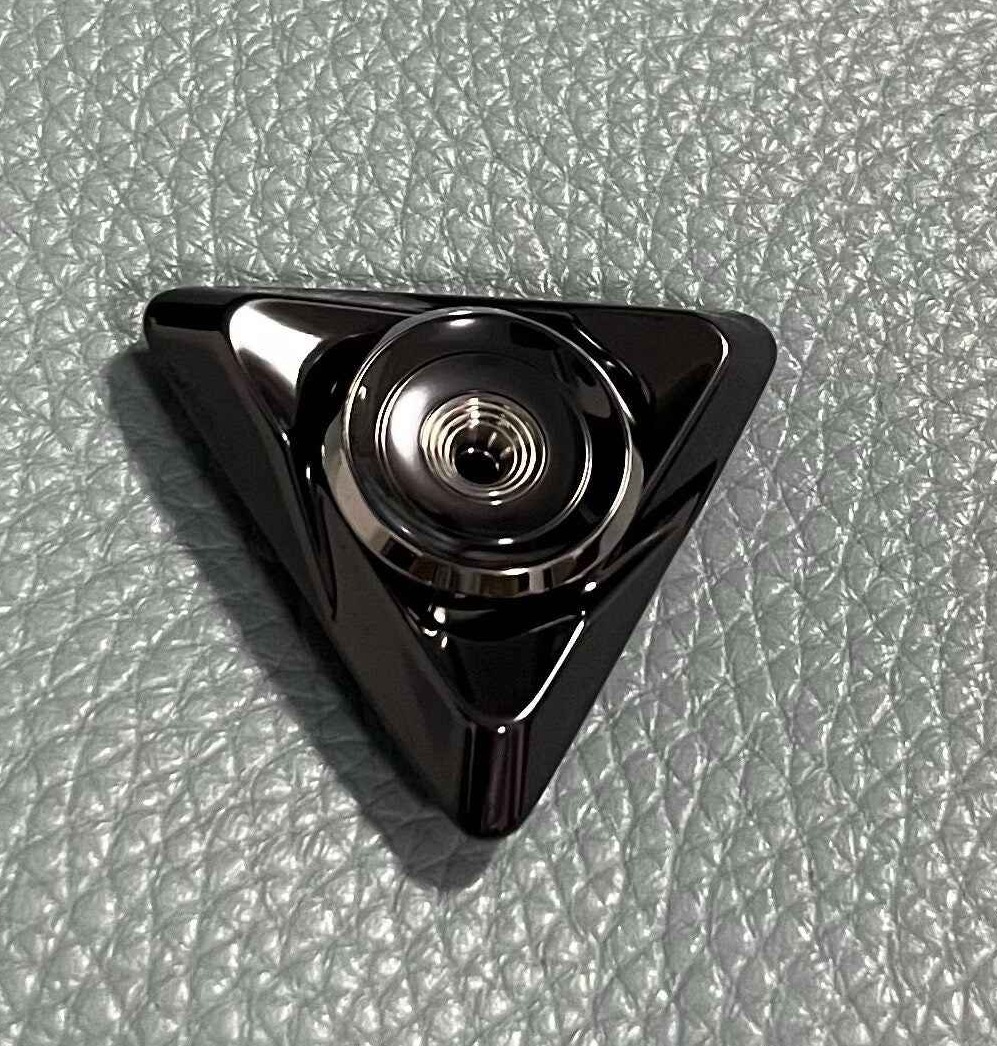
Named configuration in the studio release, illustrated by the corresponding TRB consignment specimen. · The polished wings reflect sharply defined light and dark areas all the way to the central cap.
Studio announcementMachined zirconium retains directional tool marks on the wings. The example in Rock’s zirconium section has darker gray wings with a diffuse stonewashed surface. Compare with Machined zirconium.
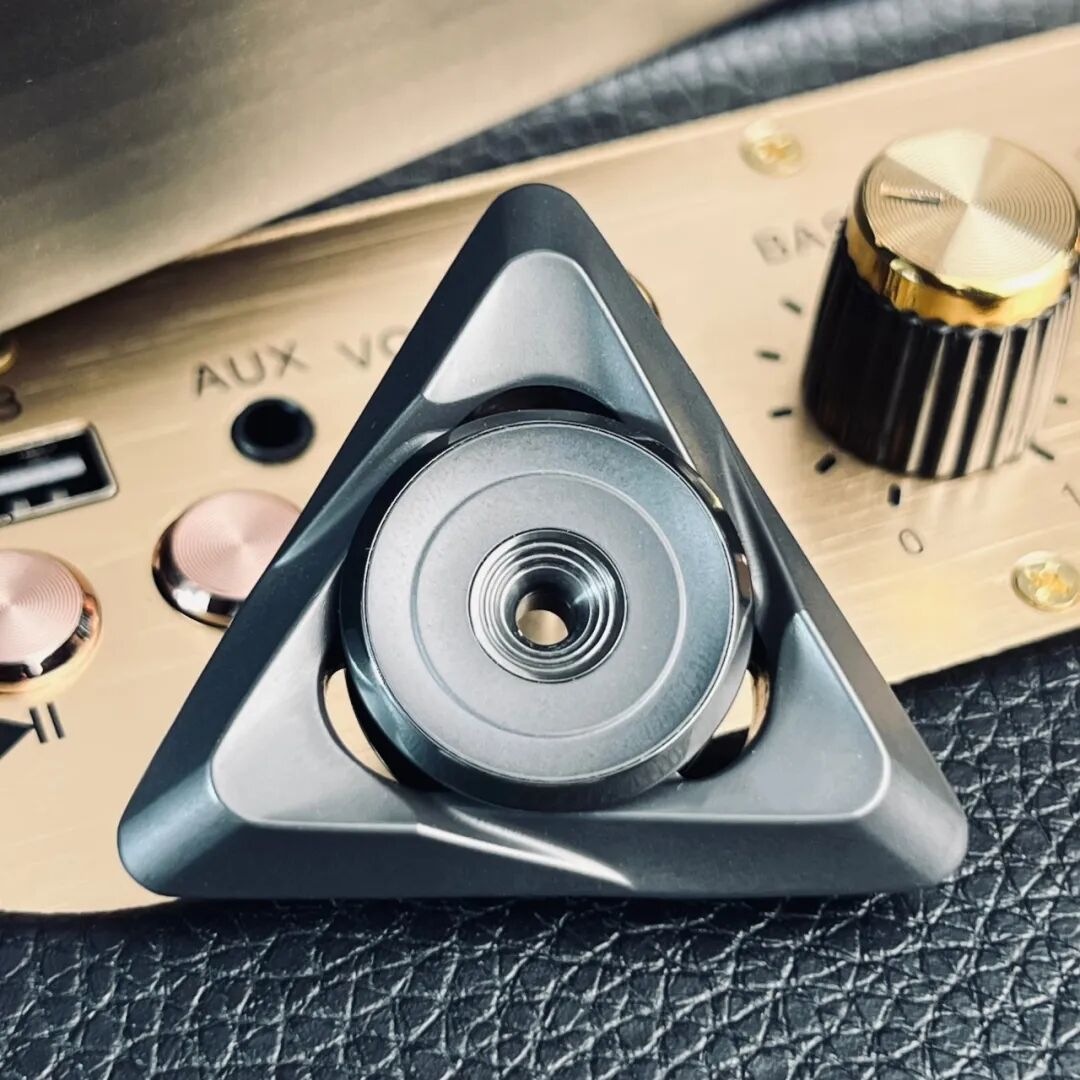
Maker release photograph and adjacent configuration label. · The example in Rock’s zirconium section has darker gray wings with a diffuse stonewashed surface.
Studio announcementThe November tungsten-alloy specimen is identified in a separate maker-labeled photograph. Directional machining distinguishes each broad wing from its inner sloping face. Compare with Tungsten alloy.
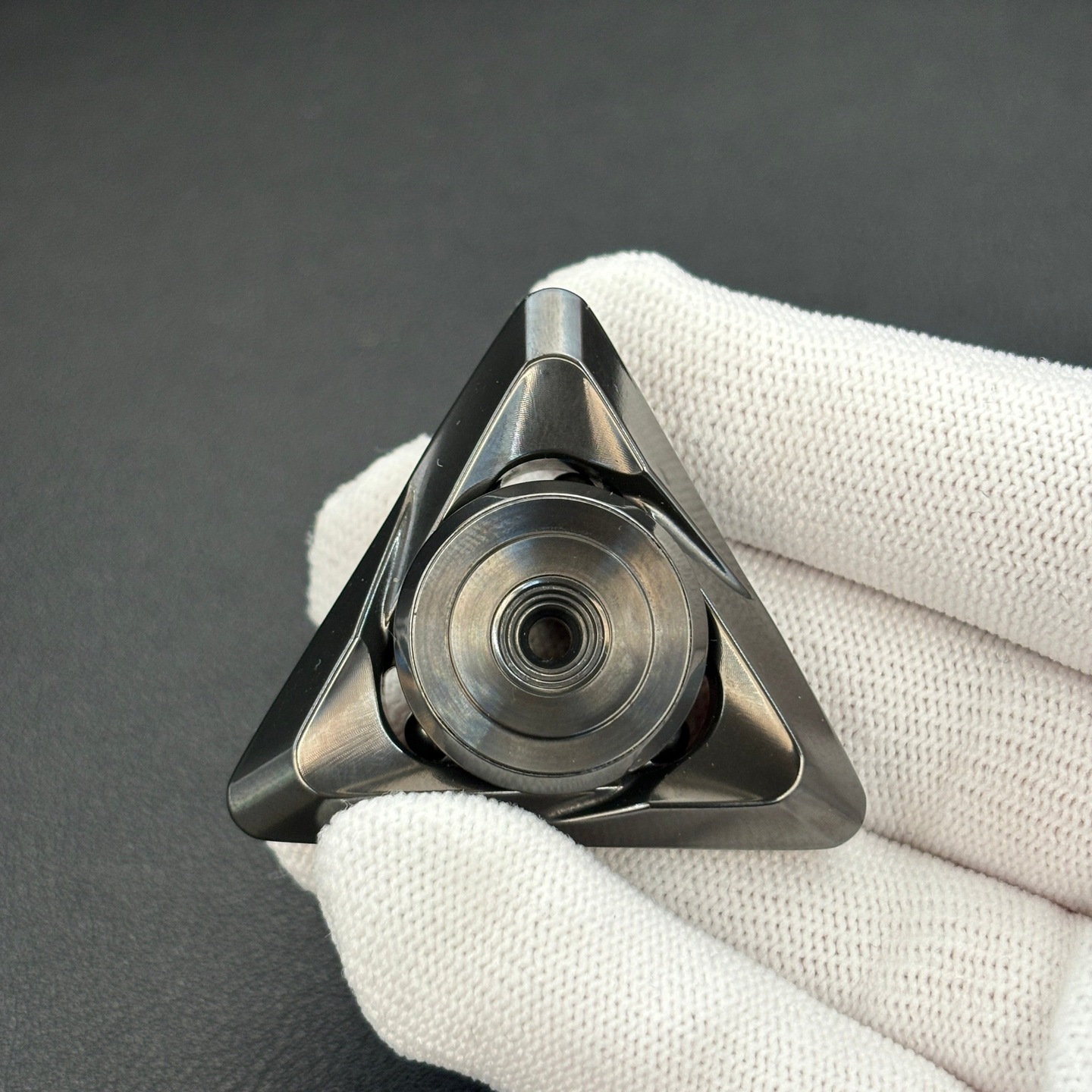
Named configuration in the studio release, illustrated by the corresponding TRB consignment specimen. · Directional machining distinguishes each broad wing from its inner sloping face.
Studio announcementOn Damascus, the material pattern runs across the changes in facet angle. The labeled studio photograph shows the three interlocking wings around a round cap and names the tungsten alloy. Compare with Damascus.
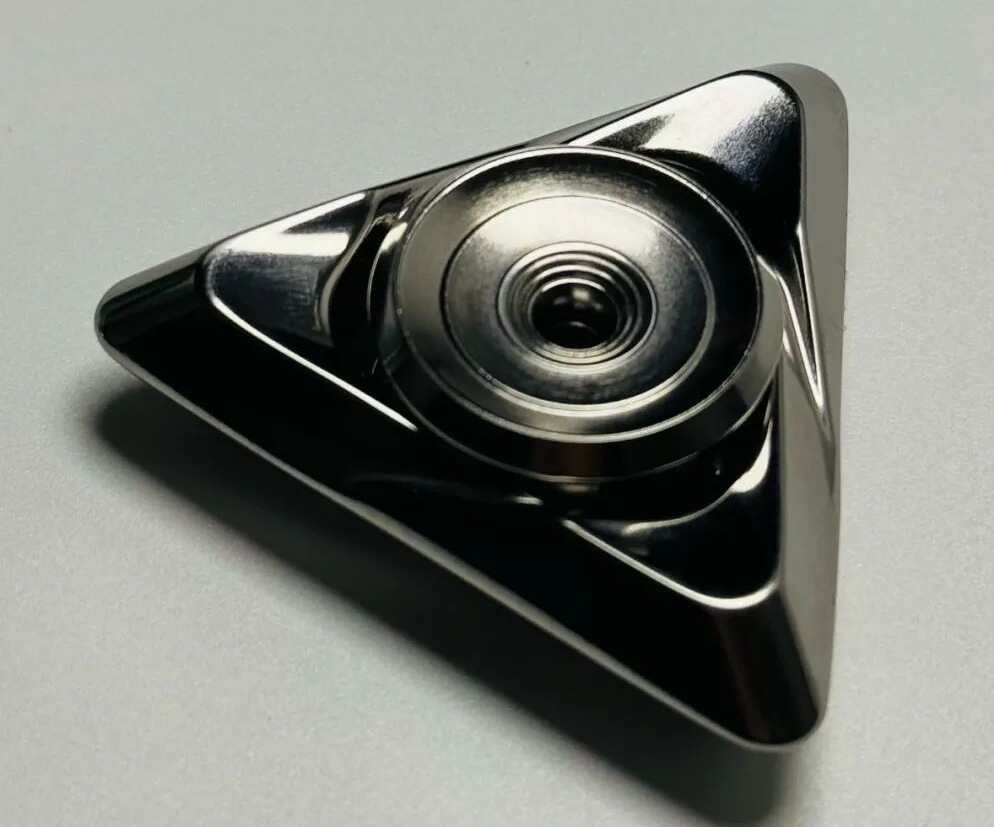
Maker release photograph and adjacent configuration label. · The labeled studio photograph shows the three interlocking wings around a round cap and names the tungsten alloy.
Studio announcementThe maker separately identifies low-temperature Zircuti, which shows a different layered pattern and coloration. Alternating light and dark bands run across the angled facets of each wing. Compare with Low-temperature Zircuti.
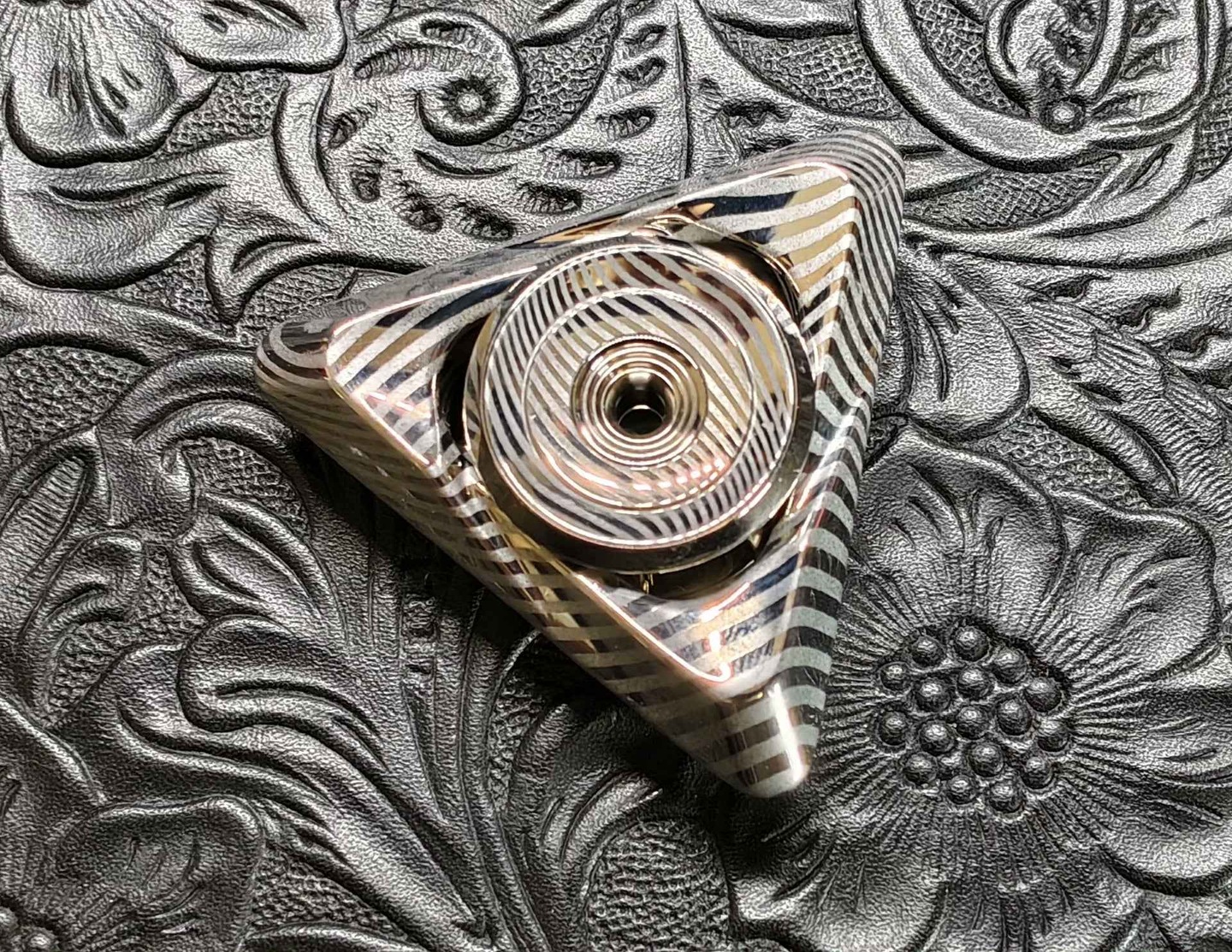
Named configuration in the studio release, illustrated by the corresponding TRB consignment specimen. · Alternating light and dark bands run across the angled facets of each wing.
Studio announcementHigh-temperature Zircuti also has layers; Rock identifies the two treatments on separate specimen images. Distinct material bands extend across all three wings in the maker’s low-temperature image. Compare with High-temperature Zircuti.
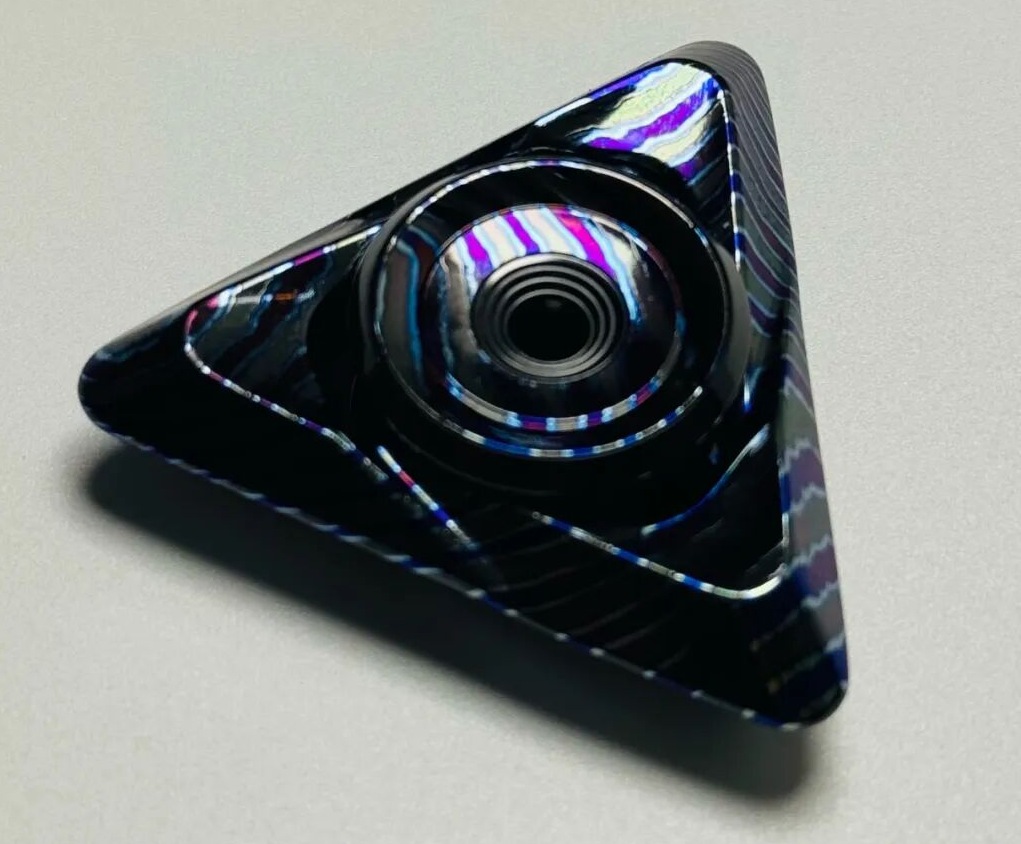
Maker release photograph and adjacent configuration label. · Distinct material bands extend across all three wings in the maker’s low-temperature image.
Studio announcementThe same notice identifies the anodized specimen as a separate surprise treatment. Layering crosses the tips and inner facets in Rock’s photograph of the high-temperature example. Compare with Anodized Zircuti.
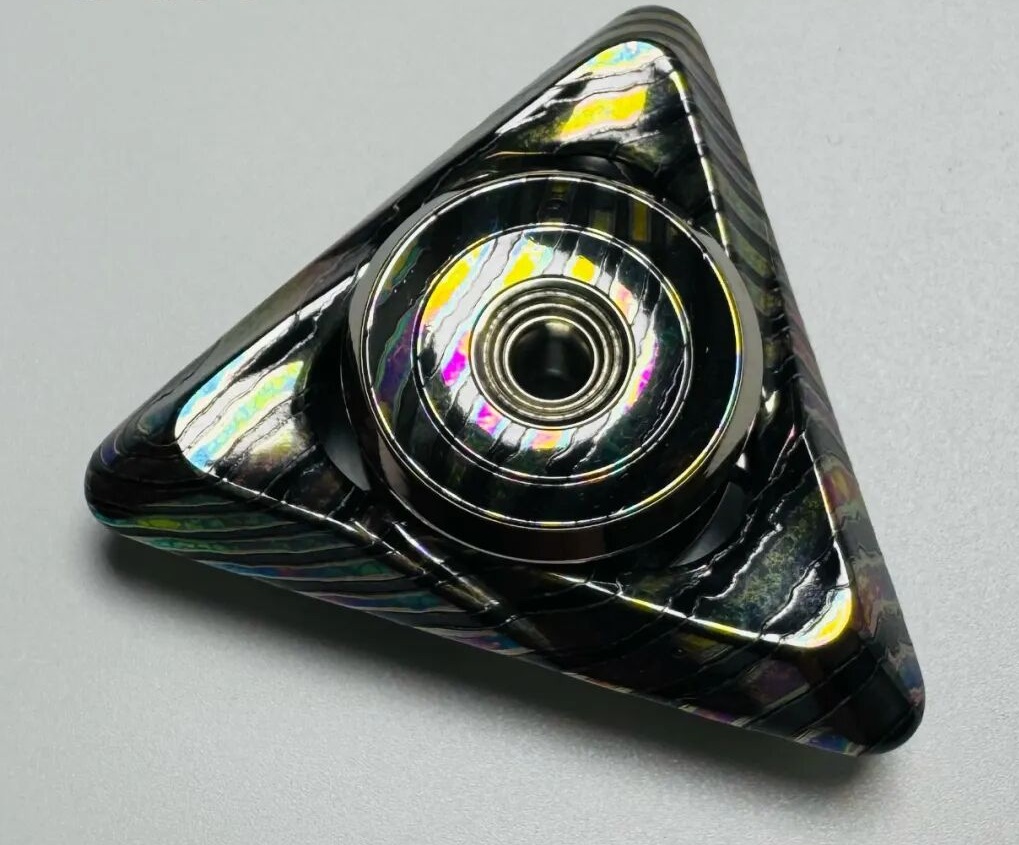
Maker release photograph and adjacent configuration label. · Layering crosses the tips and inner facets in Rock’s photograph of the high-temperature example.
Studio announcementBlack-and-white Zircuti shows the layer pattern in contrasting shades of gray. Color reflections follow the material bands. Rock names this anodized treatment in its Zircuti update. Compare with Black-and-white Zircuti.
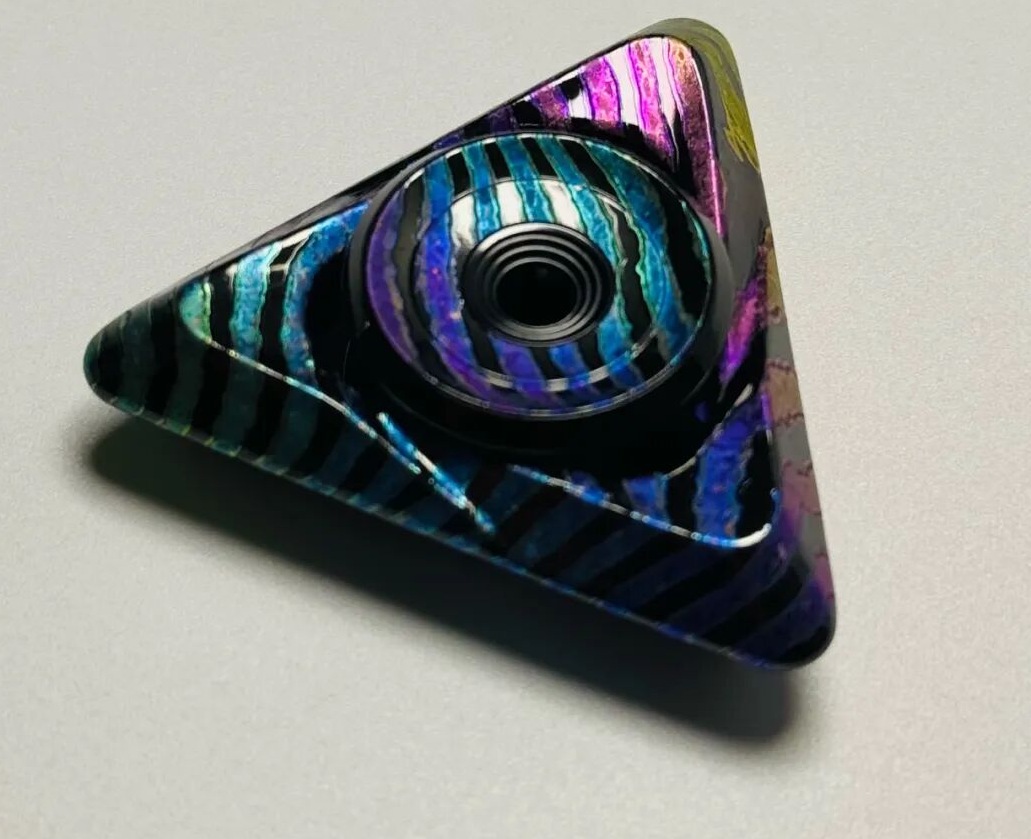
Maker release photograph and adjacent configuration label. · Color reflections follow the material bands. Rock names this anodized treatment in its Zircuti update.
Studio announcementMachined stainless steel shows tool lines without the layered material bands. Pale and dark bands remain visible along the changing planes of the three wings. Compare with Machined stainless steel.
Maker release photograph and adjacent configuration label. · Pale and dark bands remain visible along the changing planes of the three wings.
Studio announcementOn August 20, 2025, Rock previewed a three-wing design developed through more than six months of prototypes. Its September 13 announcement scheduled six configurations for September 15 at 20:00. The November 3 update recorded tungsten alloy, Damascus, two temperature-treated Zircuti versions and two surprise Zircuti finishes.
Rock describes the interleaved body and pierced insert caps.
Enlarge this crop ↗The September 13 notice schedules the six configurations for September 15 at 20:00.
Enlarge this crop ↗Rock’s update records the new materials and names both surprise treatments.
Compare any two verified configurations side by side across standardized fields.
No configurations match. Clear the search to start again.
Share the edition, material, or accessory you are looking for, and include a reference photo or serial number if available.
50.5 mm is the spin diameter, 21.5 mm is the cap diameter, and 12.8 mm is the cap thickness.
Rock’s September release and November material update identify twelve complete configurations. The photographs pair maker-documented finishes with studio or named TRB specimens.
The maker groups the pictures by metal. Titanium is listed at 31 g with 20 stonewashed sets. Zirconium is listed at 44 g with 15 stonewashed sets.
Rock’s September release and November material update identify twelve complete configurations. The photographs pair maker-documented finishes with studio or named TRB specimens.
A named consignment supplies the material description and a physical photograph, while the September and November studio lists do not separately name this item.
Rock’s September release and November material update identify twelve complete configurations. The photographs pair maker-documented finishes with studio or named TRB specimens.