Launch polymers
Two PEI colors and two PEEK colors opened the series.
Your cart is empty :(
Continue shopping
Lower prices. New tiers. More rewards.
Your cart
 KAIS
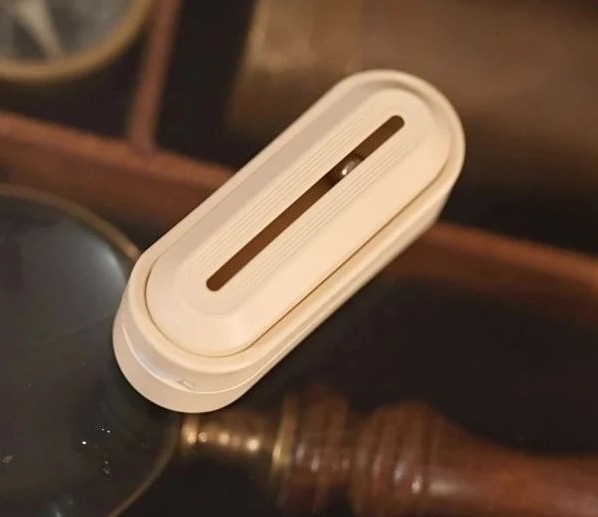
A long window frames the magnetic ball in this beige PEEK launch specimen. Its rebound adds a second, distinct sensation to the fine detents inherited from RUYI-S.
TRB Creation · 2026-11-19
| Studio | KAIS |
|---|---|
| Documented hosts | 6 |
| Parts and anatomy records | 3 |
| Host materials | PEEK, PEI, Zirconium and titanium, Titanium |
KAiS showed an early sample at the Greater Bay Area gathering in April 2025 and took a revised build to the Shanghai show. Four polymer editions went on sale on August 4. The June 20, 2026 release introduced stonewashed titanium on a zirconium body and laser-engraved DLC on titanium.
Two signed KAiS release notices, the launch edition plate, studio-shop options and individual specimens.
A long window frames the magnetic ball in this beige PEEK launch specimen. Its rebound adds a second, distinct sensation to the fine detents inherited from RUYI-S.
No matching configuration. Clear the search or reset filters.
Two distinct cues share a thumb stroke on RUYI RS. The ultra-dense track inherited from RUYI-S gives a series of closely spaced detents. A magnetic ball rebounds in the long center window. KAiS described mechanical-only, ball-only and combined feedback.
Seams divide the side wall. The long viewing window distinguishes RS from the closed face of RUYI-S.
Seams divide the side wall. The long viewing window distinguishes RS from the closed face of RUYI-S.
Magnetic-ball window and ultra-dense track
KAiS showed an early sample at the Greater Bay Area gathering in April 2025 and took a revised build to the Shanghai show. Four polymer editions went on sale on August 4. The June 20, 2026 release introduced stonewashed titanium on a zirconium body and laser-engraved DLC on titanium.
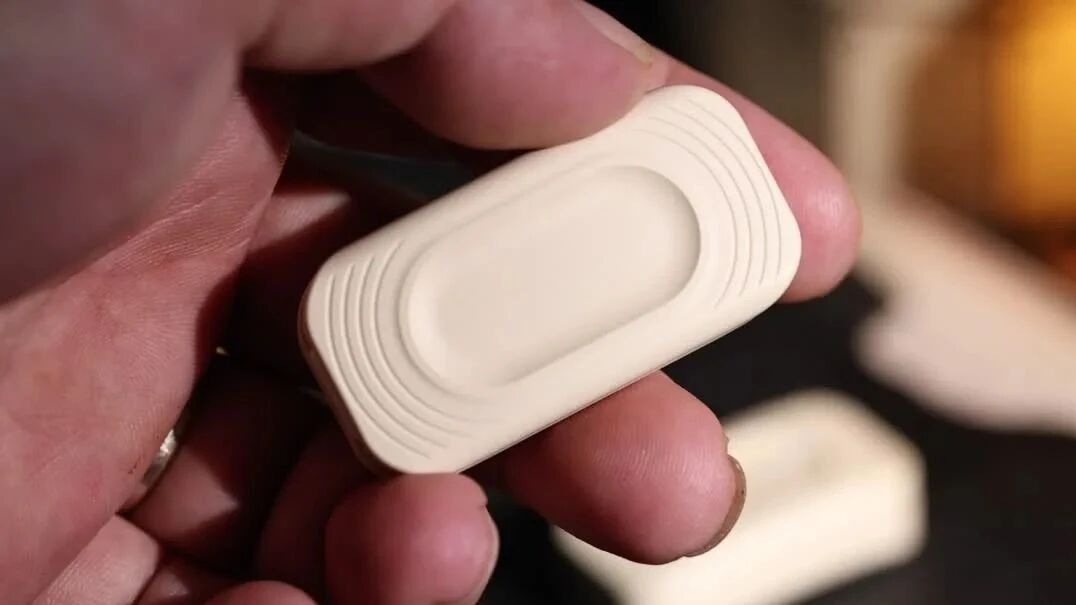
The milky face frames a long window with narrow concentric lines. The studio identified German stock for the first issue and named 770G for a future material change.
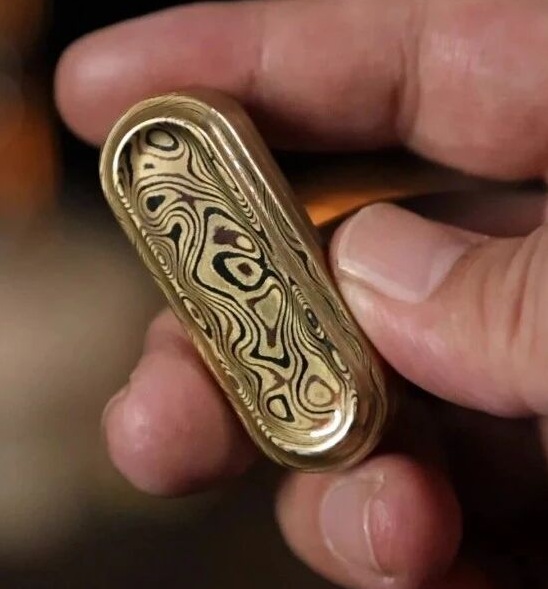
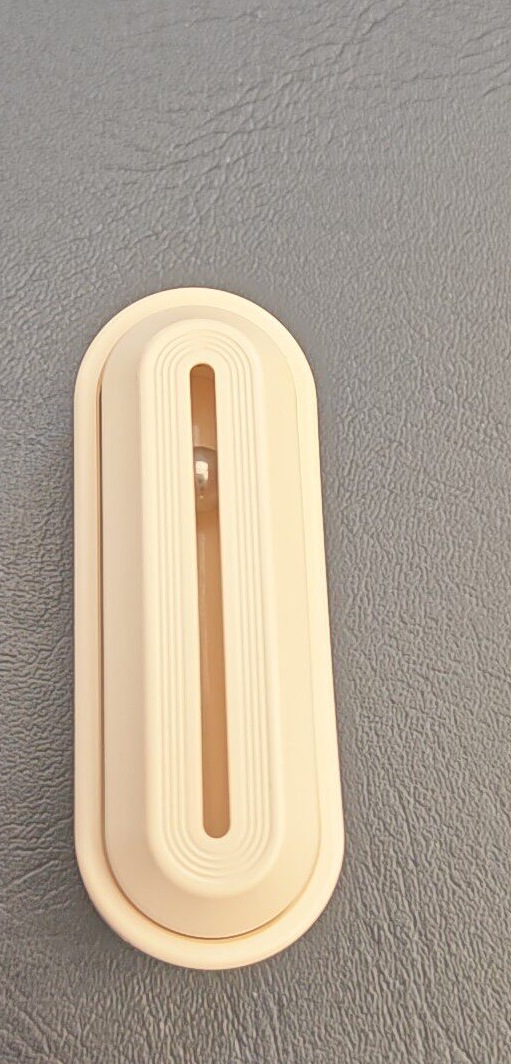
Irregular bright webbing runs across the black DLC faces and edges. The studio announced 49 g in its release text and printed 46 g on the photograph. It gave no weighing conditions.
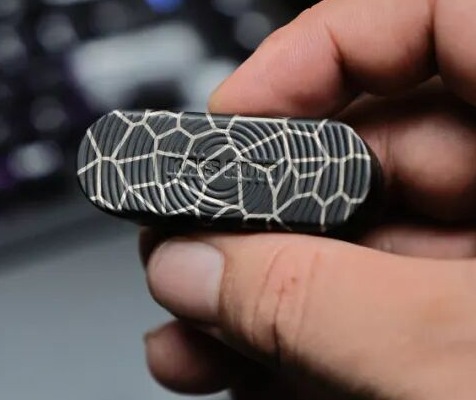
Three specimen photographs show the recessed guides, magnetic-ball window and metal track. The collector notes identify the parts KAiS offered separately.
Compare body material and finish against the individual photographs.
Two PEI colors and two PEEK colors opened the series.
The June 2026 release paired a black DLC titanium issue with a zirconium body carrying a titanium cover.
Beyond the verified configurations in this guide, the following clues and cross-family mentions are tracked separately:
Three specimen photographs show the recessed guides, magnetic-ball window and metal track. The collector notes identify the parts KAiS offered separately.
Select an accessory to open its related host record.
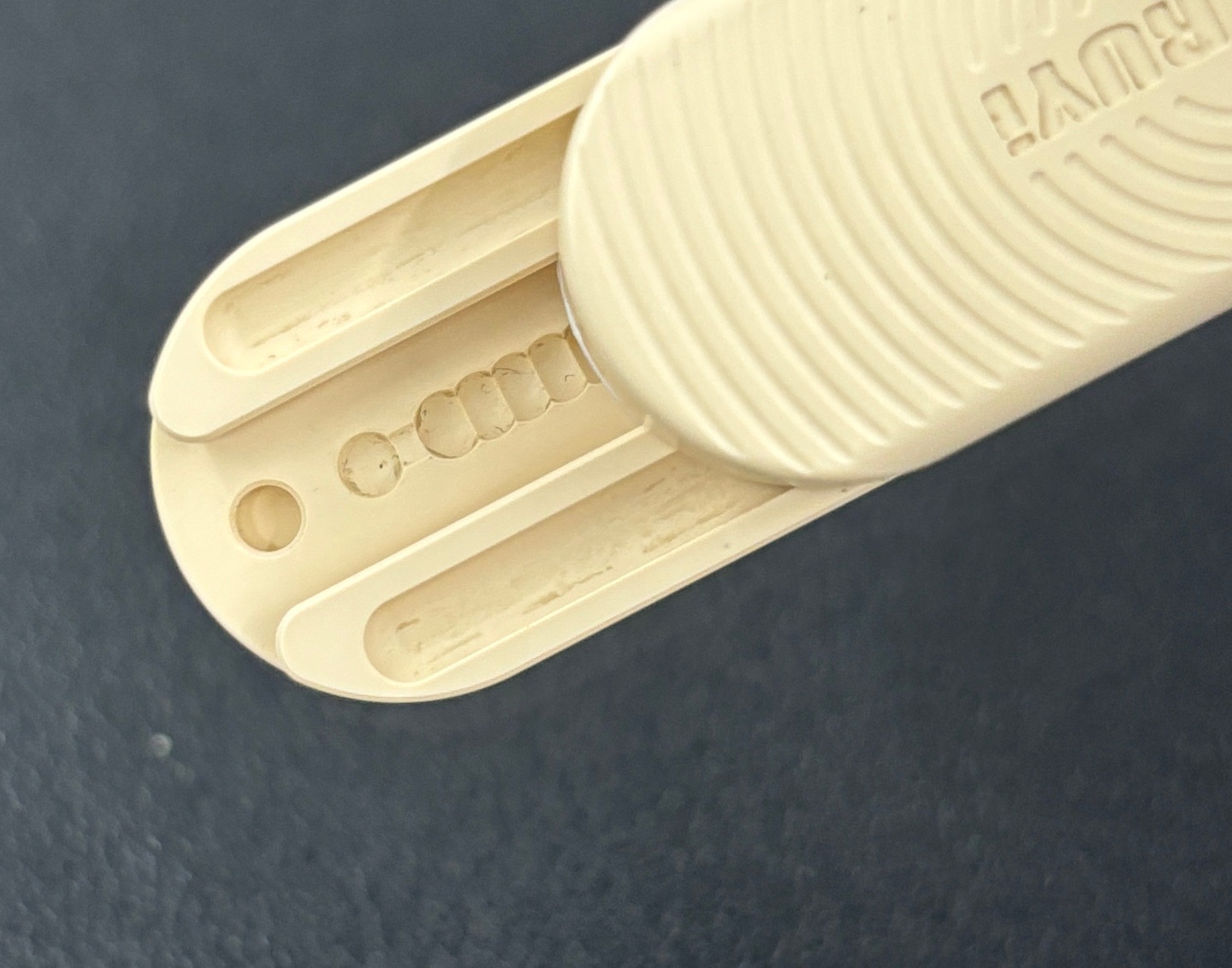 ANATOMYRecessed Track in Beige PEEKThe displaced face exposes the twin grooves and central detents of a beige specimen. KAiS listed a PEEK base separately and used the same complete-host photograph for both options.View related record ↗
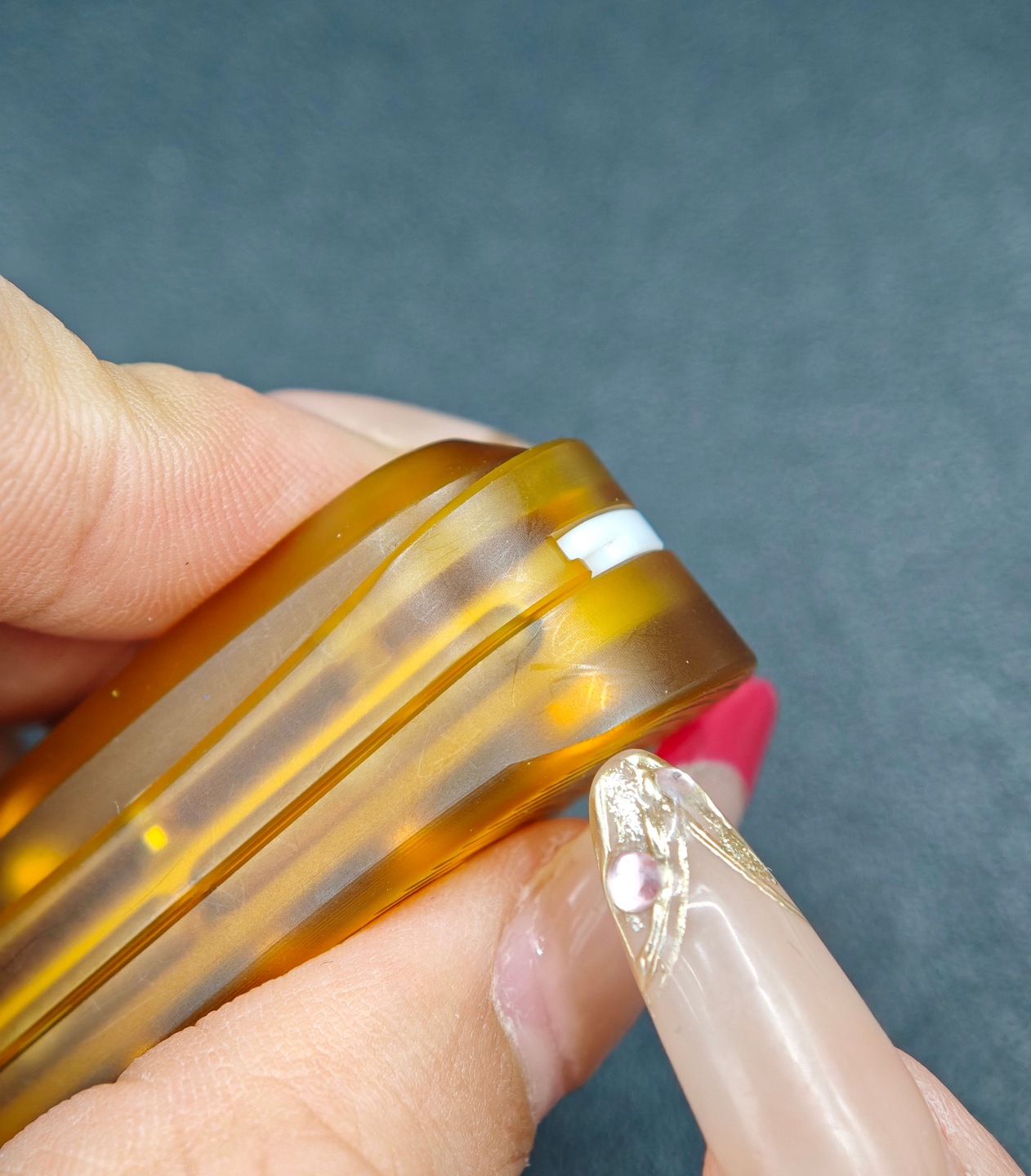 ANATOMYAmber Magnetic-Ball WindowThe translucent wall reveals the ball window and a reflection between layers. Both studio release articles specify a 5 mm ball in the finished design.View related record ↗
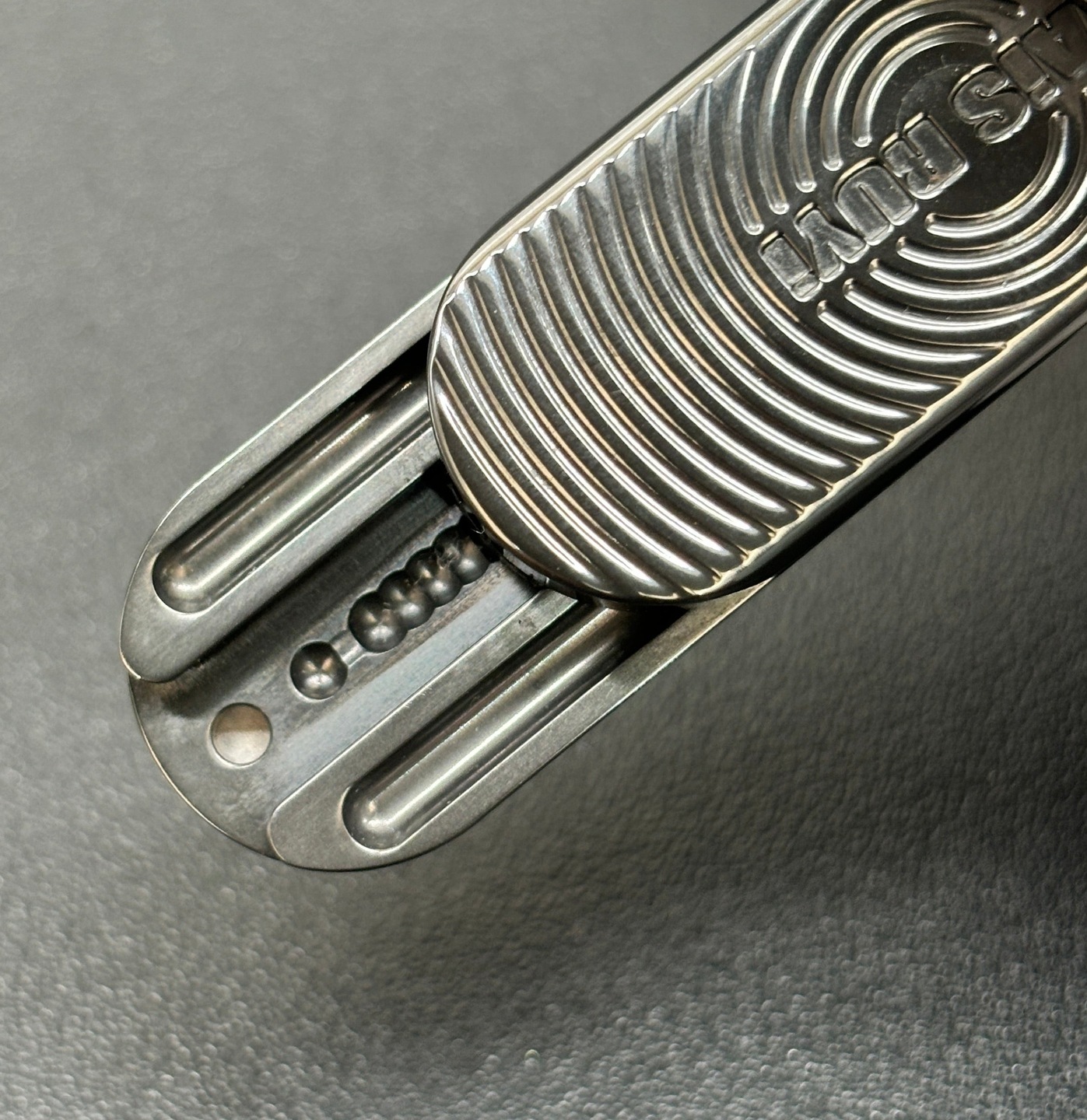 ANATOMYZirconium Host Interior TrackThe opened zirconium specimen exposes parallel guides beside a row of ball seats. The photograph shows the structure within a complete host.View related record ↗
[Compare with: Black PEEK] PEEK / Milky beige. How to recognize: The milky face frames a long window with narrow concentric lines. The studio identified German stock for the first issue and named 770G for a future material change. (Source note: Beige PEEK).
KSEDC studio release and identified specimen · Single-edition photograph
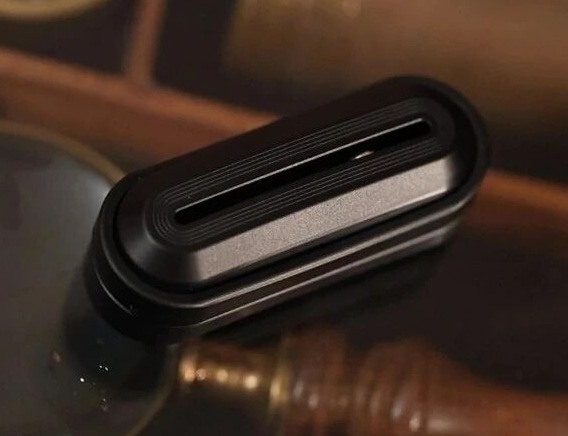
Official source · KSEDC studio release and identified specimen[Compare with: Amber PEI] PEEK / Opaque black. How to recognize: The studio film pairs this opaque slotted shell with its black PEEK caption. Black PEI shares the outline, so the material label or original box carries more information than its shade. (Source note: Black PEEK).
KSEDC studio release and identified specimen · Single-edition photograph
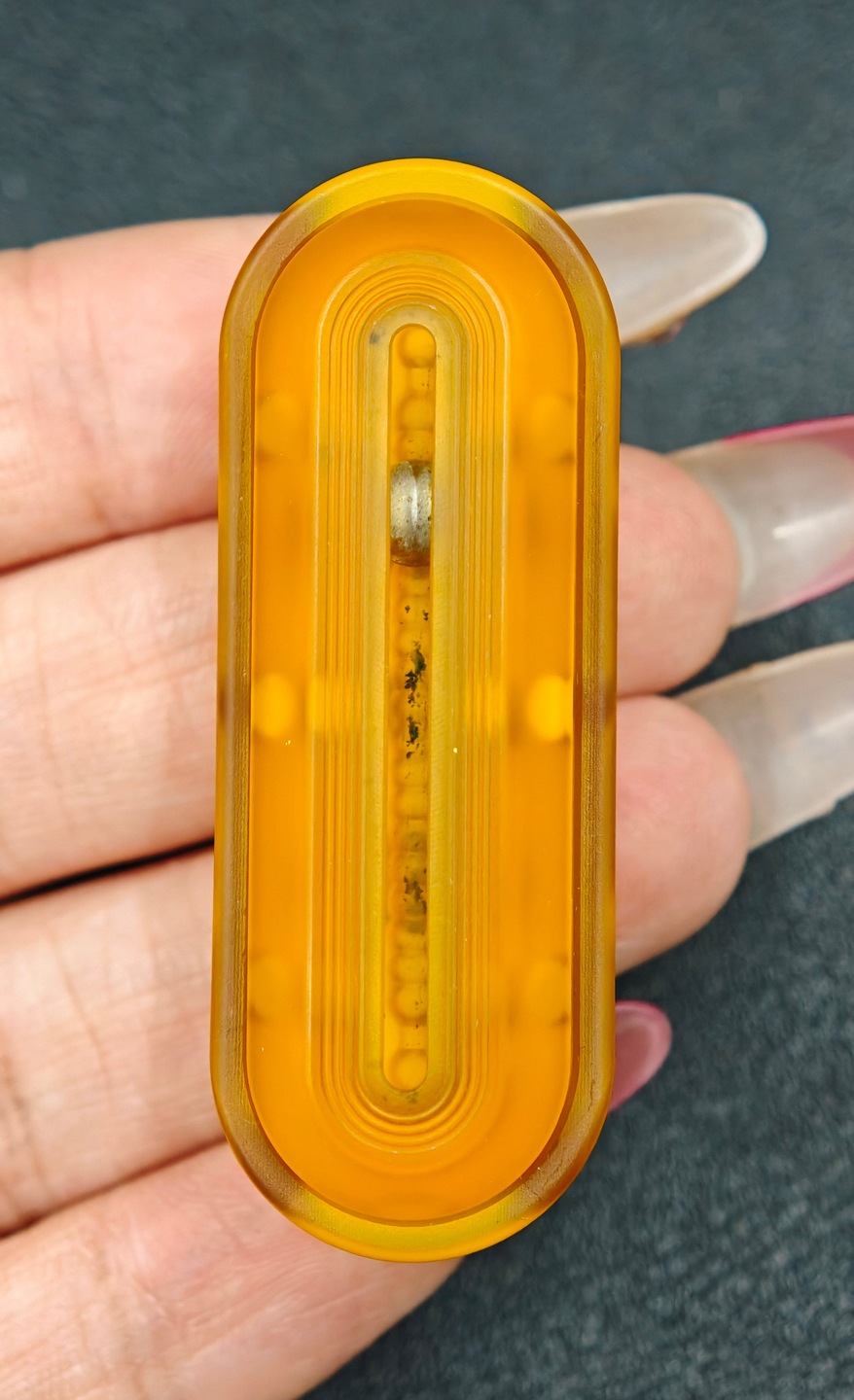
Official source · KSEDC studio release and identified specimen[Compare with: Black PEI] PEI / Translucent amber. How to recognize: The translucent amber shell reveals the outlines of the center and both ends. It is the only transparent combination on the four-edition launch plate. (Source note: Amber PEI).
KSEDC studio release and identified specimen · Single-edition photograph
Official source · KSEDC studio release and identified specimen[Compare with: Black Zirconium, Stonewashed Titanium Cap] PEI / Opaque black. How to recognize: KAiS placed this demonstration beside the black PEI description. Its reverse shows the concentric grip grooves shared by both opaque polymer versions. (Source note: Black PEI).
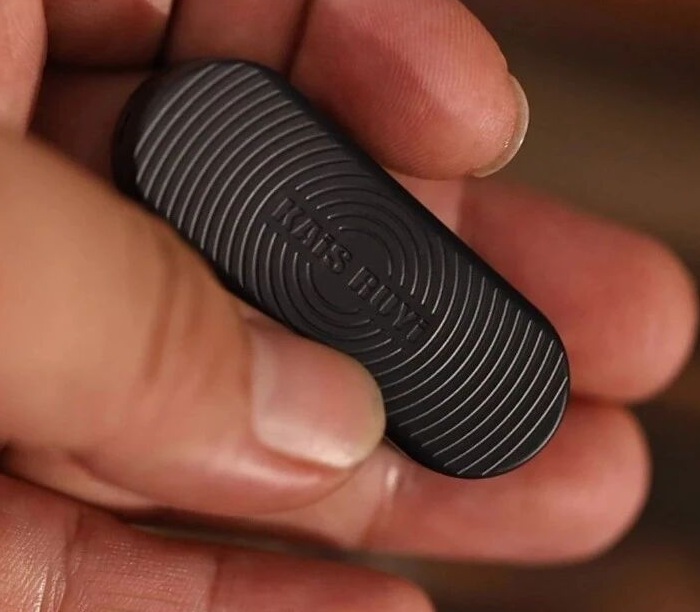
KSEDC studio release and identified specimen · Single-edition photograph
Official source · KSEDC studio release and identified specimen[Compare with: Laser-Engraved Black DLC Titanium] Zirconium and titanium / Heat-blacked polished body, stonewashed cap. How to recognize: A pale stonewashed titanium cap surrounds the long ball window. Its dark rim is polished, heat-blacked zirconium. KAiS selected titanium for a lighter cover with a textured grip. (Source note: Black Zirconium, Stonewashed Titanium Cap).
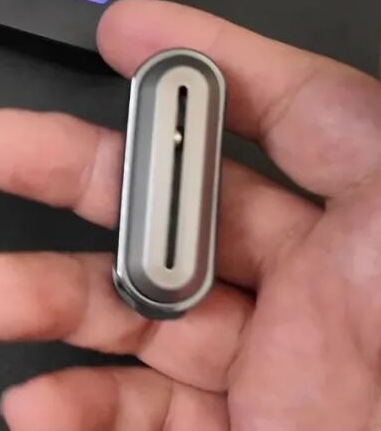
KSEDC studio release and identified specimen · Single-edition photograph
Official source · KSEDC studio release and identified specimen[Compare with: Beige PEEK] Titanium / Black DLC with laser engraving. How to recognize: Irregular bright webbing runs across the black DLC faces and edges. The studio announced 49 g in its release text and printed 46 g on the photograph. It gave no weighing conditions. (Source note: Laser-Engraved Black DLC Titanium).
KSEDC studio release and identified specimen · Single-edition photograph
Official source · KSEDC studio release and identified specimenKAiS showed an early sample at the Greater Bay Area gathering in April 2025 and took a revised build to the Shanghai show. Four polymer editions went on sale on August 4. The June 20, 2026 release introduced stonewashed titanium on a zirconium body and laser-engraved DLC on titanium.
The milky face frames a long window with narrow concentric lines. The studio identified German stock for the first issue and named 770G for a future material change.
Enlarge this crop ↗A pale stonewashed titanium cap surrounds the long ball window. Its dark rim is polished, heat-blacked zirconium. KAiS selected titanium for a lighter cover with a textured grip.
Compare any two verified configurations side by side across standardized fields.
No configurations match. Clear the search to start again.
Share the edition, material, or accessory you are looking for, and include a reference photo or serial number if available.
The studio plate lists 159 per PEI color and 199 per PEEK color. Its sale notice gives 120 ready pieces of each color, with dealer and VIP reservations further reducing the online allocation.
Two signed KAiS release notices, the launch edition plate, studio-shop options and individual specimens.
The June 2026 announcement gives 49 g in the text and 46 g on the titanium photograph. Both sources list 59 g for the zirconium body with titanium cover.
Two signed KAiS release notices, the launch edition plate, studio-shop options and individual specimens.
KAiS called RS the third RUYI development. It retains the S track and adds a magnetic rebound. POPO RS is a separate KAiS design with a different shell.
Two signed KAiS release notices, the launch edition plate, studio-shop options and individual specimens.