

BakeliteFrom a miniature slider to a two-tone spinner
These EDC pieces make Bakelite worth a closer look through warm colours, compact configurations and the parts paired with it.
Xiaoxiaoding uses Bakelite for a simple orange slider, while Yuandian pairs an orange body with a pale yellow central button. Both use the same material name, but their dimensions, weights and mechanisms come with their own conditions.
Start with the product, then its material background. This guide follows each maker's Bakelite version name; it does not treat the material as natural wood or infer a resin grade, filler or supplier from the name.
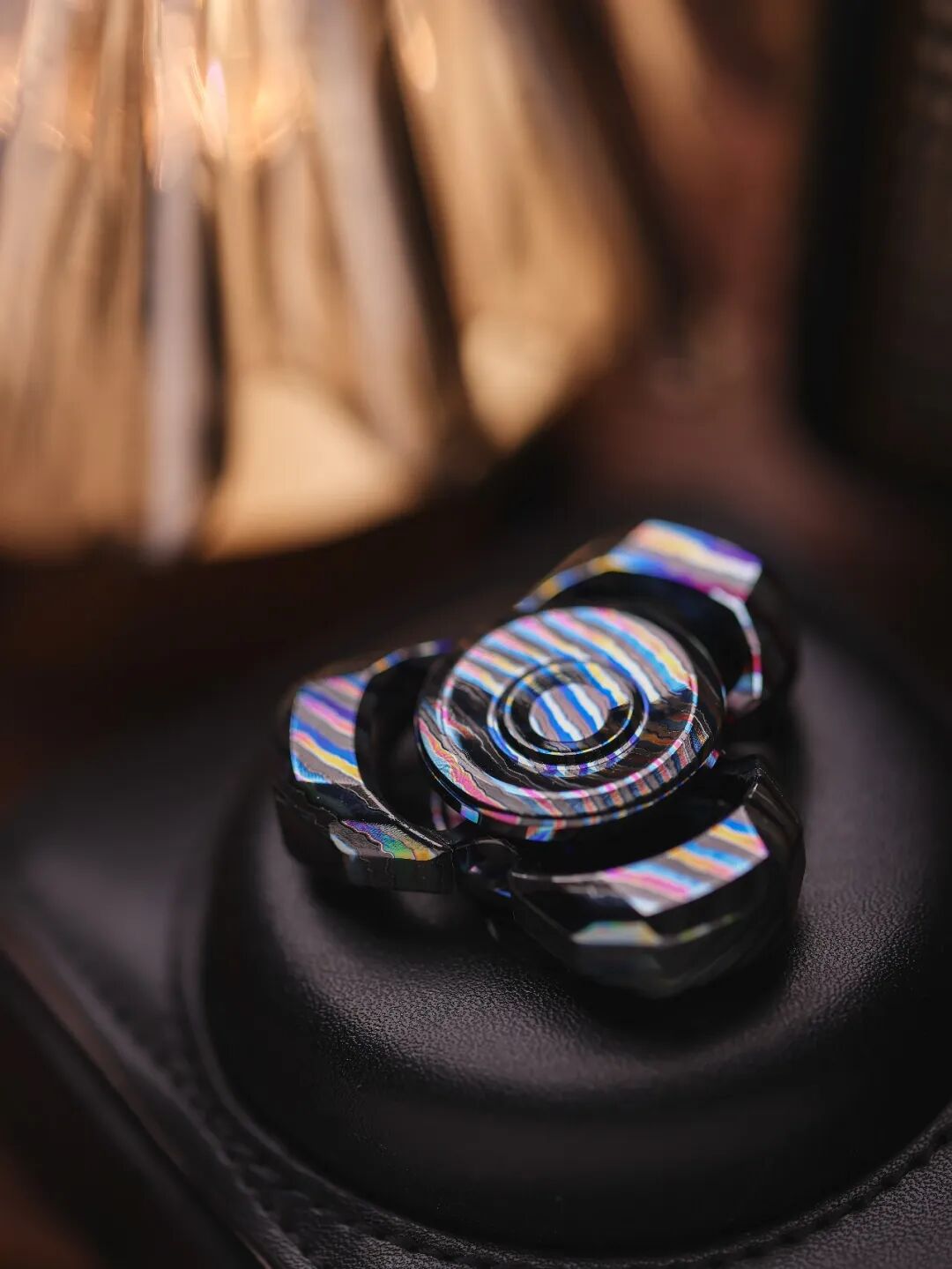
STABLE's Bakelite Yuandian. The orange body and pale yellow button are distinct; the button's exact material is not disclosed.
Xiaoxiaoding: Bakelite in a miniature slider
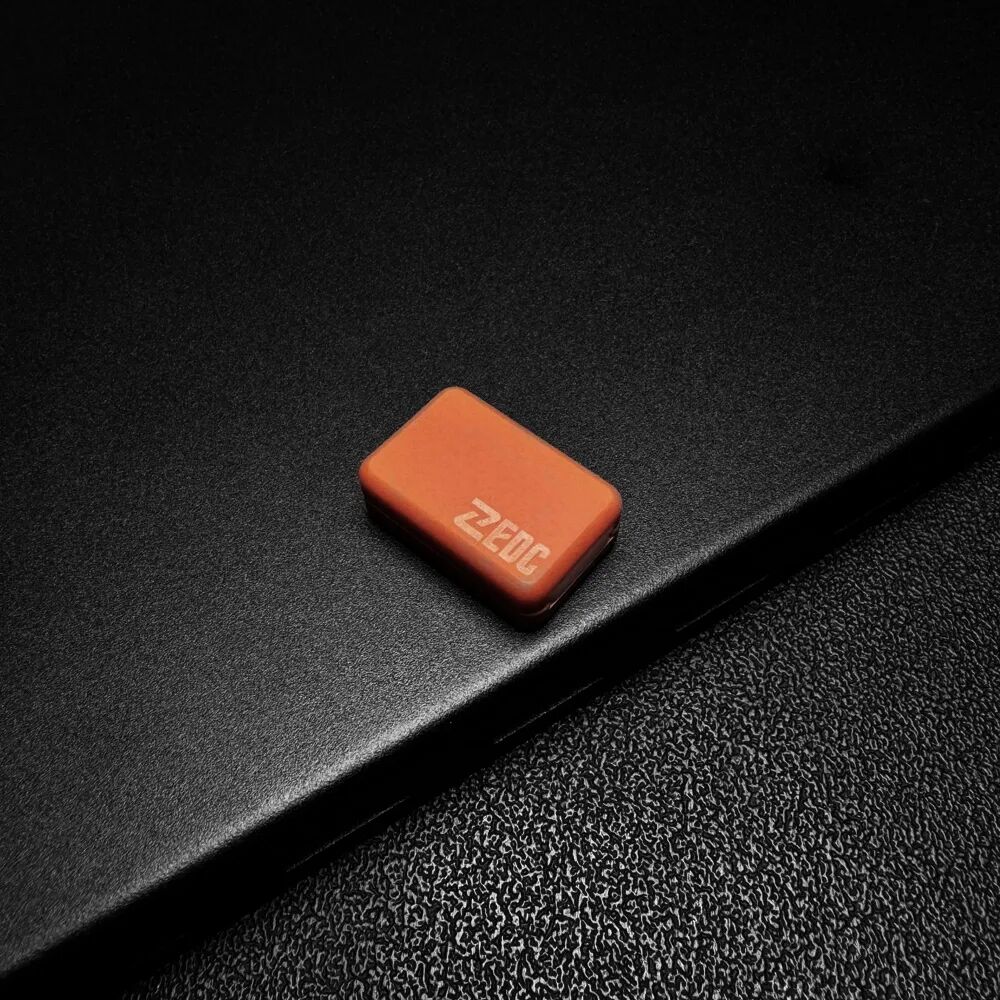
MCZHI's Bakelite Xiaoxiaoding, from the photograph explicitly labelled Bakelite in the original release.
An orange exterior in a compact shape
MCZHI's Xiaoxiaoding restock announcement separately lists PEEK, Bakelite, green glow-in-the-dark and blue glow-in-the-dark versions, each with its own photographs. The image here is explicitly labelled Bakelite: an orange, rounded rectangular exterior with pale lettering. It is separate from the PEEK and glow-in-the-dark versions in the same article.
The maker lists Xiaoxiaoding at 30 mm long, 20 mm wide and 10 mm thick, with 14 steps across its full travel. These figures describe this miniature mechanical slider's size and mechanism; the 14 steps are a product configuration, not an effect produced by Bakelite itself.
Around 8 g appears in the shared specifications, without a separate weight for each of the four materials. It is therefore not presented here as an independently measured weight for the Bakelite version. Material and size both contribute to the complete piece; the material name alone cannot replace version-specific information.
Yuandian: an orange body and a pale central button
The Bakelite version from Yuandian's second release. The maker's specification image lists this version at 15 g.
One design, with weights listed by version
STABLE's second Yuandian release separately shows Bakelite, blood copper, black-polished zirconium and colour-engraved titanium versions. In the Bakelite photographs, the orange body's curves contrast with a pale yellow central button. The release does not identify the button's material. Its colour does not establish PEI, and the version name does not establish that every component is Bakelite.
The specifications image lists the Bakelite version at 15 g, with a 48 mm rotational diameter, 13 mm body thickness and 16.7 mm button thickness. Read weight and dimensions together: 15 g belongs to this Yuandian Bakelite version, not to the material's density or a general weight range for Bakelite toys.
The same table gives 82 g for blood copper, 62 g for black-polished zirconium and 40 g for colour-engraved titanium. It shows how much complete versions of one product can differ in weight. It is not a material-performance experiment with every structural and accessory variable controlled.
Read the material alongside tracks, springs and beads
The nado first-release group, whose listed versions include Bakelite, PEEK and metals. This is a family overview, not a photograph of five Bakelite pieces.
nado explains how the combination matters
nado's first-release letter lists Bakelite with its zhizhi configuration, alongside a natural-finish steel stepped version, a black-polished zirconium long-slide version with stepped feedback, and titanium-blue and PEEK zhizhi versions. The listing identifies both material and track configuration; the material name is only part of it.
The maker explains that different combinations of material, track, springs and beads change the feel and sound during sliding. This is more useful to a player than assigning one fixed sound to Bakelite: when comparing two sliders, check whether their tracks and accessories match.
The first-release group photograph provides family context, including Bakelite, PEEK and metal versions. The whole group is not labelled Bakelite. A separate disassembly photograph mainly shows other versions and is not used to infer the Bakelite version's internal materials.
Wooden plates in the same article may belong to another version
GD EDC's first Tiaoweiqian release describes a combination of metal and natural-wood plates. The regular stainless-steel version receives either desert ironwood or snakewood plates at random. A Bakelite version is announced separately, then appears in the list of already released versions in a later zirconium-alloy update.
This establishes that a Bakelite Tiaoweiqian version exists. It does not assign the steel version's wooden plates, or the later zirconium version's PEI plates and brass impact block, to it. Check the Bakelite configuration's own parts list when choosing a piece.
Bakelite: material background and everyday use
The Chinese name dianmu contains the word for wood, but Bakelite's industrial material background is thermosetting plastic. The manufacturer's documentation describes moulding compounds based mainly on phenolic resin, with other resin systems also available, combined with reinforcements, fillers and modifiers. A name and an orange-brown appearance do not identify an EDC piece's complete formulation.
Once cured, a thermoset cannot be melted and reshaped like a melt-processable plastic. Heat resistance, insulation and wear properties depend on the industrial formulation and its conditions. These EDC releases do not disclose corresponding grades or tests, so industrial performance figures are not treated as guarantees for the toys.
For everyday handling, check the version, track, weight and surface condition of the piece you have. Before cleaning, refinishing or changing parts, establish how that product has been treated. These sources do not provide a universal cleaning agent or refinishing temperature, so this guide does not invent a care recipe.
IN THESE FAMILIES
Swipe to exploreThree contexts to compare: a miniature mechanical slider, a two-tone spinner and a design built around different component combinations.
PIECES IN BAKELITE
Two close-up groups with clear material identification. Dimensions and weights follow the relevant maker's version description.
ALL MATERIALS
Keep exploring the TRB material guides.
 ZircutiZircuti material guideVIEW →
 SuperconductorSuperconductor material guideVIEW →
Material background
Bakelite: engineering thermoset moulding compounds · Background on resin systems, fillers and the cured state; it does not identify the EDC supplier or transfer industrial grade performance to these pieces.
