

CeramicsPolish, forming and the parts that matter
From polished sliders to the outer ring of a fidget, ceramics are shaped by both their surface finish and the way they fit into an assembly.
Ceramic may form a visible body, an outer ring or a small ball. It may also describe a coating. Identify the version and the part first, then look at its gloss, colour and forming details.
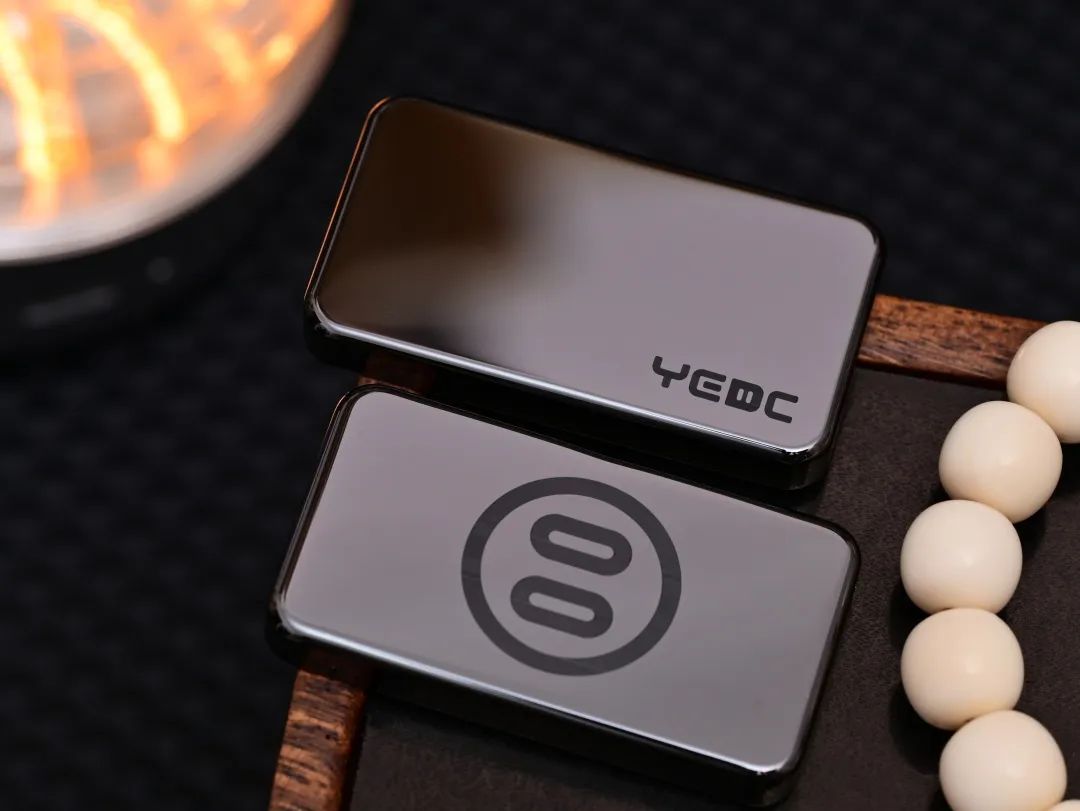
The polished black version shows broad highlights across its faces.
Polish and markings: the Zhu Bizi slider
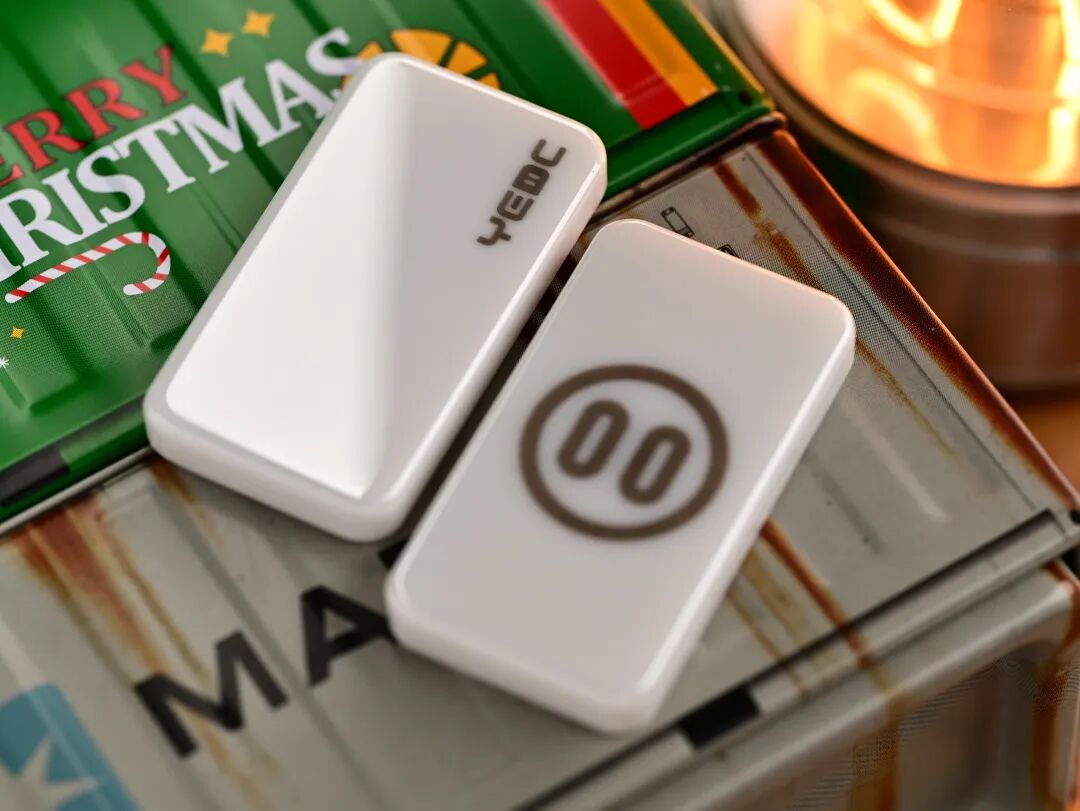
The polished white version, with rounded edges and surface markings.
Polish and markings: the Zhu Bizi slider
The production ceramic Zhu Bizi slider announced by YEDC in January 2024 came in polished black and white versions. Broad highlights cross the flat surfaces, rounded edges frame the faces, and the surface markings form part of the restrained design.
This appearance reflects a specific manufacturing decision. YEDC says it removed some recessed logos and replaced them with laser markings to avoid incomplete forming on the exterior. It also noted that track grooves and magnet holes could still have incompletely filled areas. The outline, holes and markings are useful details to examine alongside colour and gloss.
From a slider to a coin and a ring
Ceramic is a broad material category. Kyocera lists alumina, zirconia and silicon carbide as different fine ceramics, and explains that raw materials and firing methods affect their properties. A product described simply as ceramic has not necessarily disclosed its ceramic type.
YEDC explicitly identified zirconia ceramic in its December 2024 release article for the ceramic Zhu Bi 3.0, offered in black and white. That identification belongs to this product; it does not establish the composition of every ceramic product from the same brand.
Released in January 2025, the ceramic Zhuanyun MAX uses an intermediate structure adapted for its ceramic version. It came in black and white with three exterior styles: Yumian, Zuanqie and Lahua. A later service notice specifically refers to the ceramic outer ring, making clear that this is an assembly of separate parts. It should not be described as entirely ceramic.
Surface and colour in the light
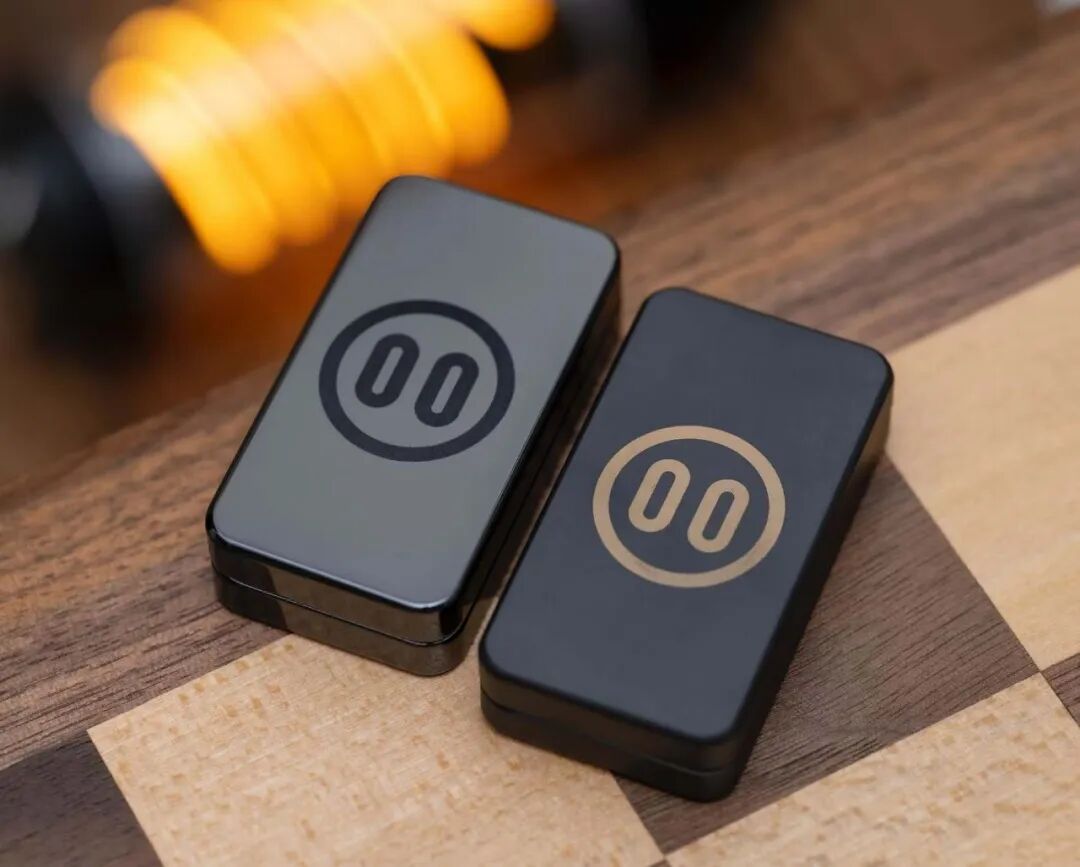
A comparison of polished and Yingsha surfaces in black from YEDC; the reflections and marking colours differ.
Surface and colour in the light
In November 2024, YEDC showed its polished and Yingsha versions side by side in both black and white. The black comparison photograph shows stronger reflections on the polished example and a more even, muted surface on the other. It offers a direct way to compare finishes within one product line.
Yingsha is a version name used by the brand. Its appearance differs from the polished finish, but the name and photographs do not establish the abrasive, grit size or complete process. It is not a separate ceramic composition.
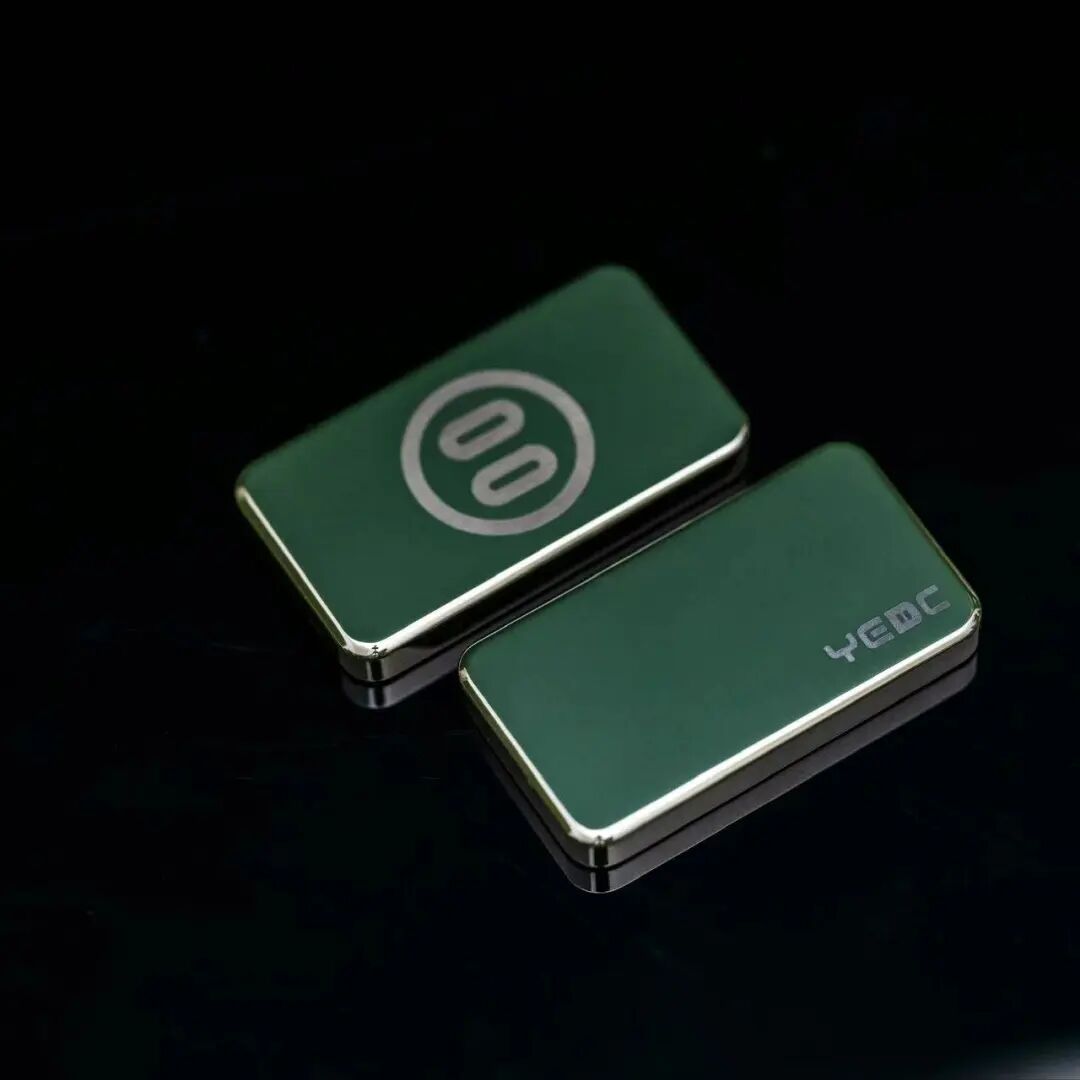
YEDC announced blue and Yuse polished ceramic Zhu Bizi sliders in July 2024. The blue version gives the broad faces a vivid colour; Yuse appears deep green in these photographs, with bright reflections along its edges.
The brand cautions that both colours look different under different lighting and that photographs are only a colour reference. Yuse, meaning jade colour, is a colour name here, not evidence of jade. Black, white, blue and green cannot identify a ceramic composition.
A shell is a distinct material role
The No. 7 ceramic shells announced by 01EDC in August 2026 place the material in a shell that fits around an assembly. The illustrated release describes screw holes machined directly in the ceramic, without metal inserts, and notes that fragments may come away from those holes. Shell material does not establish the material of the entire slider.
The same release advises avoiding drops, strong impacts and heavy pressure during handling, assembly and storage. A polished appearance should be considered together with the attachment points and the handling limits for the product.
Keep a ceramic coating on the right layer
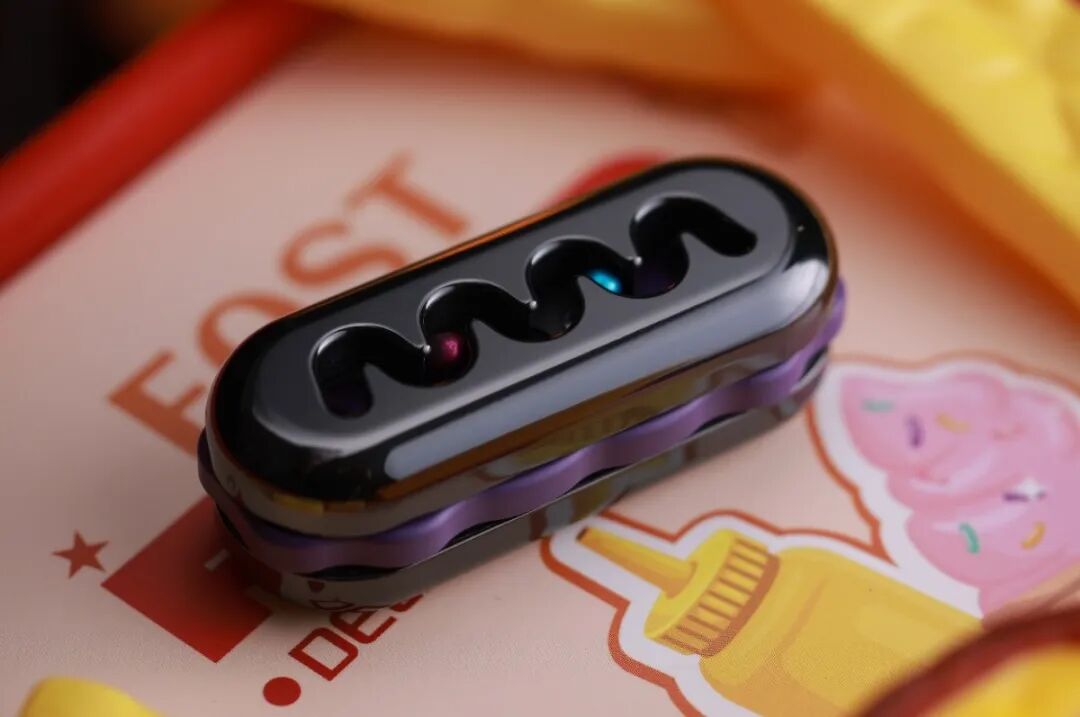
The zirconium-alloy Baobao with the ceramic-coated middle layer in Tiffany blue.
Keep a ceramic coating on the right layer
The zirconium-alloy Baobao released by ROGUE in March 2025 is described with a polished, heat-blackened zirconium alloy, PTFE stops and a Cerakote ceramic coating on its middle layer. The pale blue layer sits between dark outer parts, giving the assembly a clear visual contrast.
Here, ceramic refers to a coating. It does not identify the dark outer parts as ceramic or establish that the middle layer has a zirconia-ceramic substrate. Locating the body, shell, outer ring, ball or coating is usually more useful than classifying a product by colour.
Wear resistance does not settle the question of impact
In a later Zhuanyun service notice, YEDC reported cases of cracks or breakage in ceramic outer rings after drops and described a replacement-ring arrangement. This is a specific product counterexample, not enough to calculate a failure rate for ceramics generally. It does show why wear resistance and surviving a drop are separate questions.
Consider the surface alongside how you intend to use the product. Polish, Yingsha, colour, holes and assembly all offer useful details to examine. A hardness number or a claim of drop resistance cannot replace the structural details and handling guidance for the particular version.
IN THESE FAMILIES
Swipe to exploreExplore product lines through photographs of the documented finishes and configurations.
PIECES IN CERAMICS
Each photograph belongs to the version shown; colour alone does not identify composition.
ALL MATERIALS
Keep exploring the TRB material guides.
 CeramicsYou are hereVIEW →Materials indexAlloys, polymers and finishesVIEW →
 ZircutiZircuti material guideVIEW →
 SuperconductorSuperconductor material guideVIEW →
Material background
Kyocera: Different Types of Fine Ceramics · An introduction to ceramic material categories; not evidence of the supplier or composition of these EDC products.
