

CopperFrom polished sliders to an aged gourd and small inlays
Copper brings more than a warm colour to EDC. A slider panel, a pendant body and a small inlay each show a different relationship between the metal, its finish and the assembled object.
Start with the bright polish of Lucky Candy 2.0 and the darker, aged finish of Jiu Xian. Identify where the copper sits, then look at the texture, accompanying parts and changes that handling may bring.
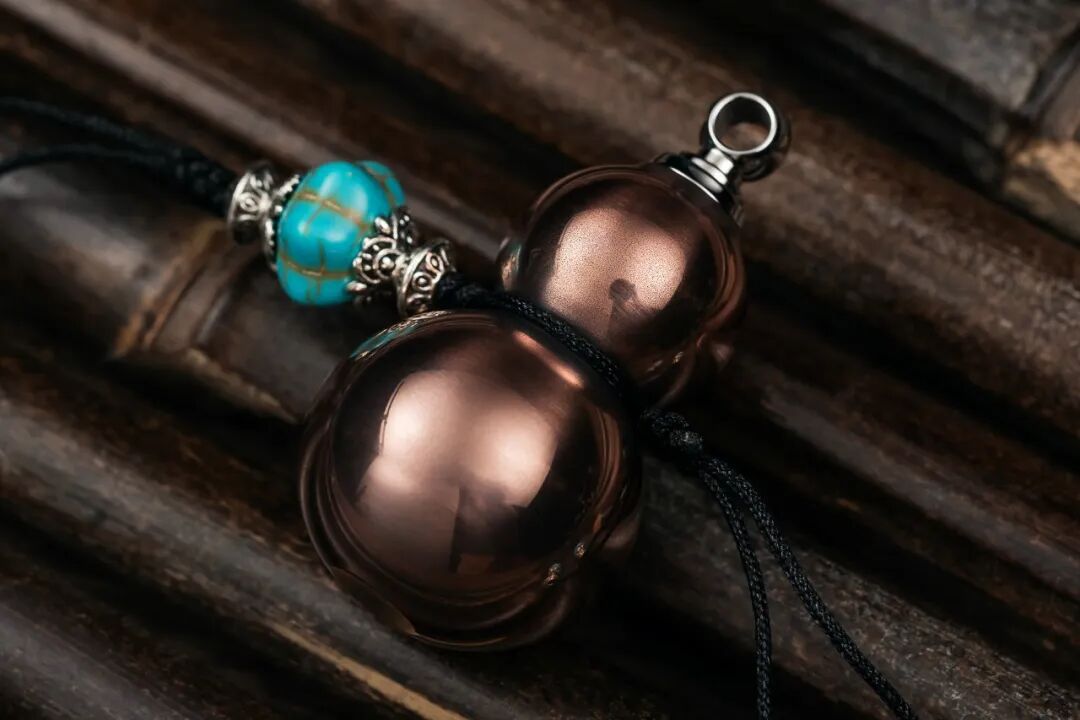
Wanwu Lezhi's copper Jiu Xian. The gourd body is copper; the top cord loop is specified separately as stainless steel.
Polishing turns the outline into highlights
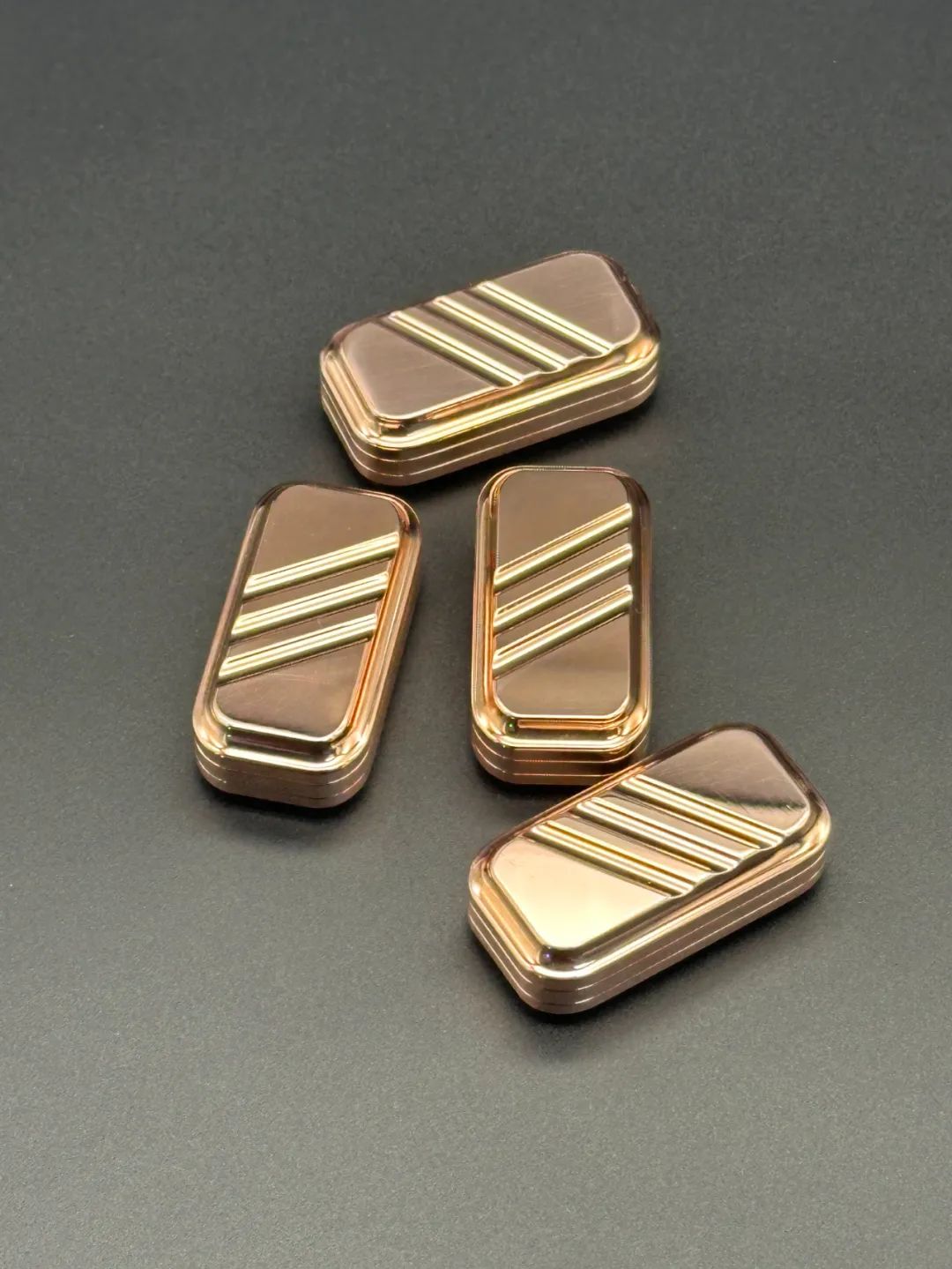
KAiS Lucky Candy 2.0 in copper. The late-2023 announcement lists a polished finish for both ringing and non-ringing versions.
The same copper, different configurations
KAiS introduced the copper version of Lucky Candy 2.0 at the end of 2023. The announcement lists versions described as ringing and non-ringing, both with polished surfaces. In the photograph, flat areas, diagonal grooves and rounded edges catch the light differently, defining the slider's shape.
The maker says handling may produce a variety of surface effects on the polished copper. It gives no fixed time or colour outcome for every owner. A photograph also cannot compare the sound or feedback of the two configurations. A shared material is still only part of the version description.
An aged copper gourd with a stainless-steel loop
Jiu Xian is a gourd-shaped pendant. In the May 2024 copper version, the body is copper and the top cord loop is stainless steel; the cord and its decorative fittings are separate accessories. The warm body and silver-coloured loop make the contrast between materials easy to see.
The maker says this version shares the bronze version's finishing sequence: sandblasting, blackening for an aged appearance, then sanding and polishing. The dark and bright areas should therefore not all be attributed to a patina acquired later through handling. The copper-body and stainless-steel-loop version is listed at 88 g; it was not weighed for this atlas.
An aged body with a bright brass ring
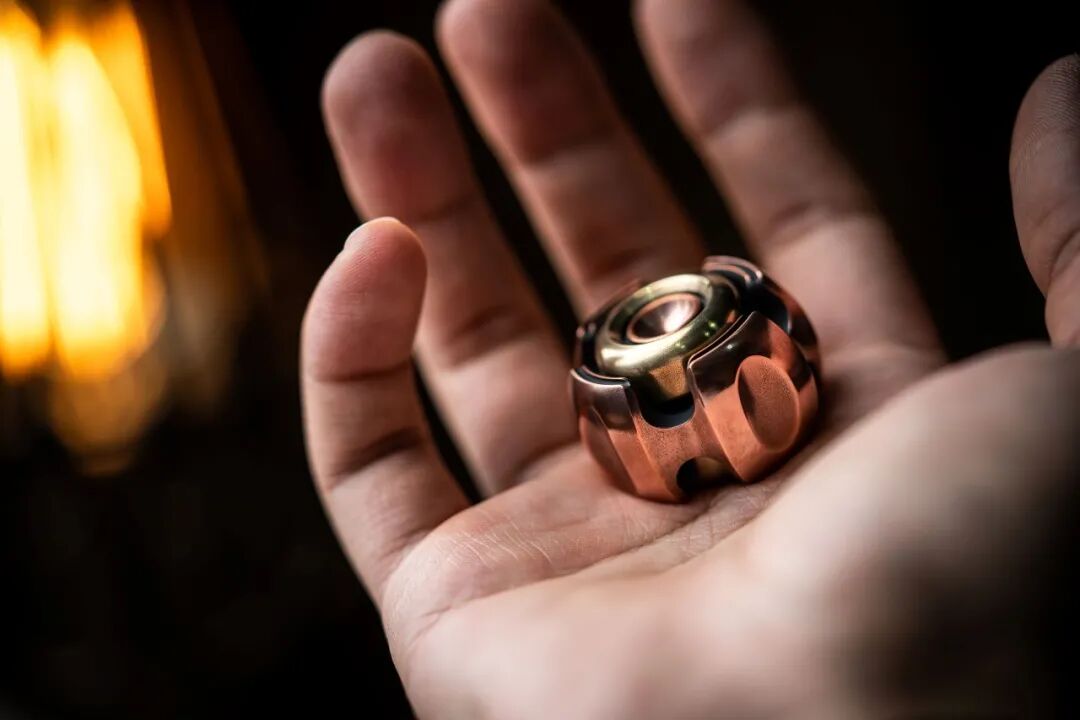
LAUTIE's vintage copper Nano-C: a copper body with a brass decorative ring, aged overall and polished in selected areas.
Two copper-based materials in different places
LAUTIE's September 2021 Nano-C update identifies the vintage copper version as a copper body with a brass decorative ring, aged overall and polished in selected areas. In the photograph, the body's recesses retain dark areas while the curved edges and decorative ring catch highlights.
This version is listed at approximately 105 g for the stated product configuration. The brass ring has a distinct material role. Both metals being copper-based does not erase that distinction, and the photograph does not establish that every dark area formed later through handling.
A full panel or a small inlay
RUMU EDC's February 2025 King version of its Lucky Coin slider combines copper outer panels with stainless-steel magnet plates. The announcement distinguishes the rivet patterns too: five copper circles surround one brass circle on the King version, with the arrangement reversed on the earlier Queen version. Similar-looking details still need their own material identification.
This version widens the sliding grooves and adds a sound reed. RUMU says the supplied carbon-fibre stickers make the sliding action lighter when fitted, while reducing the reed's sound. That is a maker's account tied to particular parts and an installed accessory, rather than a universal description of how copper feels.
HOPE studio's May 2025 Lan 3.0 announcement provides a smaller-scale example. It lists a stainless-steel version with copper inlays in the armour plates and a stonewashed finish. Here copper creates a local contrast within a stainless-steel structure; this is not an all-copper spinner.
Copper becomes part of the pattern
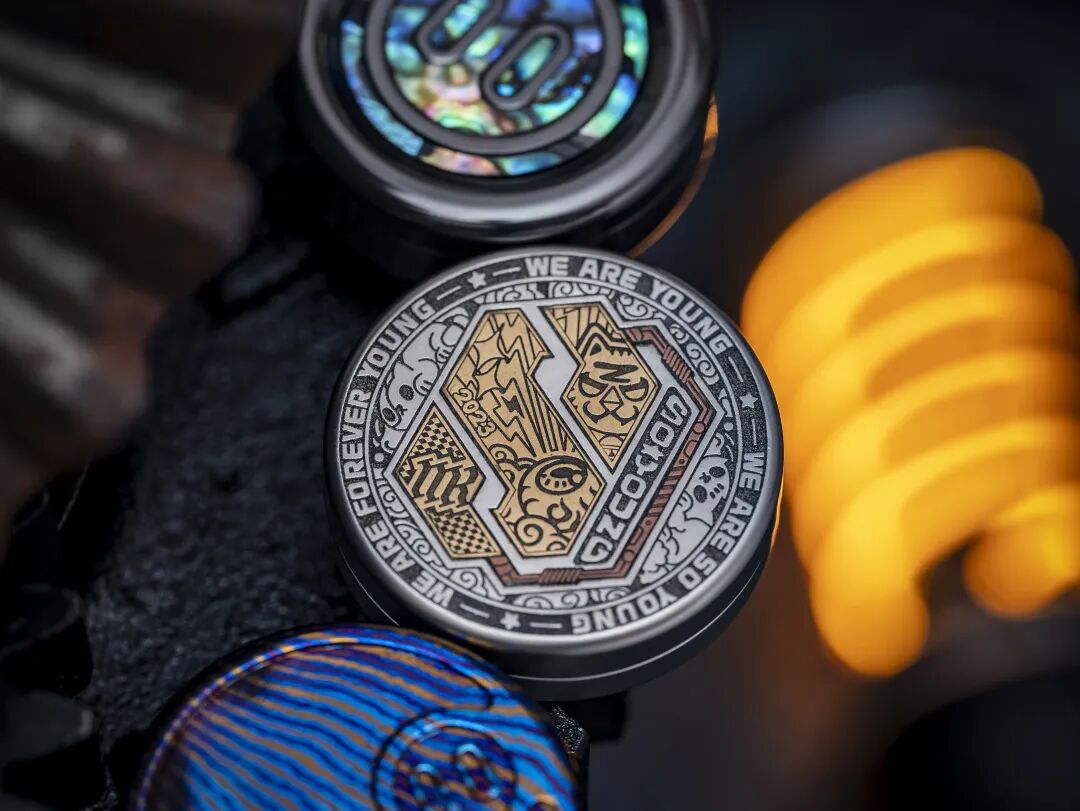
YEDC's soyoung engraved inlay edition. The central piece combines several metals and fine lines; other background objects are not material examples for this page.
Several metals, joined by engraved lines
In May 2024, YEDC introduced a soyoung engraved inlay edition of Shuang Jilun Zhu Bi, its double-ratchet pig coin. The announcement explicitly identifies stainless steel, brass and copper. The central piece in the photograph brings rings, elongated shapes and fine lines together on one face; the reverse uses lettering, a pig motif and geometric divisions.
Copper is one of the inlay materials here, rather than the material of the entire coin. The announcement does not label each shape by metal. The photograph shows warm colours alternating with silver-grey areas, but colour alone does not identify every shape as copper or brass.
Orange-peel texture and handling colour are different changes
Rui En EDC introduced an orange-peel copper version of Yong Sheng Hua in March 2024. The maker says the texture emerged while experimenting with a hammered finish, and shows a before-and-after handling comparison. The manufactured texture and the later colour are two separate things to observe.
The announcement likens orange-peel copper to gold leaf; that is a visual comparison. The explicitly gold-plated part is the accompanying hammered-texture screw. A player-modified gold-leaf piece shown earlier in the article is another object again. Distinguishing the original finish, later modifications and changes from use helps keep the material identification clear.
Read past the connecting rod's name
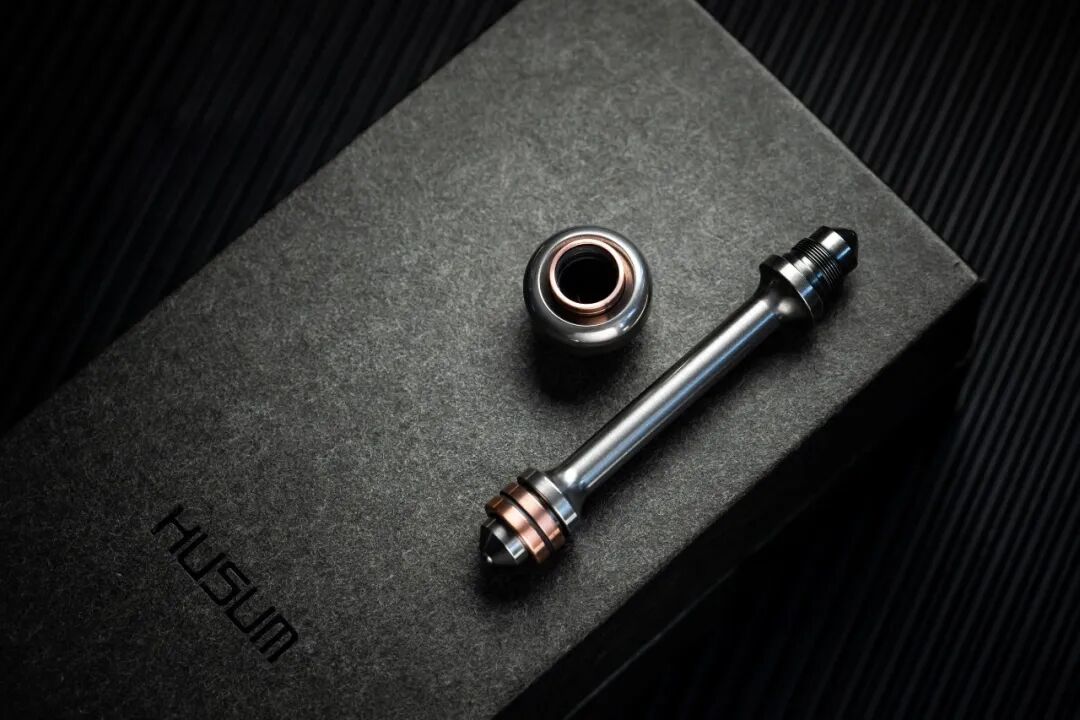
The separate copper connecting-rod set. The announcement specifies a stainless-steel rod body with polished copper accent rings.
Polished copper rings on a steel rod
The same update separately lists a copper connecting-rod set, then specifies a stonewashed stainless-steel rod body with polished copper accent rings. The photograph shows the adapter and rod apart. Copper-coloured details sit at the opening and end, while the long rod has a different material.
The listed 56 g is for the adapter and connecting rod together. It does not include the Nano-C body discussed earlier. Reading the body, decorative ring and connecting accessories separately shows how copper changes from a large visible surface to a small accent within the same series.
Compare weight within the same product
Tie Shi EDC's April 2024 table for the three-arm FaiZ lists copper at 58 g, stainless steel at 52 g and titanium alloy at 30 g. These figures describe material options for that particular three-arm release, rather than a weight rule for every copper, steel or titanium EDC.
To judge whether a copper version suits everyday carry, start with the stated weight of the product and configuration, then consider its construction and accessories. The table does not establish that every internal part is identical between versions. These are maker-listed figures, not TRB measurements.
Keep the patina or restore the shine
If you enjoy the colour left by handling, start by observing the finish of your particular version. If you want to restore a bright surface, first establish whether cleaning or polishing suits its texture, plating and inlays. A method that brightens bare copper may also alter an aged finish or the surface of an adjacent part.
The Copper Development Association's C11000 entry describes an electrolytic tough-pitch copper grade and separates properties by product form and condition. The EDC announcements here do not provide enough grade evidence to identify their products as C11000, oxygen-free copper or a specified purity. Their documented parts and finishes are more useful than an unverified grade label.
IN THESE FAMILIES
Swipe to exploreExplore copper by product series, from sliders and pendants to inlaid coins and modular accessories.
PIECES IN COPPER
Specific release versions and visible details. These records do not indicate current stock.
ALL MATERIALS
Keep exploring the TRB material guides.
CopperYou are hereVIEW →Materials indexAlloys, polymers and finishesVIEW → ZircutiZircuti material guideVIEW →
 SuperconductorSuperconductor material guideVIEW →
Material background
Copper Development Association: C11000 · Electrolytic tough-pitch copper data by grade, product form and condition. It does not establish the grade of the EDC examples here.
