

Crystallized ZirconiumFrom black crystal-like textures to coloured surfaces
Crystallized zirconium rewards a closer look at how colour, texture and curves change across an EDC piece.
The flat faces of Lucky Candy spread out the fine texture, while the curves of Toothless carry light and shade around its outline. Both are sold as crystallized zirconium, yet look quite different. Look beyond the front face to the edges, buttons and individual configuration.
This atlas follows specific versions from KAIS, STABLE, MOT and G-ing. Crystallized zirconium is the material name used by these brands. Surface treatments and use notes follow the respective announcements; undisclosed grades and production methods remain unknown.
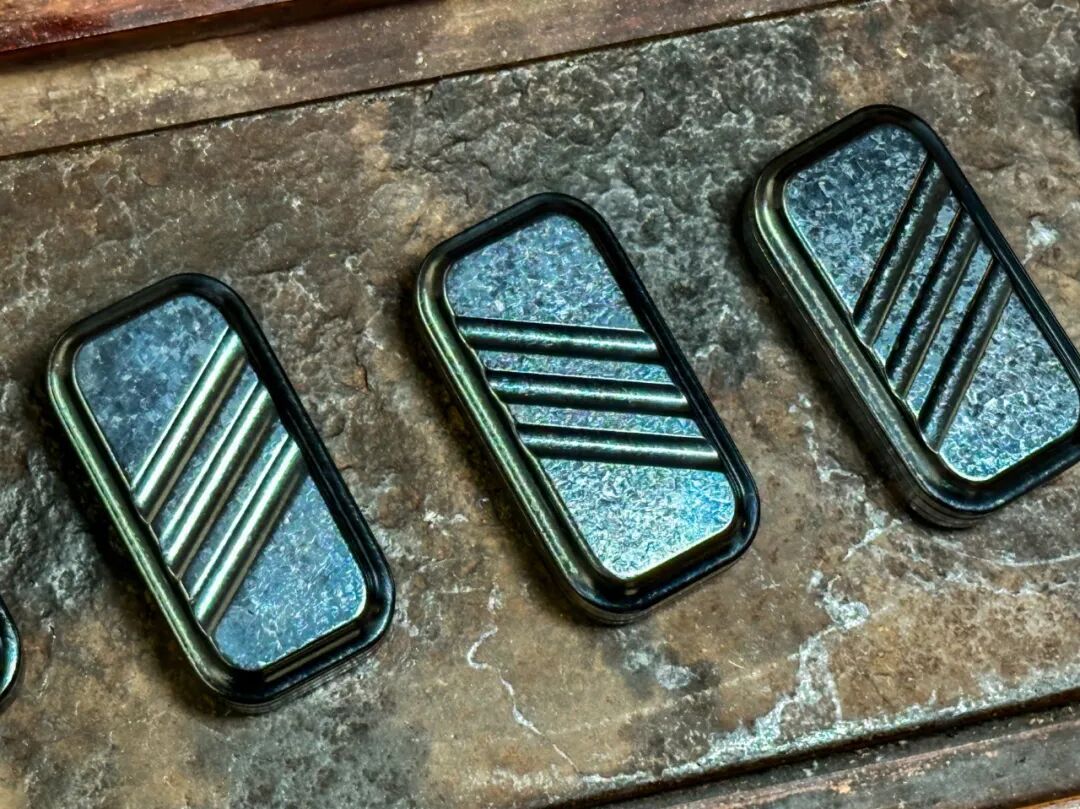
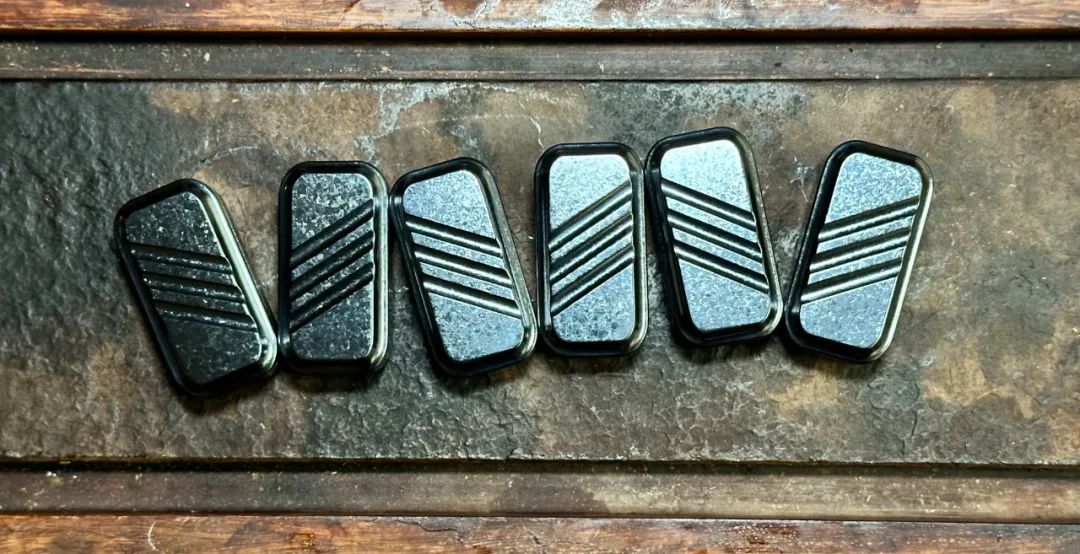
KAIS black crystallized zirconium Lucky Candy. Dark areas and pale texture in reflected light are visible together.
Black texture rewards a closer look
A closer view of the black version. Lighting affects its apparent colour; the texture description applies to this KAIS release.
Lucky Candy: a surface with its own character
When KAIS first introduced its crystallized zirconium Lucky Candy, it described a surface that looks nearly black from a distance, with silvery crystal-like markings visible up close. In the photographs, fine texture spreads beside the diagonal grooves. The frame and groove faces reflect light differently from the broad flat areas; the black version does not look uniformly black from every angle.
The buying notes specifically say that this release is less smooth than polished, heat-blackened zirconium. KAIS compares its texture to marble and mentions slight colour variations. That description belongs to this Lucky Candy version; it is not a universal account of how crystallized zirconium feels.
The same article lists a zirconium tuning fork. Its material should be read separately from the crystallized zirconium body. The photographs alone do not establish how the piece sounds.
Colour choices also involve the edges and use conditions
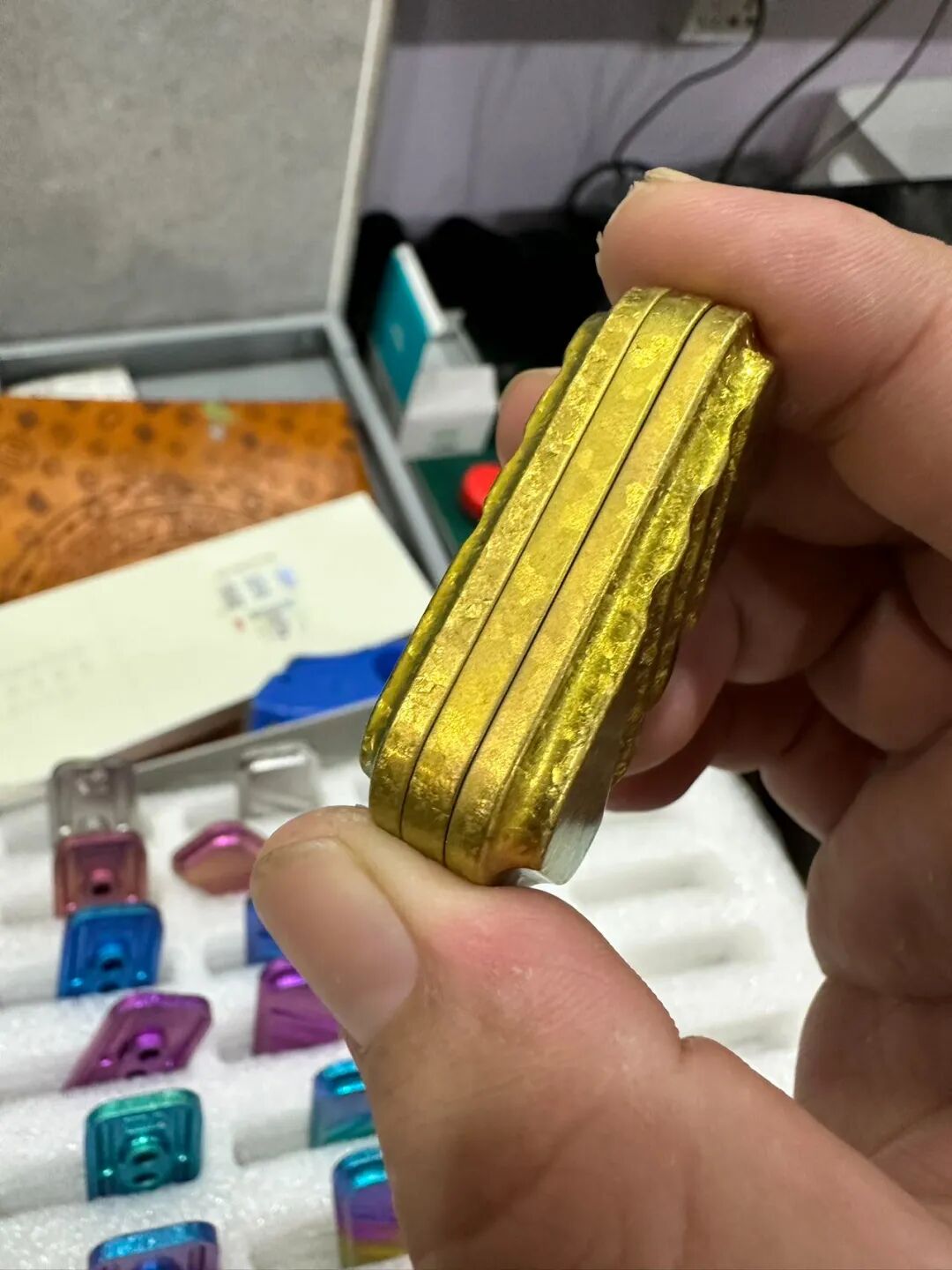
KAIS’s later colour display. Eight options are listed in the announcement; this photograph does not establish that all eight are shown.
Coloured Lucky Candy: more than a front-face choice
In a later update, KAIS explicitly described anodizing the crystallized zirconium and listed eight colour options: natural, pink, lake green, lake blue, purple, gold, a blue-green gradient and rainbow. Black remained a separate option. Eight refers to the announcement’s list, not proof that every option appears in this group photograph.
The selection notes explain a more practical difference: the coloured versions can have different levels of sheen along their sides. KAIS also warns that the colour is not permanent and can fade with use; an artisan can refinish it. No fading interval is specified. Although the brand says black will not fade, it also says use will leave marks.
Alongside the colour you prefer, look at the actual piece’s edges and check the refinishing arrangements for that version. These announcements do not promise a surface immune to wear or authorize unrestricted reheating at home.
Curves carry the texture around the outline
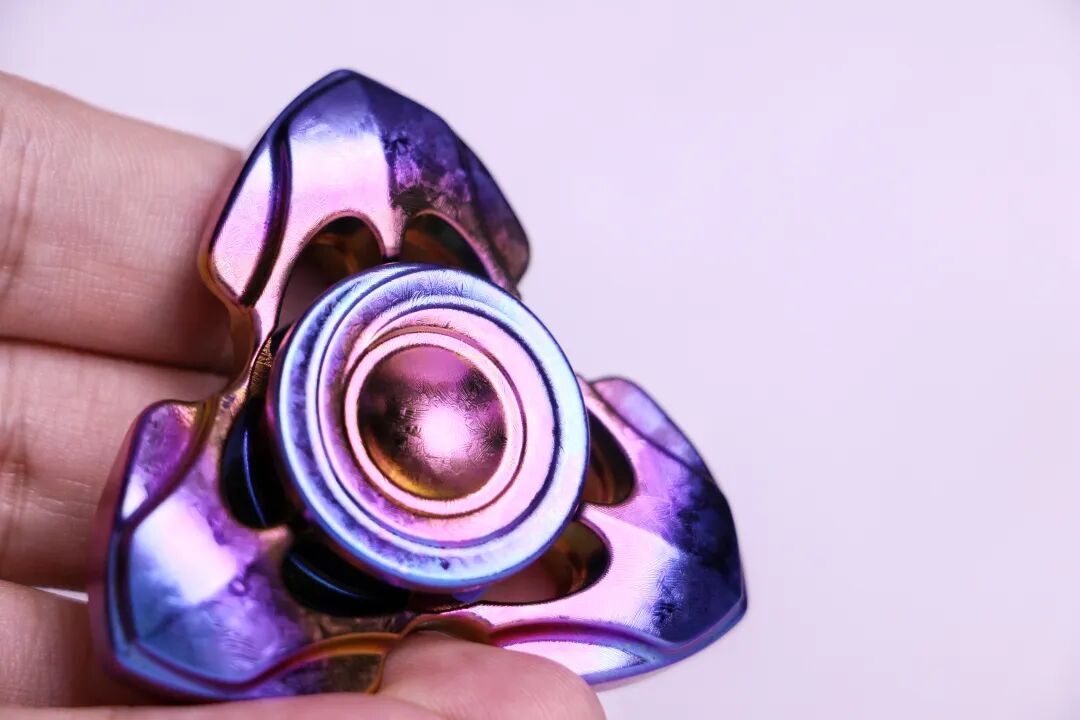
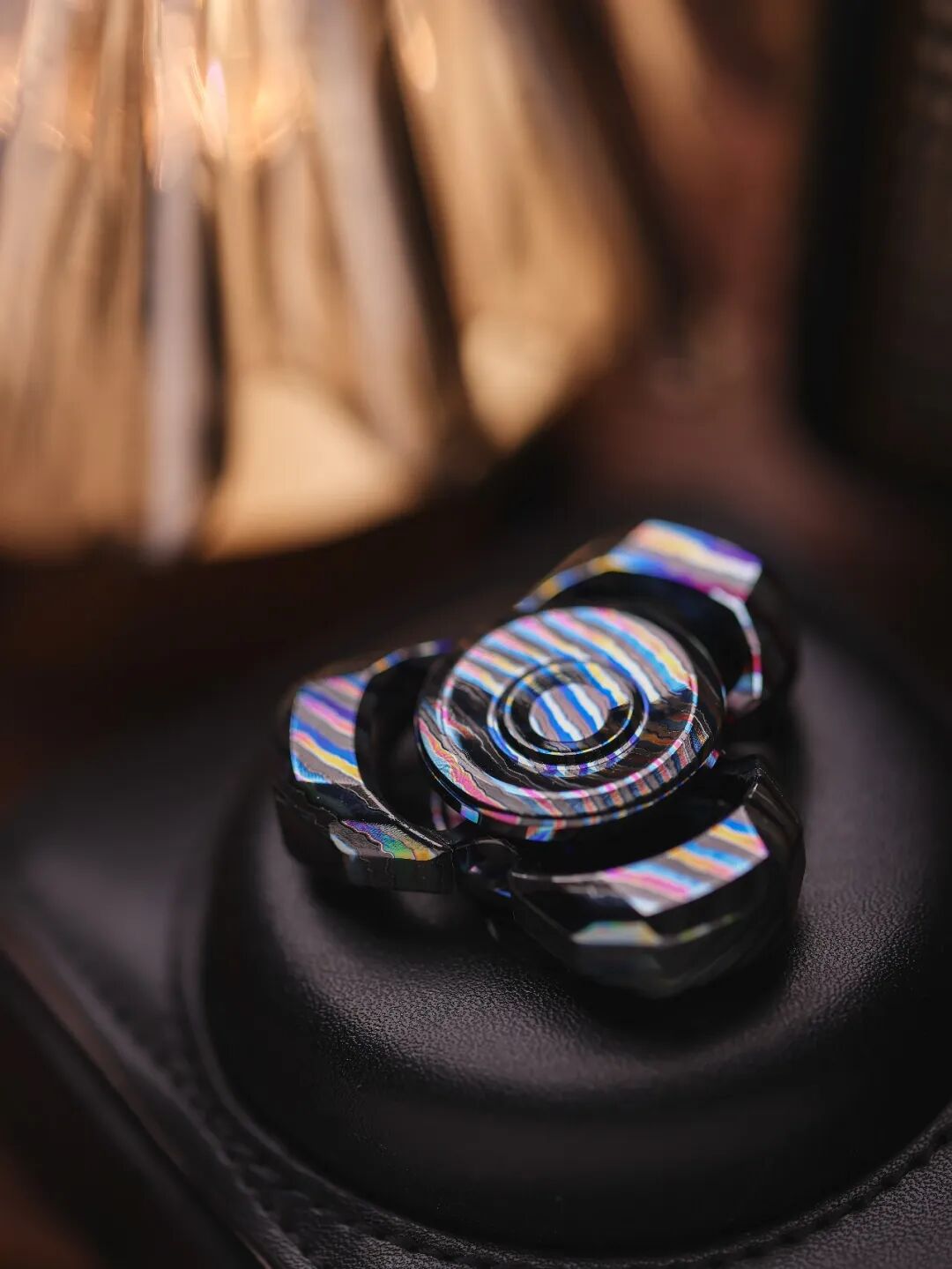
Iridescent crystallized zirconium Toothless. A close view of where curves, texture and colour meet.
Toothless: different colours in one material
STABLE’s special-material Toothless announcement separates crystallized zirconium from titanium damascus. The crystallized zirconium group includes iridescent, purple, jade-green and rose-pink versions. The photographs here come from that group: bright and darker areas alternate over the curved surfaces, while the round buttons and three lobes reflect light in different directions.
The specification image lists 60 g for the crystallized zirconium version and 42 g for titanium damascus, with a rotation diameter of 57.5 mm. These weights belong to the corresponding Toothless versions. They are not a general ranking of material weight, and they are not TRB measurements.
Beyond the texture, each piece has its own construction
MOT’s standard-version group, corresponding to Qinglan, Anxing and Bingchuan. The separate spherical parts are not identified as crystallized zirconium by the version name.
Oracle: colour versions and accessory conditions
MOT’s crystallized zirconium Oracle announcement lists Qinglan, Anxing and Bingchuan as standard versions, alongside Ziyuan and Feiying. The group photograph shows bodies, central buttons and separate spherical parts around the perimeter. Calling the complete product a crystallized zirconium version does not establish that every visible component uses that material.
The announcement says every Oracle version in that release comes with a magnetic attachment kit. That accessory belongs to the release configuration. The brand’s claims about feel and overtones do not establish inherent material properties or a TRB hands-on assessment.
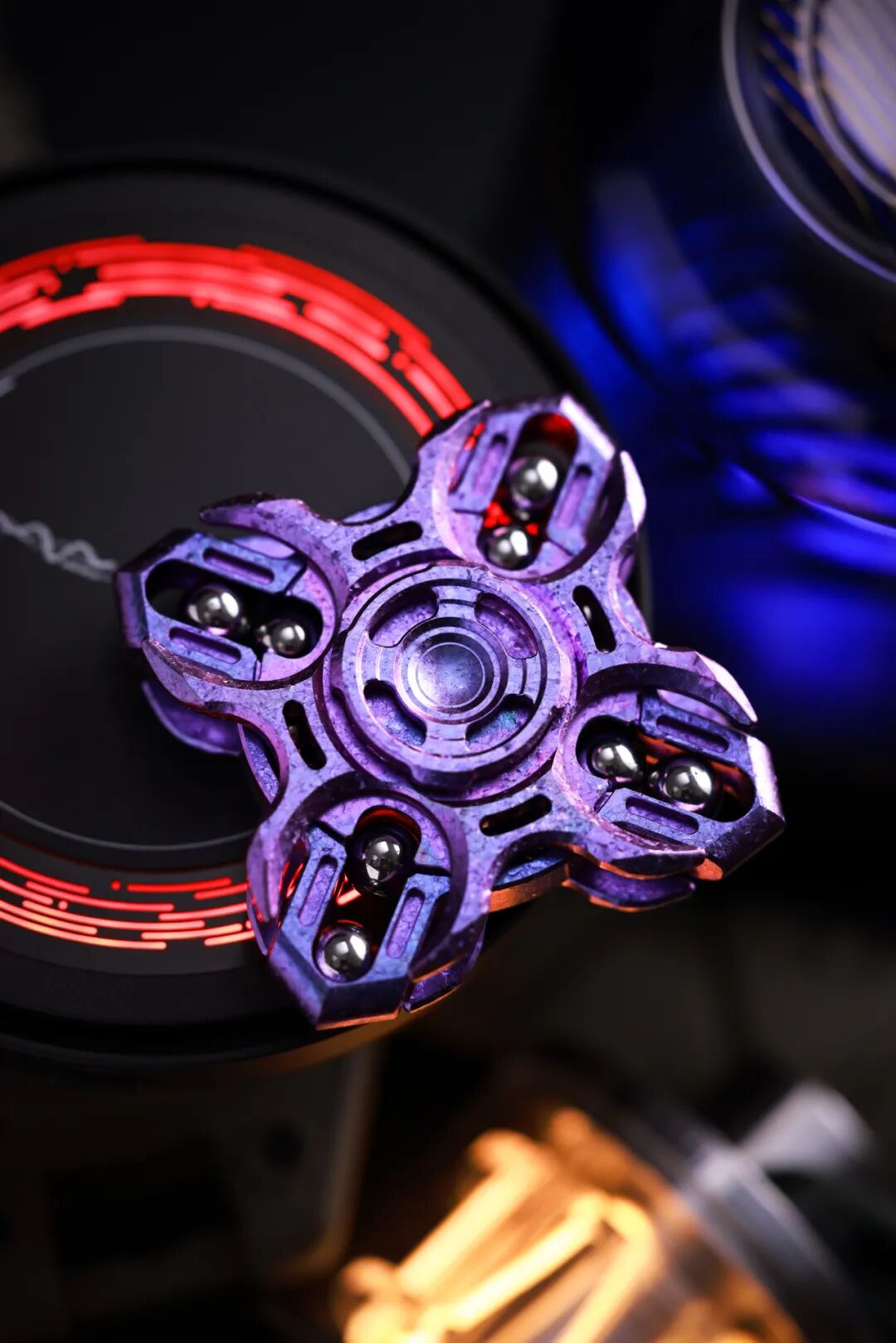
G-ing’s third special-material release of Nautilus · Longji also includes crystallized zirconium. Its original photograph shows several colours on the same form, with concave faces, lobe edges and central buttons creating different areas of light and shade. The article gives no reproducible parameters for producing the crystal-like texture; the description here follows the appearance and release name.
Check the finished product and later announcements
Crystallized zirconium is a commercial material name in these product sources. Zirconium is a metallic element, symbol Zr. Here, crystallized refers to the surface texture emphasized by the brands; it does not create another element, nor does a photograph establish a universal grade, grain size or complete heat-treatment process.
Similar names need separate checks. Crystallized zirconium, crystallized titanium and crystallized Zircuti are distinct labels in product announcements. Crystallized Zircuti plates and titanium-damascus versions are not included as crystallized zirconium examples here.
Production can also overturn an earlier label. MCZHI announced a crystallized zirconium Tangbao spinner, then reported that surface processing and comparison tests identified the supplied material as ordinary zirconium. The brand cancelled the crystallized zirconium version and arranged deposit refunds and compensation. That Tangbao batch therefore does not count as a crystallized zirconium example.
HE EDC’s Anying (Shadow) announcement explicitly lists a black crystallized zirconium version at approximately 51 g. This is the value for that Anying release, separate from Toothless at 60 g. Mixed-material group photographs in the article do not identify the material of every pictured piece.
IN THESE FAMILIES
Swipe to exploreFour product families show crystallized zirconium on flat faces, curves and different constructions. Open each to explore its versions.
PIECES IN CRYSTALLIZED ZIRCONIUM
Specific configurations matched to their photographs. These historical versions do not indicate current stock.
ALL MATERIALS
Keep exploring the TRB material guides.
 Crystallized ZirconiumYou are hereVIEW →Materials indexAlloys, polymers and finishesVIEW →
 ZircutiZircuti material guideVIEW →
 SuperconductorSuperconductor material guideVIEW →
Material background
Royal Society of Chemistry: Zirconium · Identifies zirconium as an element; does not establish the grade, stock or production process of these EDC versions.
