

Titanium AlloyGrey, blue and black across four EDC designs
From a blue detail to a black PVD upper body: see where titanium alloy sits in the design.
Titanium alloy takes different roles in these EDC objects. It shapes a spinner, forms a slider body or slot plate, and carries a blue finish. The color catches the eye; the component, stated grade and surface treatment explain what you are looking at.
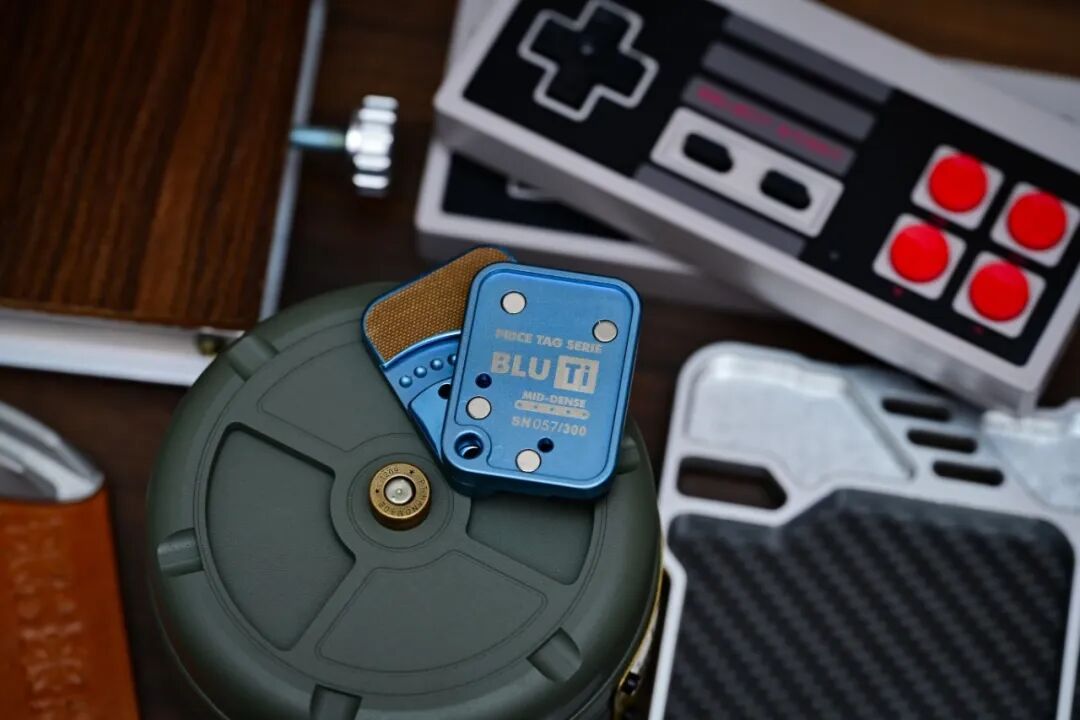
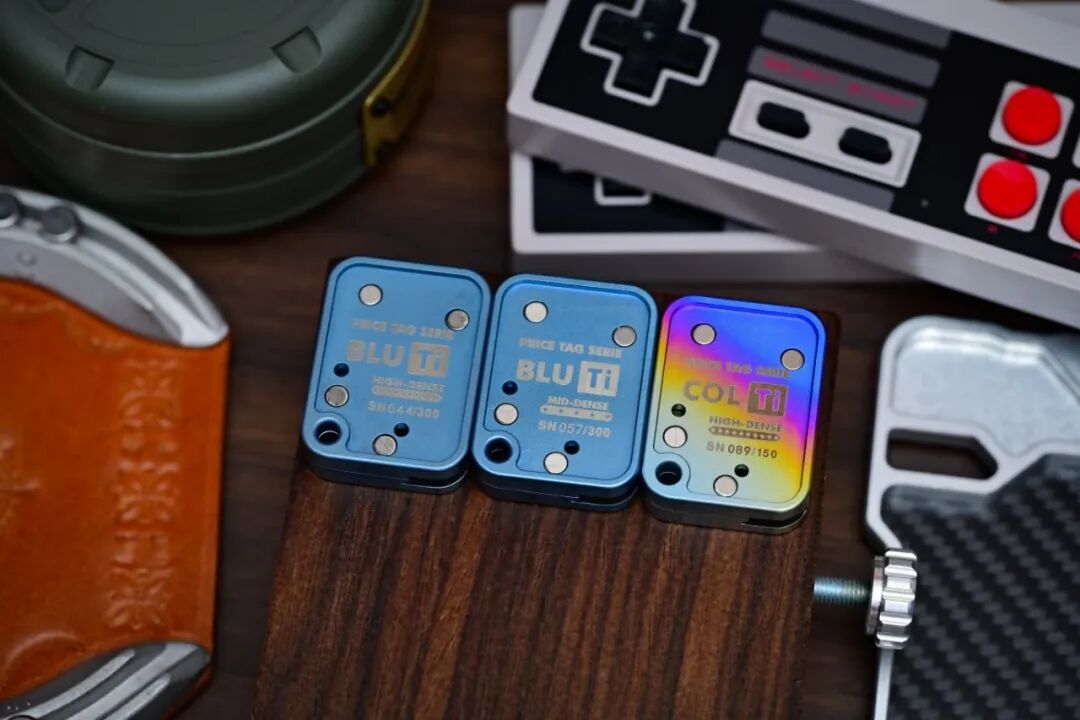
Blue and multicolor Price Tags. Both have a stated TC4 specification, with sandblasting and anodizing.
From titanium to a stated grade
Titanium is a broad starting point. Commercially pure titanium and titanium alloys are different specifications: Grade 2 is one example of commercially pure titanium, while Grade 5 / Ti-6Al-4V is an alloy. A product description may go further and name its grade.
The Price Tag examples here explicitly state TC4. Bit05, Carnival and Jiezou Hezi retain the less specific titanium-alloy description given in their introductions. Grey, blue or black cannot establish a grade, or tell you that every part uses the same titanium material.
Price Tag: one stated grade, two colour treatments
The blue Price Tag back. Approximately 39 g is the listed weight without decorative plates, not a measurement taken from this photo.
Read the body, decorative plates and track separately
BPMODS specifies sandblasting and anodizing for its blue and multicolor titanium Price Tags. Sandblasting is part of the surface treatment; anodizing supplies the color treatment. These two color versions share the same stated alloy grade.
The backs expose the blue or multicolor body, round metal parts and openings. Custom front plates add another decorative layer. Their graphics, the body color and the other components should be read separately.
The introduction specifies a track shared with the zirconium version and custom springs. Sharing that version's track does not, by itself, establish the track's material.
The Price Tag is listed at approximately 39 g without decorative plates. That figure describes the stated configuration. It is neither a weight for titanium sliders in general nor a claim about the weight after accessories are fitted.
Carnival: blue and plain finishes on the number disk
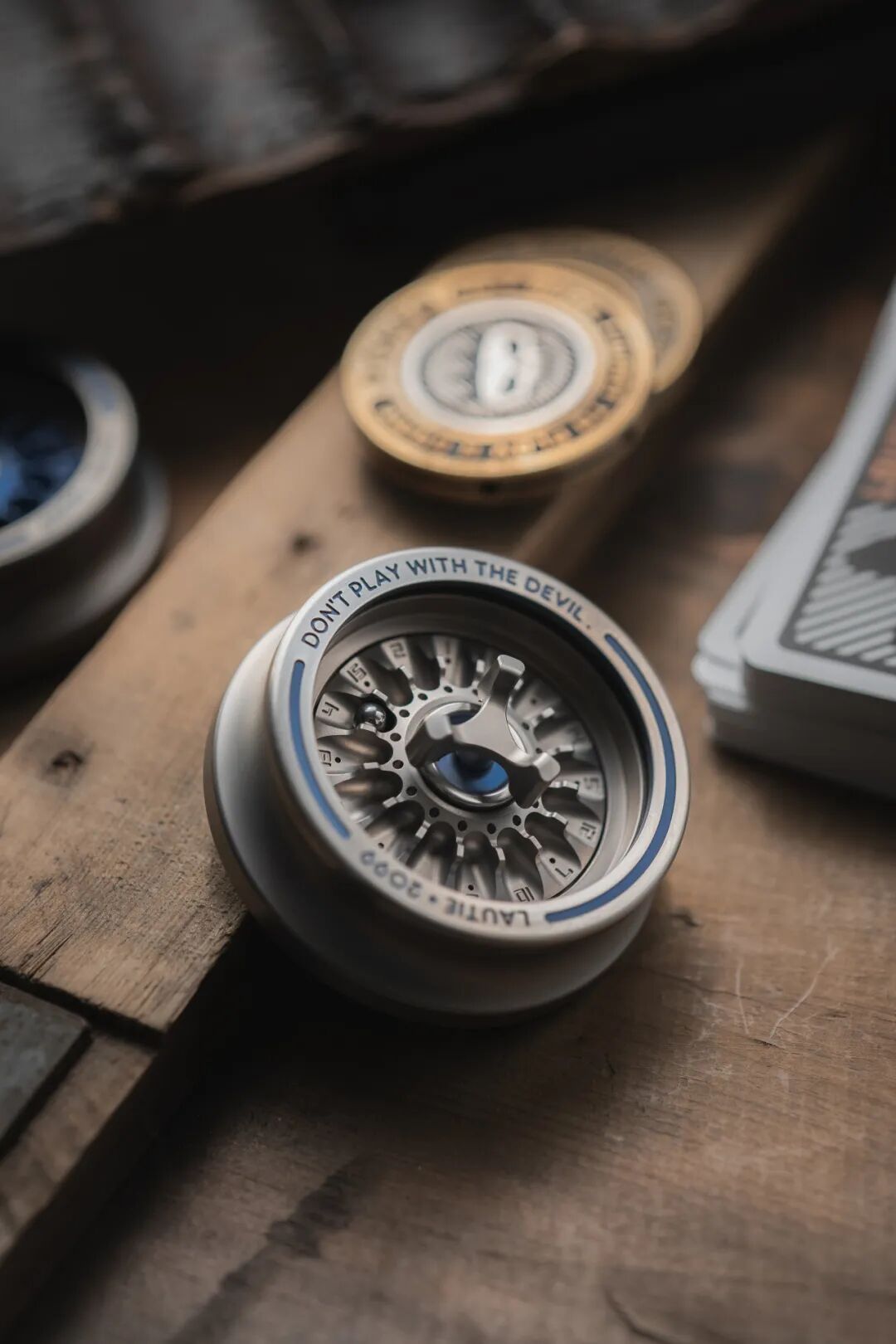
Carnival with heat-colored blue and plain number disks. Other objects at the image edges are not material examples.
Two number disks, one wheel design
The titanium-alloy Carnival pairs a grey outer ring with blue details. Its number disk comes in heat-colored blue and plain finishes; the difference is especially clear when the two versions are placed together.
Its inner and outer structures can rotate independently or together, with beads adding the wheel interaction. A sapphire glass cover is optional. LAUTIE describes the version as all titanium, but that description cannot extend to the glass, beads or every accessory. The alloy grade is not disclosed.
LAUTIE offers heat-colored blue and plain number disks for Carnival. The Bit05 introduction describes blue accents but does not specify the coloring process. Photos let you compare color and shape; the individual product description establishes the treatment.
Bit05: the bead channel within the grey outline
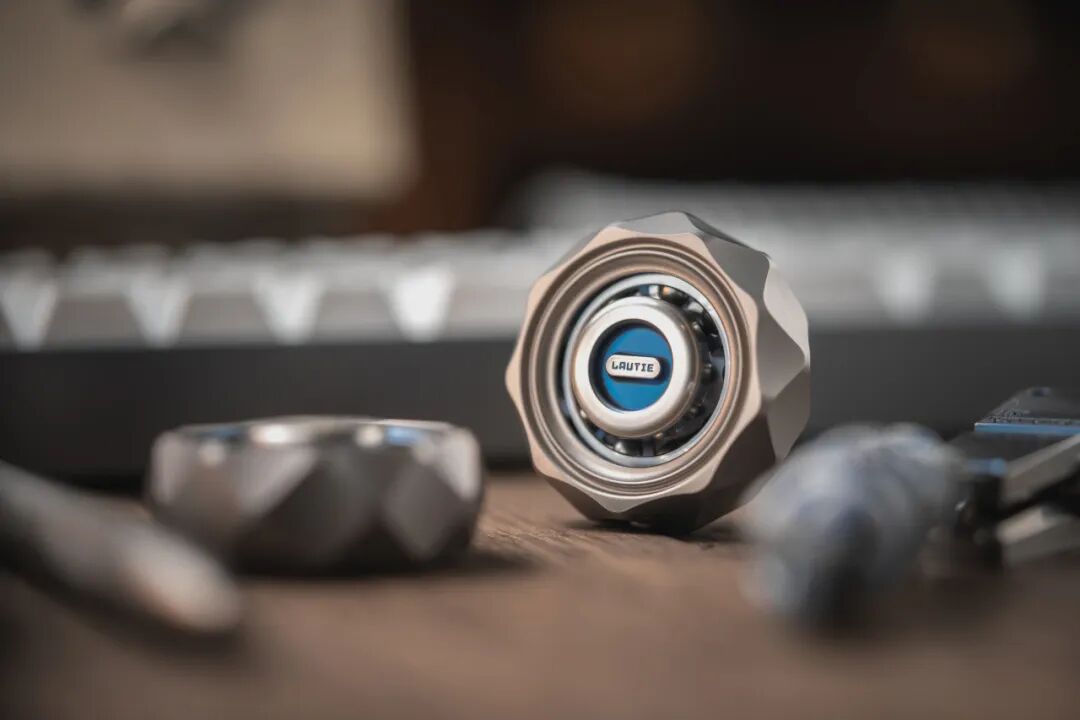
The titanium-blue Bit05. Its introduction does not state the alloy grade or coloring process.
Material and structure work together
The titanium-blue Bit05 is a material update in LAUTIE's BIT spinner series. Its grey, faceted outline surrounds the bead channel, with blue concentrated in the central detail.
LAUTIE says the bead material can be changed. The beads, their channel and the titanium-alloy structure therefore have distinct roles; feedback depends on the particular combination. The introduction does not disclose an alloy grade or the process used to produce the blue.
Bit05 uses a large bead channel and allows the user to change bead materials. Carnival has inner and outer structures that can rotate independently or together. What you handle is the assembled design: titanium alloy alone does not determine its sound, resistance or spinning behavior.
Jiezou Hezi: a black body beneath patterned inlays
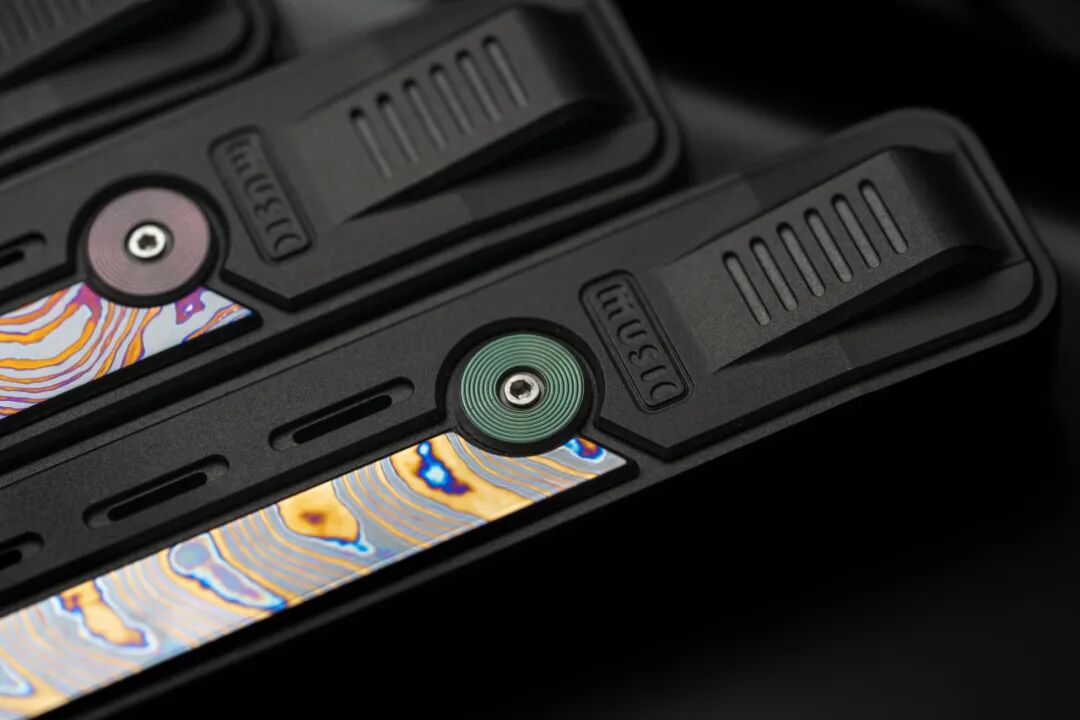
The black titanium-alloy upper body and decorative inlay are different material layers. Internal slot-plate configuration comes from the product description.
Separate materials for the body, slot plate and middle plate
Jiezou Hezi uses a titanium-alloy upper body with a black PVD finish. The introduction published by BidRush EDC identifies the patterned decorative pieces as Zircuti and describes them as hand heat-colored. The black body and patterned inlays are separate material layers.
The upper-cover slot plate is described with polished titanium-alloy and naval-brass options. The middle slider plate is black PEEK mixed with ceramic powder, while the mini spinner and window-breaking tip are specified as W95NiFe. The first-batch description specifically lists the titanium-alloy slot plate.
This design assigns materials separately to the body, sliding components and decoration. A photo shows the external layers; the component description supplies the internal material information. Static images cannot establish how the slot-plate options sound.
IN THESE FAMILIES
Swipe to exploreFour products show different ways to use titanium alloy, from a stated TC4 grade to a design that assigns materials layer by layer.
TITANIUM IN USE
Start with a visible component and look at how its material, finish and decoration work together.
ALL MATERIALS
Keep exploring the TRB material guides.
 Titanium AlloyYou are hereVIEW →Materials indexAlloys, polymers and finishesVIEW →
 ZircutiZircuti material guideVIEW →
 SuperconductorSuperconductor material guideVIEW →
Material background
TIMET: TIMETAL 50A / Grade 2 · Manufacturer data identifying a commercially pure titanium grade.
TIMET: TIMETAL 6-4 / Grade 5 · Manufacturer data identifying Ti-6Al-4V and ASTM Grade 5. This is background classification, not certification of the EDC examples.
