

ZirconiumZIRCONIUM
Zirconium can form a glossy black slider body, or bring matte, mirror and coloured surfaces to a spinner. Explore how finish meets structure in specific versions of Phase, BGM, Sword Heart and Yingwuluo.
Follow reflections along an outline, then look at the smaller blades, button posts and inner cores. The four product families introduce their constructions; the individual examples focus on particular finishes, combinations and close-up details.
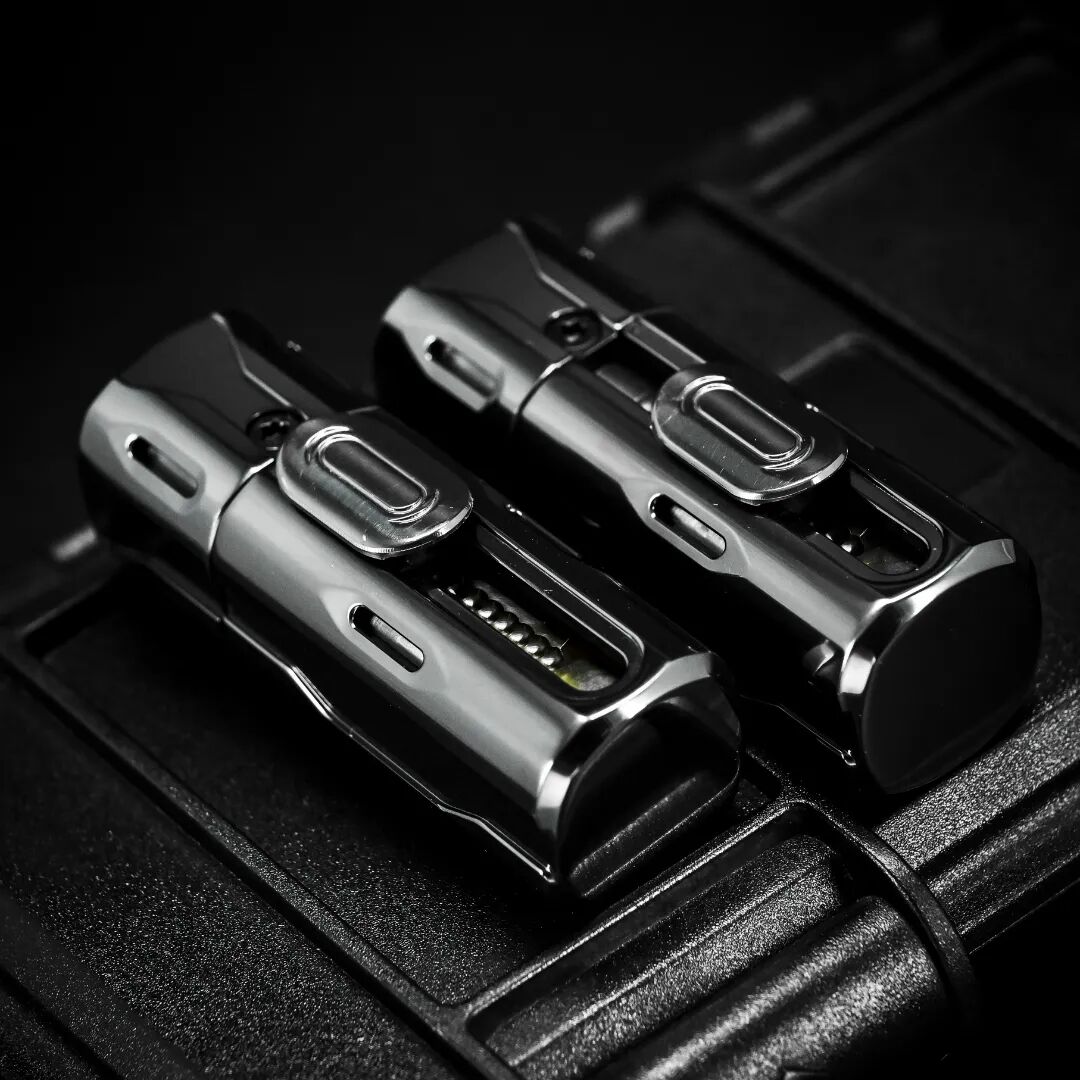
Cyber EDC Phase 1.5, the polished and heat-blackened zirconium-body version described in October 2024.
Polished, heat-blackened Phase, with a PEI core
Phase 1.5 with a polished, heat-blackened zirconium body. The maker’s approximately 70 g figure covers the body with its PEI core, excluding the separate extension.
One configuration, two materials
Cyber EDC’s October 2024 introduction of Phase 1.5 specifies a polished, heat-blackened zirconium body with a PEI inner core. In the photograph, highlights follow the long slots and changes in contour; a different material occupies the inner-core position.
The maker’s approximate 70 g specification covers the zirconium body and PEI core. The separately offered extension, also polished and heat-blackened zirconium, is listed at approximately 30 g. Adding it changes the carrying weight and grip length of the configuration; it is not included in the body’s stated weight.
The maker also notes that fine polishing marks may remain in the grooves. Look at both the broad glossy surfaces and the details within the recesses, retaining this release’s stated finishing conditions.
Zirconium alloy, with stonewashed or polished surfaces
BGM release samples: stonewashed on the left, polished on the right. The maker notes that the left sample’s black finish, laser markings and rotor centres differ from the planned production appearance.
Read the finish and the sample together
JOY EDC’s January 2026 BGM release lists polished and stonewashed finishes, both heat-blackened. The body is zirconium alloy; the inlays are separately listed as gold-plated titanium alloy and stainless steel, and the sliding strips are black POM. The black body, gold-coloured decoration and internal strips have distinct roles.
The release photograph shows samples: stonewashed on the left, polished on the right. The stonewashed side is more subdued, while the polished side catches more concentrated highlights. The maker notes that the left sample was not black enough, its white laser markings were insufficiently clear, and its yellow rotor centre was planned to become bright stainless steel in production. The photograph retains the sample-stage appearance.
The listed 82.7 g is a whole-product specification, without a breakdown by component. The body finish and the other material choices can be considered separately when comparing these surfaces.
Sword Heart: separate the finish from the material combination
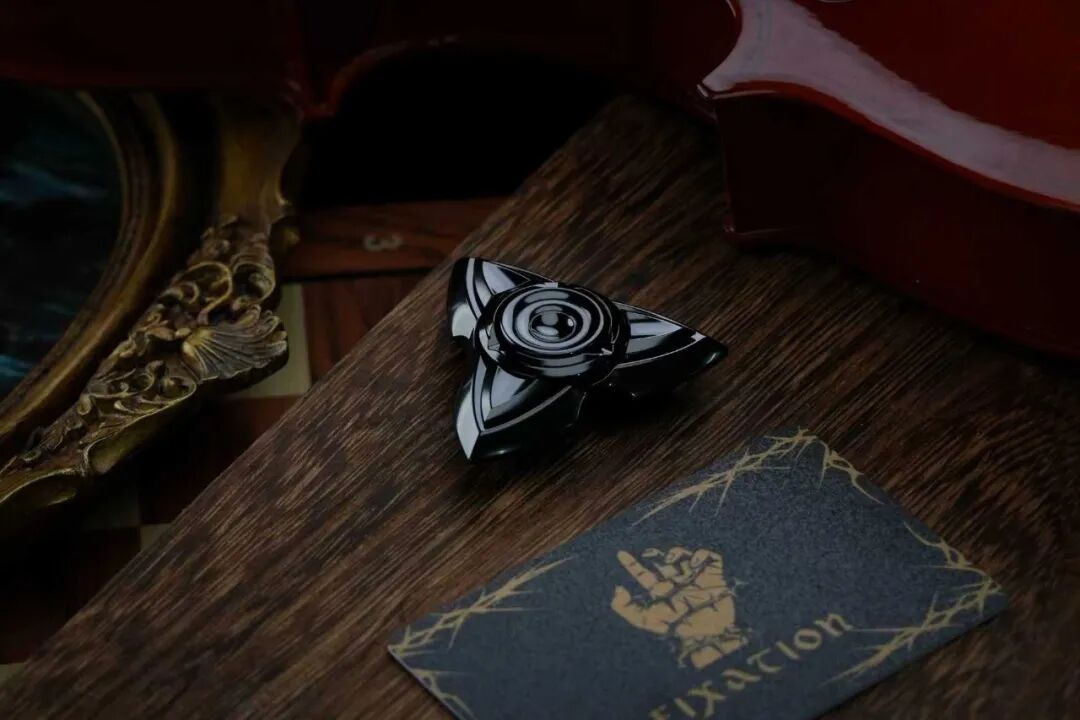
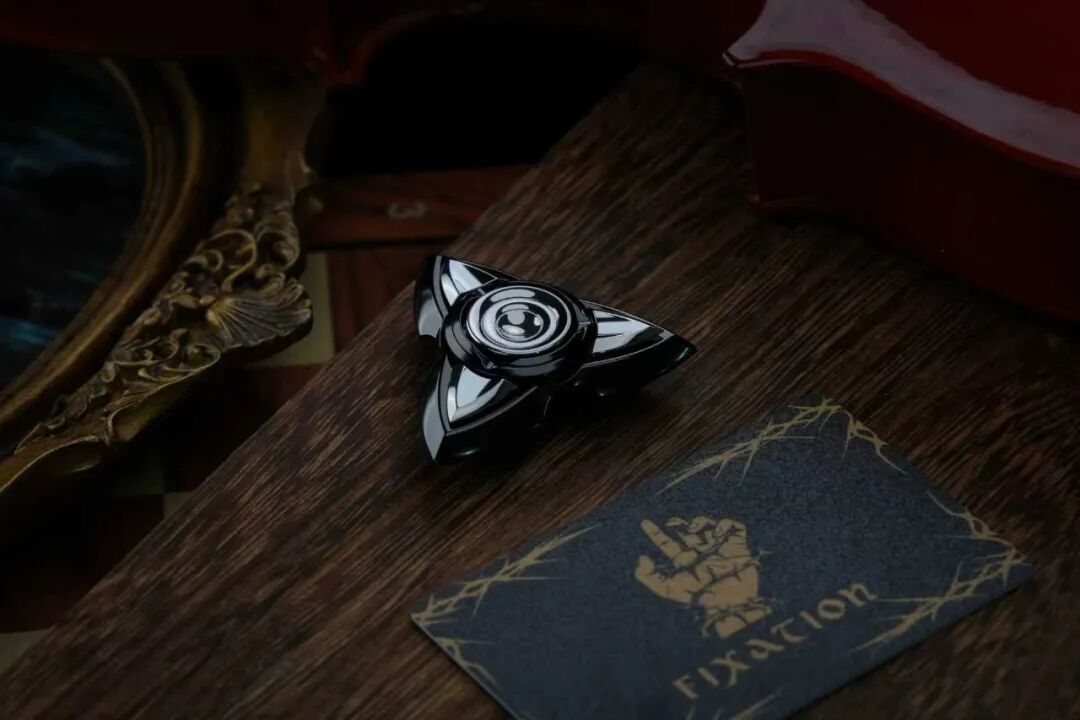
Fixation Sword Heart · Sandblasted and magnetically finished zirconium alloy, with polished, heat-blackened zirconium-alloy smaller blades and button centre post. Listed at 68 g.
One outline, three configurations
Fixation lists three surface and component combinations in its zirconium-alloy update for Sword Heart. The polished, heat-blackened version is listed at 68 g. The sandblasted and magnetically finished version is also listed at 68 g, but its smaller blades and button centre post retain polished, heat-blackened zirconium alloy. In the photograph, the more matte main blades frame the glossier smaller blades and central components, creating contrast through different finishes on the same named material.
The third combination pairs polished, heat-blackened zirconium alloy with polished stainless-steel smaller blades and a stainless-steel button centre post, and is listed at 73 g. Here the bright components have an explicit stainless-steel identity. Comparing the three versions reveals both finish changes and actual material substitutions. All three figures are the maker’s whole-product specifications, without individual component weights.
Start with the three main blades, then look at the smaller blades layered over them and the central components. The two polished combinations both catch bright reflections; the version descriptions establish which material lies beneath each bright surface.
Yingwuluo: machining marks, mirror finishes and colour
G-ingEDC Yingwuluo · Longji · Mirror-polished Qijing zirconium version, identified by the maker in this product photograph.
From close-up texture to reflections across the form
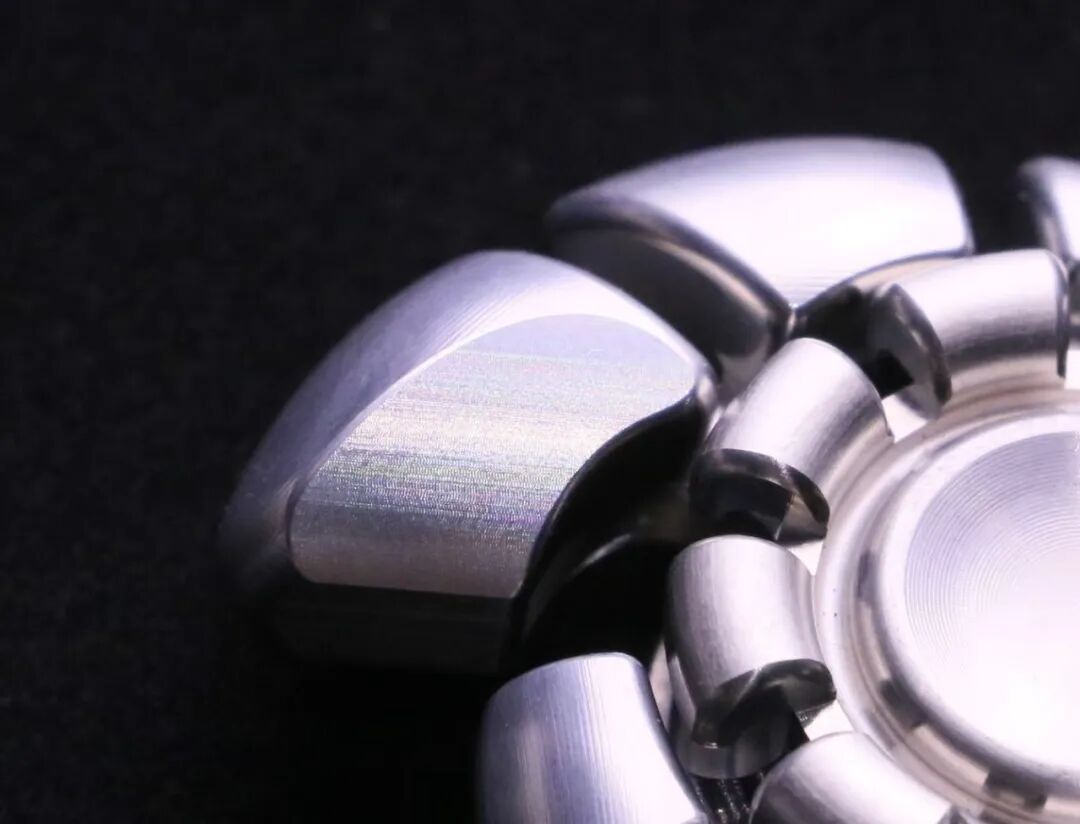
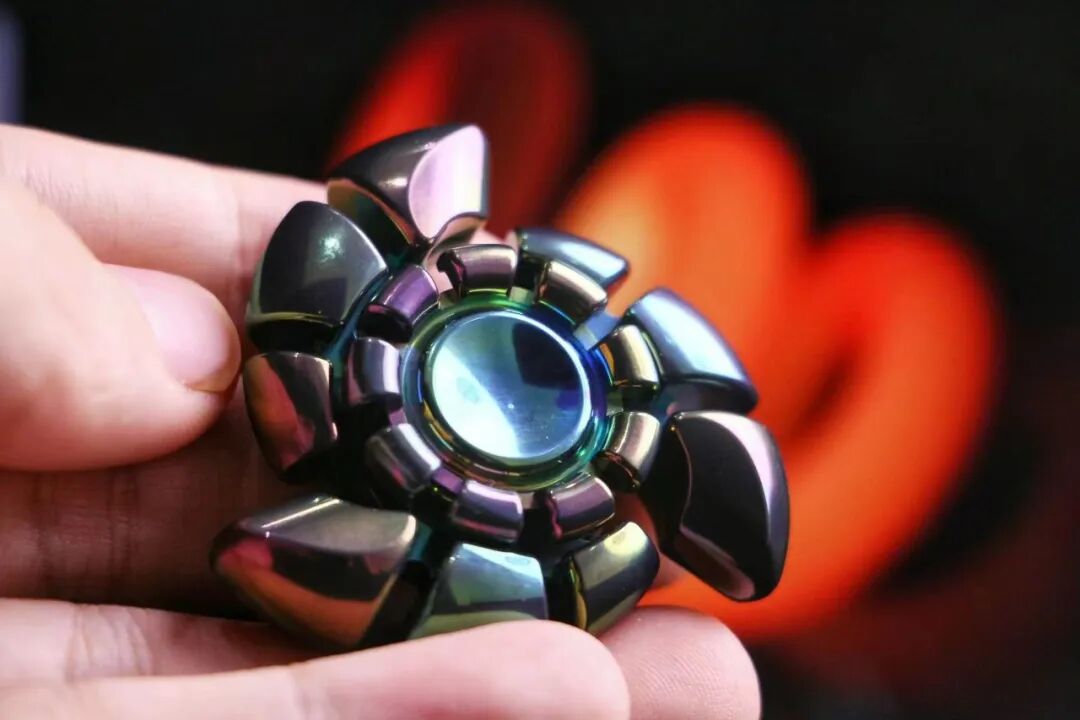
G-ingEDC’s second Yingwuluo · Longji release separately illustrates a close-up of natural-colour zirconium with its “silk” machining finish, the Huanming zirconium version with machining marks, and the mirror-polished Qijing zirconium version. Fine lines follow the curved surface in the natural-colour close-up. The full Qijing photograph brings mirror reflections and blue, green and purple tones to the same outline.
The maker credits HORNEST EDC’s Yangchen with the overall colouring work for this zirconium release and distinguishes several named colour versions. These colour passages do not give a complete colouring procedure, so the photographs are read alongside the specified finish and colour names.
The partly split Longji form brings curved surfaces, gaps and a central button into view together. Compare how light falls across those areas in the machined and mirror-polished versions. A separate zirconium version combining mirror polishing and matte blasting was still being made, with later purchase arrangements, at the time of this article.
Material background: grades and surfaces
ATI’s Zircadyne technical data distinguish commercially pure zirconium 702 from niobium-alloyed 705. They also describe a protective oxide layer that forms in air and can be enhanced through heat treatment. This provides background on zirconium composition and surfaces.
The product descriptions here do not provide enough information to assign these industrial grades, and photographs are not composition or oxide-layer tests. Use the specific product information for its grade, surface process and assembly conditions.
Care should follow the particular finish: polished and heat-blackened, stonewashed and heat-blackened, gold-plated or coloured surfaces each have their own conditions. Consult the maker before deliberately changing a surface.
IN THESE FAMILIES
Swipe to exploreExplore how four product families use zirconium alongside inner cores, smaller blades and curved structures.
PIECES IN ZIRCONIUM
Start with a specific finish or configuration: compare two glossy Sword Heart combinations, or look closely at Yingwuluo’s machining marks and mirror colour.
ALL MATERIALS
Keep exploring the TRB material guides.
 ZirconiumYou are hereVIEW →Materials indexAlloys, polymers and finishesVIEW →
 ZircutiZircuti material guideVIEW →
 SuperconductorSuperconductor material guideVIEW →
Material background
ATI: Zircadyne 702 / 705 technical data · Commercially pure and niobium-alloyed zirconium, and protective oxide layers. These grades are not established for the fidgets shown.
